Why Your Google Maps Ranking Drops the Moment You Leave the Shop
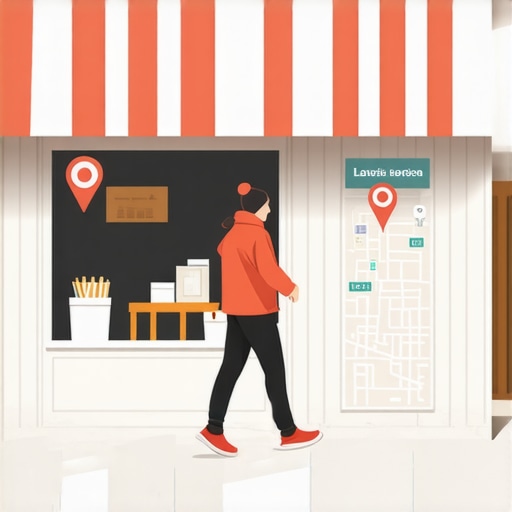
You’re sitting in your office, coffee in hand, and you decide to check how your business is doing on Google. You type in “electrician near me” or “emergency electrical repair,” and there you are – Number One in the Local Map Pack. You feel great. You’re winning. Then, you hop in your van and drive three miles down the road to a job site in the next neighborhood. You check again. Suddenly, your business is nowhere to be found. You’ve vanished from the first page, replaced by competitors you’ve never even heard of.
Welcome to the “Proximity Paradox.” As a Google Business Profile Product Expert, I see this frustration daily from contractors and small business owners. You assume that because you have a “service area” that covers the whole city, you should rank across the whole city. But the reality of google business profile seo is much more localized – and much more ruthless – than most people realize. Proximity is currently the single most influential ranking factor in the local algorithm. If you aren’t physically standing near the searcher, Google has a very high bar for why it should show your business instead of the guy next door.
The Three Pillars of Local Search: Relevance, Distance, and Prominence
To understand why your ranking is so volatile, you have to understand how Google’s local algorithm actually functions. Google doesn’t just pick the “best” business; it picks the business that best satisfies three specific criteria: Relevance, Distance, and Prominence.
- Relevance: This is how well your google business profile optimization matches what someone is searching for. If they search for “panel upgrade” and your profile only mentions “general electrical,” you might lose out on relevance.
- Distance: This is the “Proximity” factor. It is the calculated distance between the searcher (or the location they specify in their search) and your business’s physical address.
- Prominence: This is essentially your digital “fame.” It’s based on information that Google has about a business from across the web (links, articles, directories) and your review count and score.
The problem for most contractors is that Distance often overrides everything else. Even if you are the most prominent electrician in the county, Google’s primary goal is to provide the most convenient result. If you want to overcome the “Distance” handicap, you have to excel so significantly in Relevance and Prominence that Google feels obligated to show you to someone five miles away. To start diagnosing where your profile is failing in these pillars, check out Why Your Google Business Profile Isn’t Ranking and How to Fix It Today.
Understanding the “Proximity Filter”
Google employs what SEO professionals call a “proximity filter.” Think of it as a virtual leash. For high-competition keywords like “plumber” or “electrician,” that leash is very short. Google wants to provide a hyperlocal seo experience. If there are five qualified electricians within a two-mile radius of the searcher, Google will almost always “filter out” businesses that are three or four miles away.
This filter exists to prevent a few massive companies from dominating an entire metropolitan area. While that sounds fair in theory, it’s a nightmare for a high-quality shop that wants to rank higher on google maps across their entire service territory. The filter is sensitive. Sometimes, moving just a few blocks can be the difference between being #1 and being #20. This is why your rankings “drop” the moment you leave your shop; you are moving outside your immediate zone of influence where your physical address gives you a proximity “boost.”
Visualizing the Drop-off: The Power of Geo-Grid Tools
If you are still using a traditional rank tracker that gives you a single number (e.g., “You are #2 for ‘electrician’”), you are flying blind. Local SEO doesn’t happen at a city level; it happens at a coordinate level. A single “average” rank is a lie because your rank changes every time a user moves 500 feet.
To truly see what Google sees, you need to use google maps rank tracker technology. These tools, often called geo-grids, plot your ranking on a map using a grid of points (e.g., a 5×5 or 13×13 grid). Each point on the grid represents a search performed from that exact spot. When you look at a geo-grid, you’ll usually see a “Green Zone” (ranks 1-3) directly around your shop, which quickly fades into a “Red Zone” (ranks 10+) as you move further away.
Using local seo software like this allows you to visualize your “ranking bubble.” Your goal isn’t just to “rank higher”; it’s to expand the diameter of that green bubble. If your bubble is only half a mile wide, your phone will only ring when someone in your immediate neighborhood needs help. By using a specialized gmb ranking service or toolset, you can identify exactly where your “rank drop-off” occurs and target those specific areas with local content and backlinks.
Why Service Area Businesses (SABs) Struggle More
For electricians and other contractors who operate as Service Area Businesses (SABs) – meaning you go to the customer and often hide your home or warehouse address on your profile – the proximity challenge is even steeper. When you hide your address, Google still knows where you are located (based on the address you used for verification), but you lose the “physical marker” that helps build trust in the eyes of the local algorithm.
Service area business seo is a different beast. Because you don’t have a storefront that people can visit, you don’t get the “discovery” traffic that a retail shop gets. Google also tends to be more suspicious of SABs because they are easier to fake. If your ranking drops significantly just a few miles from your “center point,” it’s often because Google doesn’t have enough “local proof” that you actually serve those outlying areas. To fix this, you need a systematic approach to proving your local presence. I recommend following The Service Area Checklist That Actually Puts Your Van in Front of Local Customers to ensure your profile is anchored correctly in the eyes of the algorithm.
5 Strategies to Expand Your Ranking Radius
If you want to stop the “drop-off” and rank in google map pack results across a wider area, you have to actively work to expand your prominence. You cannot change your physical location (easily), so you must change how “important” Google thinks you are to the surrounding areas.
1. Hyperlocal Content
Stop writing generic blog posts about “how to change a lightbulb.” Start writing about specific neighborhoods. Create pages on your website like “Electrical Services in [Neighborhood Name]” or “Common Wiring Issues in [Historic District].” Mention local landmarks, parks, and even other local businesses. This signals to Google that your relevance extends beyond your shop’s front door.
2. Local Backlinks
A link from a high-authority national site is great, but a link from the local Little League team you sponsored or the neighborhood chamber of commerce is gold for local search optimization. These links act as “digital citations” that tie your business name to a specific geography. The more local “votes” you have, the more Google trusts you to serve that area.
3. Review Velocity and Diversity
Most business owners just ask for reviews. Expert owners ask for reviews from specific locations. When a customer leaves a review, Google often tracks where that user is located. If all your reviews come from people living within one mile of your shop, your ranking bubble will stay small. If you get reviews from customers in five different zip codes, Google sees that your google maps marketing is effective and that you are a trusted service provider in those areas. For more on this, read How to Rank on Google Maps Fast Without Buying Fake Reviews.
4. Google Business Profile Optimization (Services & Products)
Don’t just select “Electrician” as your category and call it a day. Use the “Services” section to list every single thing you do – ceiling fan installation, EV charger setup, panel upgrades, etc. Use the “Products” section to showcase your most common “packages.” Every word you add here increases your google business ranking for specific, long-tail searches that bypass the generic “electrician” proximity filter. Utilizing GBP ranking tools can help you identify which keywords your competitors are using to steal your “outer-rim” customers.
5. NAP Consistency (The Foundation)
Your Name, Address, and Phone number (NAP) must be identical across the entire internet. If your local business seo foundation is shaky – meaning your address is “Suite 100” on Yelp but “Unit 100” on your website – Google loses confidence in your location data. When confidence drops, your ranking radius shrinks. Consistency breeds trust, and trust breeds a larger ranking bubble.
The Role of Technical Infrastructure in Local SEO
One of the biggest mistakes I see is business owners treating google business profile seo as a one-time “tweak.” They think they can just fill out the profile and the phone will ring forever. As my colleague Rashid Rehman often points out, local SEO is not a “hack”; it is infrastructure. Just like the wiring in a house, it needs to be built correctly from the start and maintained as the environment changes.
If you are serious about competing in a major metro area, you likely need a professional google maps optimization service or a robust gmb seo tools platform to monitor your progress. The algorithm updates constantly. What worked six months ago – like keyword stuffing your business name – can now get you suspended. You need to treat your google business profile seo with the same technical rigor you apply to a complex commercial electrical project. Using professional-grade google business profile seo tools ensures that you are making decisions based on data, not just a “feeling” you get when you check your phone at a stoplight.
Conclusion: Stop Guessing and Start Mapping
Proximity will always be a hurdle in local search. Google is designed to favor the “near,” but that doesn’t mean you are doomed to a tiny service radius. By focusing on the “Prominence” and “Relevance” pillars, you can effectively “push” your ranking bubble further out, capturing leads from neighborhoods that were previously invisible to you.
The first step to fixing your ranking drop-off is knowing exactly where it happens. Stop checking your rank from your office chair. You need to see the full picture of your local visibility. If you’re ready to see the truth about your shop’s performance, it’s time for a deep dive. I highly recommend starting with The Audit That Shows Why Your Electrical Shop Isn’t Ranking Locally. Once you have the data, you can stop guessing and start dominating the map.