
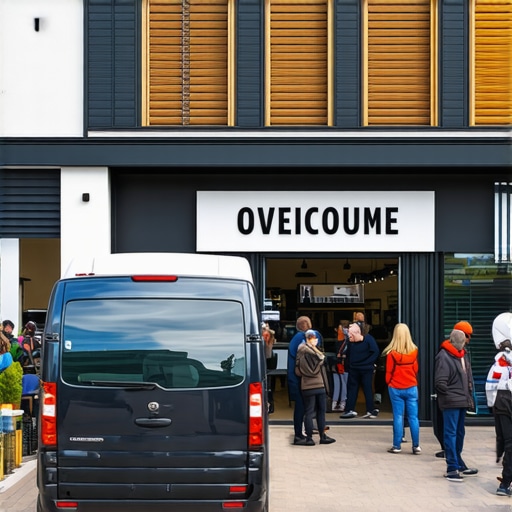
The Service Area Checklist That Actually Puts Your Van in Front of Local Customers
In the competitive landscape of 2026, many mobile contractors and trade professionals face what I call the “Invisible Van” problem. You have the equipment, the expertise, and a fleet ready to roll, but if your phone isn’t ringing, your business is effectively invisible to the people who need you most. For service area businesses (SABs), mastering google business profile seo is the difference between a fully booked calendar and a quiet shop. Many owners mistakenly believe that because they don’t have a physical storefront where customers browse aisles, they can’t compete on Google Maps. As Kevin Pauls, a Google Business Profile Product Expert and Local SEO Consultant, I am here to tell you that’s a myth. You can absolutely dominate your local market without an office, provided you follow a specific, technical roadmap.
The stakes have never been higher. Recent data indicates that over 60% of consumers use Google Maps as their primary tool to find and call a local business. If you aren’t appearing in those top three “Map Pack” results, you are handing leads directly to your competitors. This guide provides a comprehensive checklist designed specifically for the “man in a van” or the multi-fleet enterprise to fix the common reasons why most local service businesses fail to show up in search.
The “No Storefront” Myth: Why Google Wants Your SAB to Win
There is a persistent misconception in the trades that Google favors brick-and-mortar shops over mobile services. In reality, Google’s algorithm is designed to provide the most relevant answer to a user’s query. If someone searches for “emergency electrician near me,” Google knows that the user doesn’t want to drive to an office; they want a van at their front door. This is why Google officially supports the Service Area Business (SAB) model.
An SAB is defined as a business that provides services at the customer’s location and does not serve customers at its business address. Google also recognizes “Hybrid Businesses,” which serve customers at their location but also have a physical storefront (like a lighting showroom that also offers electrical installation). For the pure SAB, the verification process involves providing a physical address (often a home office) to Google for verification purposes, but this address remains hidden from the public. This allows you to rank google business profile listings without compromising your privacy.
Google’s 2026 algorithm focuses heavily on the three pillars of local search: Proximity, Relevance, and Prominence. For an SAB, proving relevance and prominence is your path to victory, as your proximity is defined by the service boundaries you set in your profile.
Step 1: Defining Your Service Territory (Cities vs. ZIPs)
One of the most critical mistakes I see as a consultant is a business owner setting a massive, 200-mile service radius. While you might be willing to drive that far for a big job, Google won’t rank you for it. To rank higher on google maps, you must be realistic and strategic about your territory.
- Start with Cities and Counties: For broad reach, list the major municipalities you serve. This tells Google the general “shape” of your service area.
- Refine with ZIP Codes: If there are specific high-value neighborhoods where you want more leads, add those specific ZIP codes. This adds a layer of “Hyperlocal Relevance” to your profile.
- The Two-Hour Rule: As a best practice, do not set a service area that extends further than 2 hours (or roughly 60-75 miles) from your base of operations. If you go beyond this, Google’s algorithm may view your profile as “spammy” or unrealistic, which can suppress your rankings.
By defining your territory accurately, you ensure that your google business profile seo efforts are focused on the areas where you can actually provide timely service, which leads to better customer experiences and higher conversion rates.
Step 2: Google Business Profile SEO Fundamentals
Once your territory is set, you need to dive into the technical optimization of the profile itself. This is the core of any successful google maps ranking service strategy. Your profile should be a digital twin of your physical business, providing every piece of information a customer might need to make a hiring decision.
Primary and Secondary Categories
Your primary category is the single most important factor for ranking. If you are an electrician, “Electrician” must be your primary category. However, don’t ignore secondary categories. If you also handle HVAC or security systems, add those. Be specific – don’t just pick “Contractor” if you can pick “Electrical Engineer” or “Lighting Consultant.” Proper category selection is the first step in google business profile optimization.
Service Descriptions and Keywords
Within your profile, you have the opportunity to list individual services. This is where you should use high-intent keywords. Instead of just “Wiring,” use “Residential Rewiring Services” or “Commercial Panel Upgrades.” This helps you rank google business profile for specific long-tail searches. Be sure to include a section on how to get an electrician to your door today to capture those urgent, high-value leads.
Business Hours and the 24/7 Trap
Many SAB owners are tempted to set their hours to 24/7 to capture middle-of-the-night emergency calls. Be warned: Google is increasingly suspicious of 24/7 hours for businesses that don’t have a physical, staffed office around the clock. If you claim to be open 24/7 but don’t answer the phone or have a history of “Closed” reports from users, you risk suspension. It is often better to set realistic hours and use the “Special Hours” feature for holidays.
Step 3: Hyperlocal Signals and Geo-Targeted Content
How do you rank in a city 30 miles away where you don’t have an address? This is the “Holy Grail” of google business profile seo. To achieve this, you must create “Local Signals” that bridge the gap between your base and your service area.
The most effective method is creating city-specific landing pages on your website. Each page should feature:
- Testimonials from customers in that specific city.
- Photos of your van parked in front of recognizable local landmarks.
- Descriptions of local building codes or common issues found in that specific area’s architecture.
- An embedded Google Map showing your service area for that specific city.
For example, if you are focusing on a growing suburb, you might create a page dedicated to ensuring safe and efficient EV charging station setup at home for residents of that specific town. This creates a powerful link between your website’s content and your Google Business Profile, signaling to Google that you are a prominent authority in that region.
Step 4: The Review Engine and Social Proof
In 2026, the quantity of reviews is secondary to the quality and frequency (velocity) of those reviews. Google’s AI now reads the text of reviews to understand what your business actually does. If a customer writes, “The best electrician in Springfield for panel upgrades,” Google associates your profile with both the location (Springfield) and the service (panel upgrades).
To improve google maps ranking, you need a proactive review strategy. You should aim for a steady stream of new reviews rather than a sudden burst followed by months of silence. Use these 5 simple moves that get 5-star Google reviews every time to build a “Review Engine” that runs on autopilot. Remember, responding to every review – both positive and negative – is a ranking signal. It shows Google you are an active, engaged business owner.
Furthermore, don’t forget to mention your loyalty programs in your interactions. Highlighting priority service membership perks can encourage long-term customers to leave detailed reviews about the ongoing value you provide, which significantly boosts your prominence in the eyes of the algorithm.
Step 5: Advanced Monitoring with Local SEO Software
The “set it and forget it” approach to google business profile seo is dead. The local search landscape is dynamic; a new competitor moving into your territory or a Google algorithm update can shift the Map Pack overnight. You cannot manage what you do not measure.
Professional local seo software allows you to track your “Grid Rankings.” Unlike a standard search, local rankings change every few blocks. A grid tracker shows you exactly where your van “disappears” on the map. If you rank #1 in the center of town but drop to #10 just three miles away, you know exactly where you need to focus your hyperlocal content and review generation efforts.
Using SEO Viper Tools gives you the data-driven insights needed to adjust your strategy in real-time. Whether it’s monitoring your “Share of Voice” or tracking how many calls are generated directly from your profile, advanced tools are the “telemetry” for your mobile business success.
Conclusion: Dominating the Map Pack in 2026
Dominating local search as a service area business isn’t about “gaming the system” – it’s about providing Google with the most accurate, detailed, and authoritative picture of your business possible. By defining your territory precisely, optimizing your profile fundamentals, generating hyperlocal signals, and maintaining a robust review engine, you can ensure that your van is always the first one customers see when they need help. The 2026 landscape rewards those who are active and authentic. Audit your profile today, leverage high-quality google business profile seo, and turn your van into a lead-generation machine.
Comments
One response to “The Service Area Checklist That Actually Puts Your Van in Front of Local Customers”
This article hits the mark on the importance of hyperlocal signals and precise service area definition. I’ve found that creating city-specific landing pages on our website and actively encouraging reviews from local clients really helped boost our visibility in targeted areas. The two-hour rule is a useful guideline, but I’d be curious to know how others handle overlapping service areas—do you prefer to keep them distinct, or do you see value in some strategic overlap for broader coverage? Also, tracking local rankings with advanced SEO tools has been a game-changer for us, especially when adjusting content strategy based on real-time data. I believe consistency in review management and updating geo-targeted content are key factors for staying ahead. How do you all balance time between maintaining your profiles and expanding your hyperlocal content? Any tips on managing these efforts efficiently?