
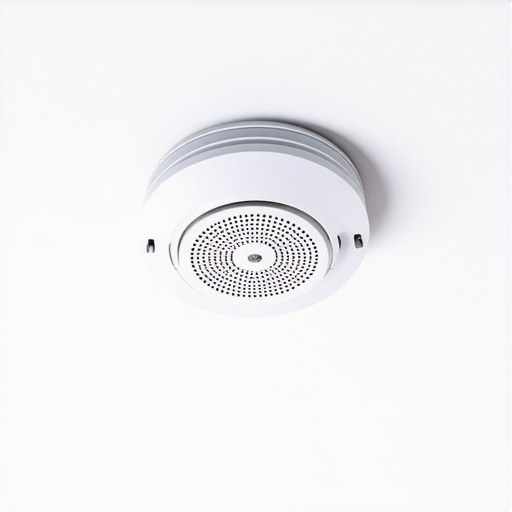
The Scent of a Dying Home
The smell of a house fire isn’t just wood smoke; it’s the acrid, chemical stench of melting PVC insulation, scorching copper, and the synthetic foam inside your sofa. I’ve smelled it more times than I care to count in my 35 years as a forensic inspector. Usually, I’m walking through the charred remains of a bedroom, my boots crunching on soot-covered drywall, looking for the ‘why.’ Too often, the ‘why’ is a small plastic disc dangling from a ceiling by a single Romex wire—a smoke alarm that failed because of a ‘weekend warrior’ mistake. You think you’re being handy by swapping out an old unit, but if you don’t understand the physics of a home run or the lethality of a nicked traveler, you’re not installing a life-saver; you’re installing a plastic paperweight. Most homeowners treat smoke alarms like a light bulb change, but it’s actually a complex rough-in operation that demands a deep understanding of circuit continuity and the National Electrical Code (NEC).
The Flipper’s Hidden Time Bomb
I walked into a ‘fully renovated’ 1920s Craftsman in the historic district last November. The new owners were proud of their gleaming kitchen and the ‘upgraded’ electrical. But when I pulled my tick tracer out, I noticed a phantom voltage on the casing of a pendant light. I started digging. Behind a freshly plastered backsplash, I found what I call ‘The Flipper Special.’ The previous owner had buried three live junction boxes behind the walls, spliced with nothing but electrical tape and hope. They had attempted to install interconnected smoke alarms by tapping into a switched lighting circuit. In their ‘renovated’ kitchen, the smoke alarms only had power when the under-cabinet pathway lighting install was turned on. This is the kind of negligence that keeps me up at night. They had essentially bypassed the life-safety requirements to save five minutes of fishing wire. I spent three days gutting that circuit, ensuring every access control wiring point was accessible and that the smoke alarms were on a dedicated, non-switched leg. When I was done, the owner asked if I could give him free electrical estimates for his garage. I told him he didn’t need an estimate; he needed an exorcism of his electrical system.
The Anatomy of Failure: Why the Interconnect Kills
The most dangerous error people make when installing their own smoke alarms is the ‘Interconnect Error.’ Modern code requires that when one alarm sounds, they all sound. This is achieved via a third wire, usually red, called the interconnect or traveler. If you’re working in an old home from the 1930s, you’re likely dealing with brittle rubber insulation or knob-and-tube wiring. These systems weren’t designed for interconnected loads. When a DIYer tries to force a modern interconnected system into an old 100-amp service without a proper home backup generator install or updated panel, they often create a ‘leakage current’ situation.
“Aluminum wire connections can overheat and cause a fire without tripping the circuit breaker.” – CPSC Safety Alert 516
This quote is vital because many mid-century updates used aluminum. If you connect a modern smoke alarm to old aluminum branch wiring without using the proper AlumiConn connectors, the thermal expansion—a phenomenon known as Cold Creep—will loosen the screw terminals. This creates high resistance, which generates heat. I’ve seen smoke alarms literally melt off the ceiling before they ever had the chance to detect a fire because the connection at the ceiling box was arcing.
The Physics of Detection: Ionization vs. Photoelectric
People buy the cheapest unit at the big-box store and think they’re safe. They don’t understand that an ionization sensor is great for fast-flaming fires but can be minutes slower than a photoelectric sensor for smoldering fires—the kind that start in a couch while you sleep. Furthermore, in homes with a poorly executed attic fan installation, the airflow can actually pull smoke away from a poorly placed detector. If the fan isn’t balanced or the intake isn’t calculated, it creates a pressure differential that turns your hallway into a wind tunnel, bypassing the sensor entirely. We see similar issues in home theater wiring projects where massive subwoofers and soundproofing materials change the acoustic and airflow dynamics of a room, requiring specialized placement that your average weekend electrician services will completely miss. It’s not just about ‘does it beep?’ It’s about ‘does it detect?’
The Danger of the Shared Neutral
In older homes, I often find ‘bootleg grounds’ and shared neutrals. When a homeowner tries to install a smoke alarm, they might grab a neutral from a nearby circuit to save time. In a world of three phase power services in industrial settings, we understand the dangers of harmonic currents, but in a residential setting, a shared neutral on a single-phase system can lead to a fire. If that neutral is overloaded by a high-draw appliance—say, a poorly wired industrial motor controls setup in a home workshop—the voltage on the smoke alarm circuit can fluctuate wildly. This leads to ‘nuisance tripping’ or, worse, the total failure of the alarm’s internal processor. If you’re trying to manage a heavy load, you might need ensuring safe and efficient EV charging station setup at home just to ensure your main panel isn’t being cooked by your car while your smoke alarms are starved for voltage.
The Hidden Cost of DIY Incompetence
I’ve used my Wiggy to test thousands of circuits, and the most common failure I see is improper torque. Every terminal screw has a torque rating in inch-pounds. Most people just tighten until it feels ‘snug.’ That’s not electrical engineering; that’s guessing. In a smoke alarm circuit, a loose connection at the first unit in the series can disable every other unit in the house. This is why I always recommend professional lighting installations made easy by those who actually know how to use a torque screwdriver.
“Smoke alarms shall be replaced when they fail to respond to operability tests, but shall not remain in service longer than 10 years from the date of manufacture.” – NFPA 72, National Fire Alarm and Signaling Code
If your alarms are older than a decade, the radioactive source in ionization units has decayed, or the LED in your photoelectric unit has dimmed. They are useless. Replacing them isn’t a suggestion; it’s a requirement. If you’re already having issues, check out this guide on how electricians tackle troubleshooting for lighting installations to see the level of rigor required for even basic circuitry.
The Final Inspection
Don’t be the person I visit after the fire trucks have left. Electricity is a living force that is constantly looking for a path to ground, and it will use your body or your home’s framing to get there if you give it a chance. Whether you’re dealing with power factor correction in a commercial space or just trying to keep your family safe, treat your electrical system with respect. If your smoke alarm chirps, don’t just pull the battery. Investigate the trim-out. Check the connections. Use your dikes to clean up those messy pig-tails. And if you aren’t 100% sure that your interconnected system will fire off when it matters most, call a professional. For those dealing with more modern tech, like troubleshooting an EV charger, you can find ev charger troubleshooting expert tips to fix common issues, but for smoke alarms, there is no room for error. Sleep at night knowing your sensors are torqued, your neutrals are dedicated, and your life isn’t hanging by a loose wire.