
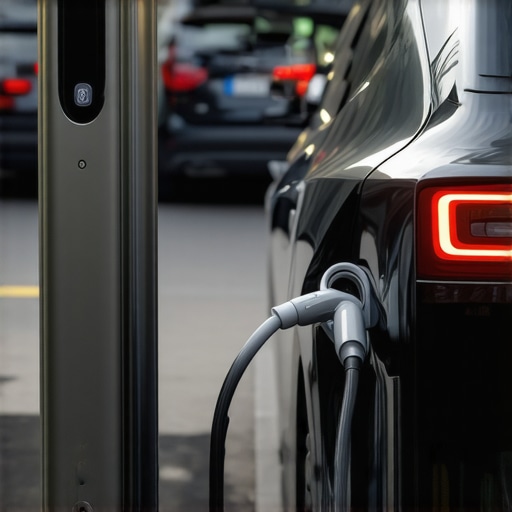
The Phantom Loss: Why Your Amperage Is Vanishing into Thin Air
You pull into the garage, plug in your shiny new EV, and expect the usual 11.5 kilowatts of power to surge into the battery. But tonight, the dashboard tells a different story. The charging rate has plummeted to a crawl, or worse, the breaker trips after twenty minutes of operation. Most homeowners think it’s a software glitch. They’re wrong. As an inspector who has spent three decades diagnosing charred bus bars and melted Romex, I can tell you: electricity doesn’t lie, but it sure as hell complains when you mistreat it. My journeyman used to smack my hand if I stripped a wire with a knife. ‘You nick the copper, you create a hot spot,’ he’d scream. He was right. That tiny nick reduces the cross-sectional area of the conductor, increasing resistance, which in turn generates heat. When you’re pulling 48 amps for eight hours straight, that ‘hot spot’ becomes a localized furnace. If your charging speed has dropped, your car’s onboard computer is likely detecting thermal runaway or a voltage drop and is throttling the intake to prevent your house from becoming a statistic.
The Physics of Continuous Loads and Thermal Throttling
An electric vehicle charger is not like a toaster or a vacuum cleaner. It is a continuous load, defined by the National Electrical Code as a load where the maximum current is expected to continue for three hours or more. This is the ultimate stress test for your home’s electrical infrastructure. When electricity flows through a conductor, it encounters resistance. This resistance generates heat ($I^2R$ losses). If your service entrance upgrade wasn’t performed correctly, or if the electrical load calculations were ‘guesstimated’ by a handyman, the system will heat up until the physical properties of the metal change.
“Fixed electric vehicle charging equipment shall be considered a continuous load for the purposes of sizing the branch circuit overcurrent protective device and conductors.” – National Electrical Code (NEC) Article 625.41
In mid-century homes built between 1960 and 1980, we often see the dreaded ‘Cold Creep’ in aluminum branch wiring or even in poorly torqued copper lugs. As the metal heats up during a heavy charging session, it expands. When it cools down, it contracts. Over hundreds of cycles, this expansion and contraction can loosen the connection at the breaker or the receptacle. A loose connection is a high-resistance connection. Your car senses the resulting voltage drop—the ‘sag’ in electrical pressure—and automatically reduces the charging speed to stay safe. If you’re experiencing this, you need a detailed EV charger troubleshooting session to identify the bottleneck before the insulation on your wires begins to pyrolyze.
The Service Entrance Bottleneck: 100 Amps Isn’t Enough
Many homes in older neighborhoods are still running on 100-amp or even 60-amp services. You might have added a hot tub, a home theater wiring package, and a whole house fan wiring setup over the years. Now, you’ve added a 50-amp EV circuit. You are redlining your electrical system. When the HVAC kicks on while the car is charging, the total demand can exceed the capacity of your main breaker. Some modern smart chargers will detect this total house load and throttle the car’s charging speed to prevent the main breaker from tripping. This is a band-aid, not a solution. The real fix is an electrical panel upgrade. If you’re seeing the lights flicker when the car starts its session, your transformer or your service mast is screaming for help. I’ve seen service masts pulled right off the side of a house because the heat from overloaded conductors caused the mounting hardware to fail. You need a bonded insured electrical professional to perform a Load Calculation according to NEC Annex D; anything else is just a guess that could lead to fire damage wiring restoration.
Trenching and the Hidden Resistance of Distance
If your charger is located in a detached garage or near a boat lift wiring installation, the length of the wire run becomes a critical factor. Trenching electrical conduit is more than just digging a hole; it’s about calculating the ‘Voltage Drop.’ If you use #6 AWG copper for a 50-amp circuit over a 150-foot run, you’re going to lose a significant amount of voltage to the wire itself. This energy isn’t just lost; it’s converted into heat underground. The charger’s logic board monitors the incoming voltage. If it sees 240V at the panel but only 208V at the car, it knows the resistance is too high and will throttle the speed. I always tell my apprentices: ‘Don’t be cheap with the copper.’ Upsizing to #4 or even #2 conductors for long runs is the only way to ensure safe and efficient EV charging station setup at home. You can find more on this in our guide to ensuring safe and efficient EV charging.
The Enemy Within: Corrosion and the Coastal Factor
If you live near the coast, salt air is the silent killer of EV chargers. Salt is hygroscopic; it pulls moisture out of the air and creates a conductive bridge where there shouldn’t be one. I’ve opened NEMA 14-50 outlets where the terminals were covered in green verdigris—copper carbonate. This corrosion increases resistance and generates immense heat. Even a high-quality charger will struggle if the ‘Rough-in’ wasn’t protected with dielectric grease. I’ve used my ‘Wiggy’ (solenoid voltmeter) to test circuits that looked fine to the eye but had massive impedance issues due to internal oxidation. This is why top EV charger maintenance tips always include a physical inspection of the contact points. If you smell something fishy or like burnt plastic, shut it down immediately. That’s the smell of your insulation melting.
“Aluminum wire connections can overheat and cause a fire without tripping the circuit breaker.” – CPSC Safety Alert 516
The Forensic Breakdown: Why It Tripped
When I go out for a troubleshooting call, the first thing I do is pull the dead-front off the panel and get my thermal imager out. If I see a breaker glowing at 180 degrees Fahrenheit while the car is charging, we have a problem. Often, it’s a ‘Home Run’ that was shared with another heavy appliance, or worse, a sub-panel that isn’t properly bonded. You cannot treat an EV circuit like a standard 15-amp lighting circuit. It requires dedicated infrastructure. If your charging speed has suddenly dropped, check the following: 1. Is the ambient temperature in the garage exceeding 100 degrees? 2. Is there visible discoloration on the plug blades? 3. Is your panel a known fire hazard like Federal Pacific or Zinsco? If the answer is yes to any of these, you aren’t just losing charging speed; you’re flirting with a structure fire. Electricity is a powerful tool, but it demands respect and proper electrical load calculations. Don’t let a ‘handyman’ install your charger. Get a pro who understands the physics of continuous loads and the importance of a properly torqued lug. If you need a forensic audit of your system, you can contact us here for an inspection.