
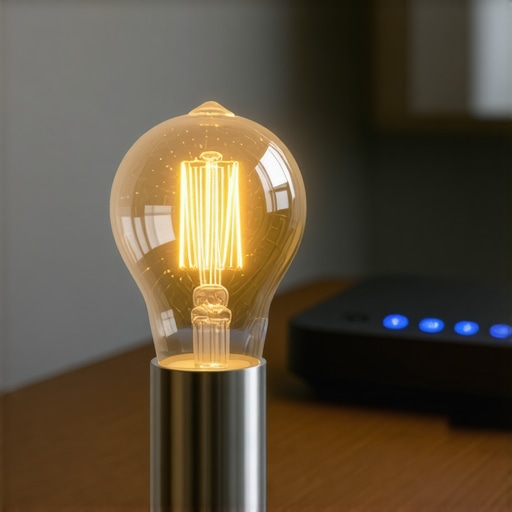
The Ghost in the Circuit: Why Your Smart Home is Acting Dumb
I have spent nearly four decades dragging my bones through the crawlspaces of houses built before the invention of the transistor, and I have seen it all. You think you have a ‘smart’ home because you installed a mesh network and some fancy Wi-Fi dimmers, but your 1940s infrastructure is currently engaged in a slow-motion war with your gadgets. Most homeowners call me for 24 hour emergency electrician services because their smart bulbs are flickering like a horror movie prop. They think it is a software bug. It is not. It is physics. My old journeyman used to smack my hand with his heavy-duty dikes if I ever left a wire nut loose enough to rattle. ‘If it ain’t tight, it’s a fire, kid,’ he’d bark. He was talking about resistance—the very thing that is killing your home automation setup today.
“Aluminum wire connections can overheat and cause a fire without tripping the circuit breaker.” – CPSC Safety Alert 516
The Forensic Breakdown: Dirty Power and the Neutral Problem
In the world of forensic electrical inspection, we look for ‘dirty power.’ Most smart lighting devices require a constant, clean flow of electrons to keep their internal radios alive. If you are living in a home built between 1900 and 1950, you likely have ungrounded circuits or, worse, the dreaded ‘bootleg ground.’ This is where a ‘handyman’ ties the neutral wire to the ground screw because he didn’t want to pull a new home run back to the panel. This creates a massive amount of electrical noise. When your refrigerator compressor kicks on, it sends a voltage spike down that line. A traditional incandescent bulb would just dim for a millisecond, but that spike is enough to reboot the microchip in your smart switch. This is why troubleshooting for lighting installations often reveals that the problem isn’t the bulb, but the ancient cloth-covered wire feeding it.
Component Zooming: The Physics of Cold Creep and Resistance
If your home was built in the 1970s, you might be dealing with aluminum wiring. This is where Cold Creep becomes your enemy. Aluminum expands and contracts at a different rate than the brass terminals on your smart switches. Over time, the connection loosens. This creates a microscopic gap where arcing occurs. That arcing creates heat, which creates oxidation. Oxidation is a semiconductor; it literally resists the flow of electricity. Your smart hub is trying to send a low-voltage signal through a layer of burnt metal. It’s like trying to whisper through a thick wool blanket. This is why annual maintenance contracts are not a luxury; they are a necessity for ensuring your track lighting services actually stay functional. A licensed master electrician will use a tick tracer and a wiggy to find these high-resistance points before they become a widow maker.
Why Your Panel is the Bottleneck
Modern life is heavy. Between your RV hookup installation, that new hot tub wiring services request, and the EV charger maintenance you forgot about, your old 100-amp panel is gasping for air. When a panel is overloaded, voltage sags occur. Electronic components in smart dimmers hate voltage sags. If the voltage drops below a certain threshold, the device’s internal power supply fails, and it drops off the Wi-Fi. You don’t need a faster router; you need a service heavy-up. Installing safe and efficient EV charging requires a rock-solid foundation, and the same applies to your lights. Without whole house surge protection, every transient spike from the utility grid is shaving years off the life of your smart tech.
“The presence of harmonics can cause overheating of conductors and failure of electronic equipment.” – NFPA 70 Handbook
The Fix: Beyond the Handyman Special
If you want your smart lighting to stay online, you need to stop treating electricity like a DIY hobby. You need certified journeyman services to evaluate your grounding system. We often find that the battery backup wiring or the home automation setup was done without regard for the total load calculation. We use monkey shit (duct seal) to keep moisture out of the exterior conduits and ensure every terminal is torqued to the inch-pound specifications listed on the device. It isn’t just about making the light turn on; it’s about ensuring the impedance is low enough that the signal can actually travel. If you’re tired of resetting your hub, it’s time to contact us for a real forensic audit of your home’s vitals. Sleep better knowing your connections are torqued, not just twisted.