
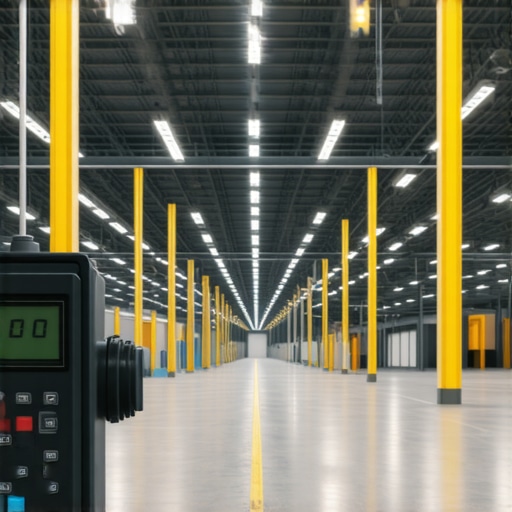
The Invisible Thief in Your Electrical Panels
I’ve spent thirty-five years listening to the sound of money evaporating. It’s not a loud sound; it’s a low-frequency hum coming from a magnetic ballast in a high-bay fixture, or the quiet sizzle of a loose lug in a commercial load center. Most business owners look at their utility bill and blame the rates. I look at the infrared signature of their equipment and see the truth: your infrastructure is leaking energy like a rusted bucket. When you operate a commercial space, your electrical system isn’t just a set of wires; it’s a living, breathing entity that obeys the laws of thermodynamics. And thermodynamics is a harsh mistress if you haven’t performed a load center upgrade in the last two decades.
The Old Timer’s Lesson: The High Cost of a Nick
My journeyman used to smack my hand with his dikes if I stripped a wire with a knife instead of the proper tool. ‘You nick the copper, you create a hot spot,’ he’d scream. He was right. That tiny notch in the conductor reduces the cross-sectional area of the wire. Under heavy industrial loads, that bottleneck creates resistance. Resistance creates heat. Heat increases resistance further. It’s a thermal runaway loop that ends in a 2 AM call to a 24 hour emergency electrician. This fundamental lesson applies to your entire commercial lighting system. Every poor connection, every oxidized terminal, and every oversized breaker is a ‘nick’ in your company’s profitability. If you’re seeing flickering or hearing a buzz, you’re not just looking at a nuisance; you’re looking at an electrical load calculation that has gone off the rails.
The Forensic Breakdown: Why Ballasts are Budget Killers
Let’s talk about Joule Heating ($I^2R$). In a standard commercial setup with old-school HID or fluorescent lighting, the ballast is the heart of the problem. These legacy transformers are essentially big lumps of copper and iron designed to limit current. Over time, the internal insulation breaks down. This leads to eddy currents—wasted energy that does nothing but turn your ceiling into a radiator. I’ve walked into restaurant kitchen electrical inspections where the ambient temperature at the ceiling was 130 degrees because of failing ballasts. That heat doesn’t just waste light energy; it forces your HVAC system to work twice as hard. You’re paying to create heat you don’t want, and then paying again to remove it. When we perform lighting installations, we aren’t just swapping bulbs; we are removing these thermal parasitic loads from your overhead.
“Luminaires shall be installed so that adjacent combustible material is not subjected to temperatures in excess of 90°C (194°F).” – National Electrical Code (NEC) Article 410.11
Industrial Motor Controls and the Power Factor Tax
If your facility runs industrial motor controls alongside your lighting, you’re likely being hit with a power factor penalty. Most commercial meters track ‘apparent power’ (KVA) versus ‘real power’ (KW). When your motors and lighting ballasts are out of phase, you’re pulling more current than you’re actually using to do work. This ‘Reactive Power’ (KVAR) is like the foam on a beer—you pay for the full glass, but you only drink the liquid. A master electrician knows how to balance these loads. Without proper electrical load calculations, you might think you need a 400-amp service when a 200-amp service with power factor correction would suffice. This is why a load center upgrade is often the first step in budget recovery.
The Vulnerability of Signage and Exterior Lighting
Your brand is literally up in lights, but sign lighting installation is often the most neglected part of a commercial property. These systems are exposed to the elements 24/7. Moisture ingress in a sign transformer leads to tracking—where electricity finds a path across the surface of an insulator. This doesn’t always trip a breaker immediately; it just leaks current into the grounded frame of the sign. I’ve seen signs that were drawing 15 amps when they should have been drawing 5, simply because of carbon tracking. Then comes the wind. Storm damage electrical repair often reveals that these signs were held together by ‘monkey shit’ (duct seal) and luck. If a storm rips a conduit loose, you’re looking at a trenching electrical conduit project just to get your parking lot lights back on.
“Electrical equipment shall be installed in a neat and workmanlike manner.” – NEC 110.12
The Hidden Danger in Restaurant Kitchens
Commercial kitchens are the ultimate stress test for electricity. You have high humidity, extreme heat, and heavy grease vapor. I’ve pulled covers off junction boxes in kitchens and found the wires submerged in liquefied fat. This isn’t just gross; it’s a fire hazard. Grease is conductive when contaminated with moisture. It leads to ‘dry-band arcing’ which can ignite the very structure of your building. This is why smoke detector installation in commercial kitchens must be strategic—using heat detectors instead of ionisation sensors to avoid nuisance trips while still providing life-safety protection. If your kitchen hasn’t been inspected by a pro who knows how to use a Wiggy or a tick tracer to find ghost voltages, you’re sitting on a time bomb.
Emergency Calls and Preventative Maintenance
There is a specific smell to a holiday emergency call. It’s the smell of ozone and charred PVC. It usually happens when a business pushes their system to the limit during peak season without checking their home run connections. A loose neutral wire in a three-phase system is a ‘widow maker’ for electronics. If that neutral fails, 120-volt circuits can suddenly see 208 volts or 240 volts, frying every computer, POS system, and LED driver in the building. This is why troubleshooting lighting installations early is critical. If your lights flicker when the refrigeration kicks on, you have a high-resistance connection that needs immediate attention from a 24 hour emergency electrician. Don’t wait for the ‘magic smoke’ to leave the wires; once it’s out, you can’t put it back in.
The Solution: Efficiency Through Forensic Analysis
Upgrading your commercial lighting isn’t about buying new ‘toys.’ It’s about infrastructure integrity. Modern LED systems don’t just use less juice; they have a much higher power factor and generate a fraction of the heat. When we do a load center upgrade, we ensure every terminal is torqued to manufacturer specifications—not just ‘hand tight.’ We use thermal imaging to find those ‘nicks’ and hot spots before they become insurance claims. Whether it’s trenching electrical conduit for new site lighting or recalibrating your industrial motor controls, the goal is the same: a system that is boring. You want your electricity to be boring. No hums, no smells, no flickering, and most importantly, no surprises on your budget. Sleep better at night knowing your lugs are torqued and your loads are balanced.