
The Anatomy of a Warning: Why Your Lights Are Actually Screaming
You’re sitting in your living room when the floor lamp does it—a quick, rhythmic stutter, a momentary dip into darkness that most people dismiss as a ‘glitch’ in the power grid. But to a forensic inspector who has spent three decades tracking down the scent of charred phenolic plastic, that flicker isn’t a glitch. It’s a signature. It’s the sound of electrons jumping a gap they were never meant to cross. When I do a virtual consultation, I’m not just looking at your fixture; I’m looking for the physical evidence of thermal runaway and resistive heating. Most homeowners think they need a new bulb. Usually, they need to stop their house from trying to ignite.
The Old Timer’s Lesson: The Sin of the Nicked Copper
My first journeyman was a man who could track a short circuit through a concrete slab by scent alone. I remember a rough-in back in ’88 where he caught me using a pocket knife to strip a piece of 12/2 Romex because I’d misplaced my dikes. He didn’t just yell; he took the wire, showed me the microscopic score mark I’d left on the copper, and bent it back and forth until it snapped at that exact spot. ‘You nick the copper, you create a hot spot,’ he growled. ‘That tiny notch increases resistance, and resistance is just another word for a localized oven.’ He was right. Every flickering light I see during a virtual inspection usually leads back to a moment where someone was lazy with their tools or their torque wrench.
“Aluminum wire connections can overheat and cause a fire without tripping the circuit breaker.” – CPSC Safety Alert 516
Forensic Breakdown: The Physics of the Flicker
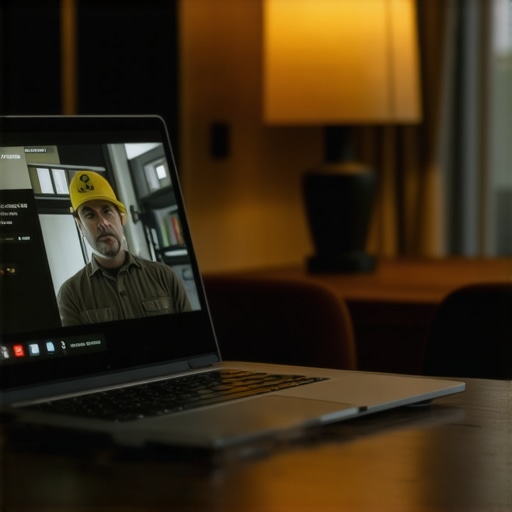
When we jump on a video call to diagnose your system, I’m performing a visual autopsy. We start at the home run—the main circuit path back to the panel. If your lights flicker when the AC kicks on, we’re talking about voltage drop caused by high inrush current. But if they flicker randomly? That’s more sinister. It’s often Cold Creep. This is especially prevalent in mid-century homes with aluminum branch circuits. Aluminum expands and contracts at a different rate than the brass screws on your switches. Over years, this cyclic thermal movement actually pushes the wire out from under the screw. The connection loosens, oxygen gets in, an oxide layer forms—which is an insulator—and suddenly your 120-volt current is trying to punch through a wall of resistance. That’s the ‘flicker’ you see; it’s the arc trying to maintain continuity.
Coastal Context: Why the Salt Air Wants Your Boat Lift Wiring
If you’re living near the coast, your electrical system is under constant chemical attack. Salt air is a brilliant conductor, and it loves to build ‘salt bridges’ between phases in your outdoor equipment. During a virtual walkthrough, I’ll have you point your camera at the boat lift wiring and the meter can. If I see that greenish-white crust—patina on steroids—I know your grounding system is failing. In these environments, an equipotential grid isn’t just a code requirement; it’s the only thing keeping your dock from becoming a giant heating element. We often find that flickering lights inside are actually a symptom of a failing neutral in a salt-corroded service mast. The current can’t find a clean path back to the transformer, so it starts wandering through your cable shields and gas lines. This is why how electricians tackle troubleshooting for lighting installations involves more than just tightening a bulb; it requires a systemic check of the grounding path.
The Hidden Dangers of ‘Modern’ Upgrades
I’ve seen plenty of chandelier installation jobs where a DIYer hung a 50-pound crystal beast on a plastic nail-on box meant for a smoke detector. Through a lens, I look for the tell-tale sag in the canopy. If that box isn’t rated for the weight, the vibration from a whole house fan wiring project in the attic can vibrate those connections loose. Speaking of attics, that’s where the real nightmares live. I’ll ask you to show me the network cable installation. If some data tech ran Cat6 draped over your hot recessed light cans, you’re not just getting slow internet; you’re melting the jacket of your data lines, creating a fire path. We also check for speaker system setup wires that have been stapled too tight, piercing the insulation and creating a high-resistance ground fault that makes your dimmers hum and your lights dance.
“All electrical equipment shall be installed in a neat and workmanlike manner.” – NEC Article 110.12
High-Load Logistics: EVs and Solar
Your house wasn’t designed for the 21st century. When you add a solar panel electrical hookup or an EV charger, you are redlining your bus bars. I’ve seen panels where the main lugs were discolored—a rainbow sheen on the metal that tells me they’ve hit 400 degrees Fahrenheit. If you’re experiencing flickering, we need to look at ensuring safe and efficient EV charging station setup at home. If your charger is pulling 48 amps on a 60-amp breaker in a cramped, unventilated panel, the heat soak will cause every other breaker on that bus to trip prematurely or, worse, fail to trip at all. We also look for generator transfer switch installs that were ‘back-fed’ by a handyman—a deadly setup we call a Widow Maker. During a virtual consult, I look for that suicide cord. If I see it, we stop everything.
From Campers to Flood Zones: Specialized Safety
Whether it’s a camper electrical panel showing signs of vibration-induced loose neutrals or a basement that needs flood water electrical safety protocols, the physics remains the same. If water has touched your outlets, the capillary action pulls moisture up inside the Romex jacket, rotting the copper from the inside out. You might think it dried out, but that ‘monkey shit’ (duct seal) the last guy used didn’t stop the moisture from wicking up. During our session, I’ll guide you to check for ‘tick tracer’ readings where there shouldn’t be any. If your drywall is hot to the touch near a switch, we aren’t just ‘troubleshooting’ anymore; we are in a race against a structure fire. This is why contacting us for a professional eyes-on assessment is the only way to sleep soundly. We ensure every lug is torqued to inch-pounds, not just ‘hand tight,’ because in this game, hand-tight is a house fire waiting for a reason to start.