
The Deceptive Silence of Solar
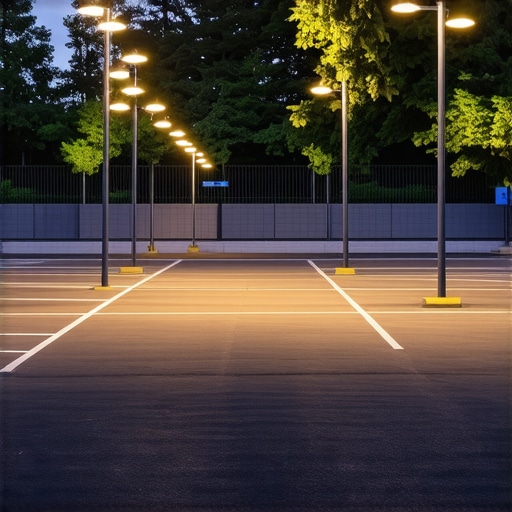
I’ve spent thirty-five years listening to the hum of electricity, and sometimes, the most dangerous thing is the silence. When you walk into a parking lot at 2:00 AM and half the lamps are dark, you aren’t just looking at a maintenance lapse; you’re looking at a failed system. Many property owners think solar-powered parking lot lighting is a ‘plug-and-play’ miracle. They see the lack of trenching and the zero-dollar utility bill and think they’ve cheated the system. But as a forensic inspector, I see the ticking clock. I see the chemical breakdown inside the battery enclosures and the microscopic corrosion on the photovoltaic traces. Before you trade your copper ‘home run’ for a standalone sun-chaser, you need to understand the physics of failure in these units.
The Old Timer’s Lesson: Why Precision Prevents Fire
My journeyman used to smack my hand if I stripped a wire with a knife. ‘You nick the copper, you create a hot spot,’ he’d scream. He was right. That lesson applies twofold to the delicate low-voltage DC connections found in solar lighting arrays. In a standard AC system, a minor nick might survive for years. In a solar luminaire, where you’re dealing with high-amperage battery discharges at night, a single nicked strand or a loose terminal becomes a point of extreme resistance. Resistance creates heat. Heat creates carbon tracking. Carbon tracking leads to a localized fire that melts the controller before it ever thinks about tripping a fuse. Whether we are talking about office lighting upgrades or a complex solar grid, the mechanical integrity of the connection is the only thing standing between you and a catastrophic failure.
“Aluminum wire connections can overheat and cause a fire without tripping the circuit breaker.” – CPSC Safety Alert 516
The Anatomy of the Solar Time Bomb
Let’s talk about the ‘Component Zooming’ of a solar pole. You have the panel, the controller, the battery, and the LED head. In a coastal environment, the enemy is relentless. Salt air doesn’t just sit on the surface; it’s an electrolyte. It finds its way into the gaskets and initiates a galvanic reaction between the aluminum housing and the stainless steel fasteners. This is why electrical safety audits are non-negotiable for outdoor assets. I’ve seen meter cans and solar controllers rot from the inside out because the installer forgot a dab of ‘monkey shit’ (duct seal) in the conduit entry. When salt bridges the gap between phases on a circuit board, the whole unit goes into thermal runaway.
Pros: The Allure of Grid Independence
The primary advantage of solar is, of course, the avoidance of the ‘Widow Maker’—that high-voltage underground line that’s been buried for forty years without a map. Avoiding trenching means you aren’t disturbing the existing asphalt or risking a hit on a gas main. For temporary power services or remote lots where the utility company wants fifty grand just to drop a transformer, solar is the king. It’s also a way to secure warranty backed repairs through modular replacement rather than digging up 500 feet of faulted Romex. Plus, for those looking to support local businesses, many firms offer a military discount wiring program for veterans transitioning their properties to sustainable tech.
Cons: The Harsh Physics of Photovoltaics
Here is where the marketing gloss wears off. A solar light is only as good as its battery chemistry. Most of these units use Lithium Iron Phosphate (LiFePO4) or deep-cycle AGM batteries. In the heat of a Florida or California summer, the internal temperature of a pole-mounted battery box can hit 140 degrees Fahrenheit. This accelerates ‘sulfation’ in lead-acid or electrolyte depletion in lithium cells. You also have to deal with harmonic distortion if the DC-to-AC inverters are cheaply made, though most modern LEDs run straight DC. If you find your lights flickering, you might need harmonic filter services or a better charge controller. I’ve seen cheap drivers fail so often that they make a standard kitchen range hood wiring job look like NASA engineering. If your system is failing, you might need to check how electricians tackle troubleshooting for lighting installations to see where the bottleneck is.
The Forensic Breakdown: Why They Fail
When I do a forensic inspection on a dark lot, I pull out my ‘Wiggy’ or a high-end multimeter and start at the battery. If the voltage is sitting at 10.5V, the battery is toast. But why? Usually, it’s ‘Cold Creep.’ Even in copper-clad systems, thermal expansion and contraction cause screws to back out. A loose screw on a solar controller causes a voltage drop. The controller ‘thinks’ the battery is charged when it isn’t, leading to a shallow cycle that kills the cells. This is why I always recommend a virtual consultation wiring review before a property manager signs a contract for 100 poles. You need to know the ‘L-10’ life of the bearings in the wind-rated mounts and the micron-rating of the powder coating. If you’re adding these to a residential setting, like patio cover outlets or even a PA system installation, the load calculations must be spot on or you’ll be sitting in the dark by October.
“All equipment shall be installed and used in accordance with the instructions included in the listing or labeling.” – NEC Article 110.3(B)
The Maintenance Reality
You don’t just ‘install’ solar. You marry it. Those panels need cleaning. A layer of bird droppings or sea salt can drop your charging efficiency by 30% in a month. Without that current, the battery never reaches ‘float’ stage, and the lifespan is cut in half. If you aren’t prepared for that, stick to a wired ‘rough-in’ and ‘trim-out.’ At least with a hardwired system, if the light goes out, you know it’s either the breaker or the bulb—not a complex chemical failure happening 25 feet in the air. For those who insist on the best, ensure you have a pro who knows how to torque every lug to the inch-pound specified. If you’re struggling with existing tech, you can always contact us for a real-world assessment. Don’t let a ‘handyman special’ turn your parking lot into a liability. Sleep at night knowing your connections are torqued, your seals are tight, and your grounding rods are deep. Electricity isn’t a hobby—it’s a force of nature that’s always looking for a way to ground out. Don’t give it one.