
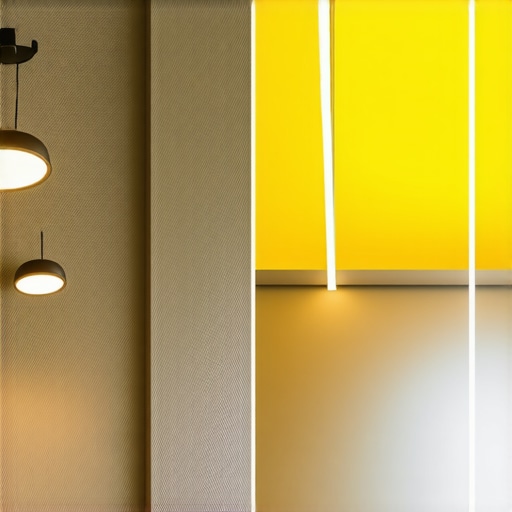
Listen closely. If you’re standing in a warehouse or an old retail space and you hear a persistent, low-frequency hum coming from above, that’s not the sound of productivity. That’s the sound of resistance. As a forensic inspector, that hum tells me that your old track lighting is currently converting your expensive electricity into useless heat and microscopic arcing. I’ve spent 35 years pulling charred 1970s-era tracks off ceilings, and let me tell you, the difference between those ancient copper-strip heaters and modern LED rails isn’t just about the light quality—it’s about whether you’re going to need a fire damage wiring restoration team next Tuesday.
The Flipper Special: A Lesson in Hidden Dangers
I walked into a ‘fully renovated’ kitchen last year where the flipper had installed high-end granite but left the original 1980s J-style track lighting. They’d buried the live junction boxes behind a new tile backsplash, thinking no one would notice. I found them with my tick tracer because the entire wall was radiating an electromagnetic field. The track itself was so warped from decades of halogen heat that the heads were barely making contact. I touched the rail with my Wiggy, and it wasn’t even grounded. The flipper had cut the ground wire back to the Romex jacket to make it ‘fit better.’ That’s not a renovation; it’s a death trap. This is why we insist on a proper rough-in and trim-out by actual electricians, not a guy with a bucket of joint compound and a dream.
The Anatomy of Failure: Why Old Tracks Die
To understand the danger, we have to look at Component Zooming. In an old track system, you have a literal ‘bus bar’ of copper running the length of a plastic-lined rail. Over time, halogen bulbs—which operate at temperatures high enough to sear a steak—cause the plastic housing to become brittle. This is where Cold Creep and thermal expansion come into play. Every time you flip the switch, the metal expands. When you turn it off, it contracts. After 20 years, those copper strips start to pull away from the housing. This creates a gap. Electricity hates a gap. It will jump that gap, creating a micro-arc that carbonizes the plastic. Carbon is conductive. Once you have a carbon path, you have a fire.
“Aluminum wire connections can overheat and cause a fire without tripping the circuit breaker.” — CPSC Safety Alert 516
While many tracks are copper, the older overhead service drop and subpanel installation points often utilized aluminum in mid-century builds. When you mix those old aluminum feeds with the high current draw of vintage track lighting, you’re asking for a meltdown. This is why a warehouse lighting retrofit is the only sane move for commercial properties. Modern LED rails don’t use these flimsy tension-fit contacts; they use integrated drivers and solid-state connections that don’t vibrate themselves to death.
Vibration Analysis and Industrial Decay
In a warehouse environment, we often perform vibration analysis services. You’d be surprised how much the constant thrum of heavy machinery affects your lighting. Old track heads are held in place by friction and a prayer. Constant vibration loosens the connection between the head and the rail. This increased resistance leads to ‘Ohmic Heating.’ I’ve seen deck lighting services where the salt air (if you’re near the coast) has completely corroded the track pins, turning a 120V rail into a series of glowing hot spots. If you’re seeing flickering, don’t just hit the rail with a broom handle. You need a warranty backed repairs specialist to look at the integrity of the line.
LED Rails: The Engineering Superiority
Modern LED rails aren’t just ‘track lighting 2.0.’ They are fundamentally different beasts. First, the heat dissipation is handled by extruded aluminum heat sinks that keep the diodes cool, preventing the insulation brittleness that plagues old systems. Second, the power draw is a fraction of the old stuff. When I do an EV charger installation, I often find that the subpanel installation is already maxed out because the building is still running 5,000 watts of old incandescent tracks. By switching to LED rails, we free up enough ‘overhead’ on the load calculation to install a Level 2 charger or an energy storage systems without a massive heavy-up.
“Luminaires, lampholders, and rosettes shall be securely supported.” — NEC 410.36
If your tracks are sagging or the heads are drooping, you’re in violation of the NEC. It’s that simple. In tiny home wiring, where space is tight and heat builds up fast, using old-style tracks is practically an invitation for a disaster. You want a home run back to the panel that is clean, torqued to spec, and running cool LED tech. For those looking for more detail, check out this lighting installations guide.
The Forensic Conclusion: Don’t Repair, Replace
Whenever I see a ‘burn mark’ on a track, I tell the client the same thing: The system has reached its end of life. You can’t just swap the head. The rail itself is compromised. Trying to fix it with some electrical tape and monkey shit (duct seal) is a fool’s errand. You’re better off pulling it all down, using your dikes to clip the old wires, and starting fresh with a system that won’t keep you awake at night. If you’re dealing with flickering or smells of ozone, you need to troubleshoot your lighting immediately or contact a professional before the drywall starts smoking. Electricity isn’t a hobby, and it certainly doesn’t forgive ‘good enough.’ Get it torqued, get it grounded, and get it right.