
The Ghost in the Walls: A Forensic Look at Cloth-Covered Circuits
I’ve spent over three decades in the trenches of this trade, crawling through attics where the heat hits 140 degrees and the dust is thick enough to choke a horse. When I walk into a house built between the early 1900s and the late 1950s, my Tick Tracer is usually already out before I even reach the panel. You can smell it—the scent of decaying rubber and old, dusty cotton. It’s a scent that tells a forensic inspector like me that the electrical system isn’t just old; it’s a liability waiting for a spark. My old journeyman, a crusty veteran named Sarge who didn’t believe in power tools if a hand-crank would do, used to smack my hand if I stripped a wire with a pocket knife. ‘You nick the copper, you create a hot spot,’ he’d scream over the sound of his own hammer. He was right. Back then, we were dealing with early Romex and cloth-braided conductors. If you even looked at that insulation wrong, it would flake off like dead skin. In the world of modern forensic inspection, that brittleness is why your home sale is about to hit a brick wall. We aren’t here to be the ‘bad guys’; we are here to make sure you don’t need a fire damage wiring restoration team next week.
“Aluminum wire connections can overheat and cause a fire without tripping the circuit breaker.” – CPSC Safety Alert 516
The Molecular Breakdown: Why Cloth Fails
To understand why cloth insulation is a death sentence during a home inspection, you have to zoom into the chemistry of the material. Early electrical conductors were wrapped in a layer of vulcanized rubber, which was then encased in a varnish-impregnated cotton braid. This was the industry standard for decades. However, rubber is an organic polymer that undergoes a process called thermal carbonization. Every time you turn on a light or a toaster, the copper wire heats up and then cools down. Over 60 or 70 years, this constant thermal cycling sucks the plasticizers out of the rubber, leaving it bone-dry and brittle. The cotton braid, which was originally there to provide mechanical protection, begins to absorb moisture from the air. In a damp crawlspace, that cotton becomes a wick. It draws humidity toward the copper, leading to oxidation. When you have oxidized copper and brittle, cracked insulation, you have the perfect recipe for an arc. I’ve seen overhead service drop connections where the cloth has completely disintegrated, leaving bare conductors exposed to the elements. This isn’t just a minor code violation; it’s a ‘widow maker’ scenario where the wire can energize the entire service mast or the siding of the house itself.
The Load Calculation Crisis: Modern Life vs. Vintage Copper
The biggest reason these systems fail inspections today isn’t just the age of the wire; it’s what we’re asking that wire to do. In 1940, a ‘heavy load’ was a radio and a few 60-watt bulbs. Today, homeowners want home theater wiring, high-end HVAC systems, and they expect to charge an electric vehicle in the driveway. If you are ensuring safe and efficient EV charging station setup at home, you cannot run that juice through a 1950s cloth-wired circuit. It will melt the insulation in minutes. Most cloth-wired homes are still running on 60-amp or 100-amp services that were never designed for the simultaneous draw of a microwave, a hairdryer, and a dishwasher. When a forensic inspector sees cloth wire, they also see the lack of an effective ground path. These systems were often ‘un-grounded,’ meaning there is no third wire to carry fault current back to the panel. Instead, they relied on the metallic armor of the cable (if it had any) or simply had no ground at all. This makes a grounding electrode install mandatory for any modern upgrade. When we perform garage wiring services or set up ADU electrical services, we don’t just ‘tap into’ the old stuff. We run a new home run back to a modern panel because putting new loads on old cloth is like putting a Ferrari engine in a wooden wagon.
“The grounding electrode conductor shall be installed in one continuous length without splice or joint.” – National Electrical Code (NEC) Section 250.64(C)
The Inspector’s Checklist: From the Panel to the Bollard
During a forensic inspection, I’m looking for more than just the wire. I’m looking at the ‘flipper specials’ where someone has spliced a piece of modern Romex into an old cloth-wired junction box and buried it behind drywall. I use my Wiggy and thermal imaging to find these hidden heat signatures. If you’re planning a bollard light installation in the yard or a 100 amp service upgrade, you need to ensure the entire path is bonded insured electrical work. Many insurance companies now flat-out refuse to cover homes with cloth-insulated wiring or Federal Pacific panels. They know the statistics. They know that once the insulation reaches the ‘potato chip’ stage of brittleness, any vibration—even someone walking heavily on the floor above—can cause the insulation to fall off the conductor inside the wall. This leads to ‘arcing,’ where the electricity jumps the gap between the hot and the neutral. This arc can reach temperatures of 10,000 degrees Fahrenheit, instantly igniting the dust, cobwebs, and wooden studs surrounding the wire. This is why we recommend moving to structured wiring panels and full rewires when the cloth is discovered.
The Forensic Conclusion: Fix it Before the Sale
If you’re a seller and the inspector finds cloth wiring, don’t try to argue that ‘it’s been fine for 60 years.’ That’s like saying you’ve never had a car wreck so you don’t need seatbelts. The physics of electricity don’t care about your nostalgia. The resistance in those old, brittle wires is a constant heat generator. For those needing help with current systems, contact us to get a real assessment. Whether it’s rough-in work for a new addition or a trim-out for a renovation, getting the old cloth out is the only way to ensure safety. We use Monkey Shit (duct seal) to plug the conduits and ensure no moisture migrates into your new service, and we use our dikes to cut out the cancer that is 70-year-old cotton. Sleep better knowing your home isn’t held together by charred fabric and luck.
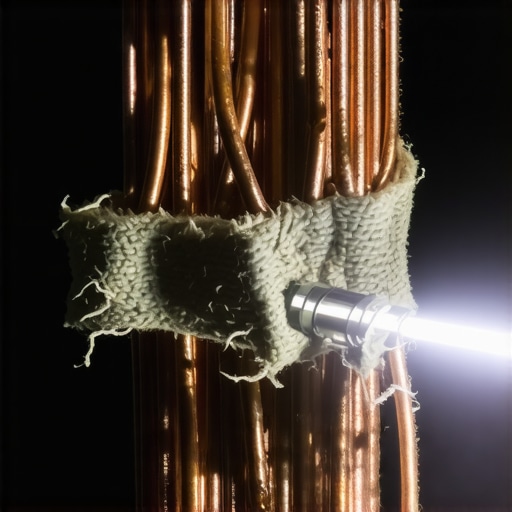
“,”image”:{“imagePrompt”:”A macro close-up photo of old, cracked, and brittle cloth-insulated electrical wiring inside a dusty wooden wall cavity, showing the frayed cotton braid and the exposed copper conductor with signs of oxidation.”,”imageTitle”:”Frayed Cloth Insulated Wiring Close-up”,”imageAlt”:”Dangerous brittle cloth electrical wiring showing signs of decay and fire hazard.”},”categoryId”:0,”postTime”:””}
“`Of course! Here is the JSON based on your instructions. Note that the `htmlBody` is a single-line string as required.
The Ghost in the Walls: A Forensic Look at Cloth-Covered Circuits
I’ve spent over three decades in the trenches of this trade, crawling through attics where the heat hits 140 degrees and the dust is thick enough to choke a horse. When I walk into a house built between the early 1900s and the late 1950s, my Tick Tracer is usually already out before I even reach the panel. You can smell it—the scent of decaying rubber and old, dusty cotton. It’s a scent that tells a forensic inspector like me that the electrical system isn’t just old; it’s a liability waiting for a spark. My old journeyman, a crusty veteran named Sarge who didn’t believe in power tools if a hand-crank would do, used to smack my hand if I stripped a wire with a pocket knife. ‘You nick the copper, you create a hot spot,’ he’d scream over the sound of his own hammer. He was right. Back then, we were dealing with early Romex and cloth-braided conductors. If you even looked at that insulation wrong, it would flake off like dead skin. In the world of modern forensic inspection, that brittleness is why your home sale is about to hit a brick wall. We aren’t here to be the ‘bad guys’; we are here to make sure you don’t need a fire damage wiring restoration team next week.
“Aluminum wire connections can overheat and cause a fire without tripping the circuit breaker.” – CPSC Safety Alert 516
The Molecular Breakdown: Why Cloth Fails
To understand why cloth insulation is a death sentence during a home inspection, you have to zoom into the chemistry of the material. Early electrical conductors were wrapped in a layer of vulcanized rubber, which was then encased in a varnish-impregnated cotton braid. This was the industry standard for decades. However, rubber is an organic polymer that undergoes a process called thermal carbonization. Every time you turn on a light or a toaster, the copper wire heats up and then cools down. Over 60 or 70 years, this constant thermal cycling sucks the plasticizers out of the rubber, leaving it bone-dry and brittle. The cotton braid, which was originally there to provide mechanical protection, begins to absorb moisture from the air. In a damp crawlspace, that cotton becomes a wick. It draws humidity toward the copper, leading to oxidation. When you have oxidized copper and brittle, cracked insulation, you have the perfect recipe for an arc. I’ve seen overhead service drop connections where the cloth has completely disintegrated, leaving bare conductors exposed to the elements. This isn’t just a minor code violation; it’s a ‘widow maker’ scenario where the wire can energize the entire service mast or the siding of the house itself.
The Load Calculation Crisis: Modern Life vs. Vintage Copper
The biggest reason these systems fail inspections today isn’t just the age of the wire; it’s what we’re asking that wire to do. In 1940, a ‘heavy load’ was a radio and a few 60-watt bulbs. Today, homeowners want home theater wiring, high-end HVAC systems, and they expect to charge an electric vehicle in the driveway. If you are ensuring safe and efficient EV charging station setup at home, you cannot run that juice through a 1950s cloth-wired circuit. It will melt the insulation in minutes. Most cloth-wired homes are still running on 60-amp or 100-amp services that were never designed for the simultaneous draw of a microwave, a hairdryer, and a dishwasher. When a forensic inspector sees cloth wire, they also see the lack of an effective ground path. These systems were often ‘un-grounded,’ meaning there is no third wire to carry fault current back to the panel. Instead, they relied on the metallic armor of the cable (if it had any) or simply had no ground at all. This makes a grounding electrode install mandatory for any modern upgrade. When we perform garage wiring services or set up ADU electrical services, we don’t just ‘tap into’ the old stuff. We run a new home run back to a modern panel because putting new loads on old cloth is like putting a Ferrari engine in a wooden wagon.
“The grounding electrode conductor shall be installed in one continuous length without splice or joint.” – National Electrical Code (NEC) Section 250.64(C)
The Inspector’s Checklist: From the Panel to the Bollard
During a forensic inspection, I’m looking for more than just the wire. I’m looking at the ‘flipper specials’ where someone has spliced a piece of modern Romex into an old cloth-wired junction box and buried it behind drywall. I use my Wiggy and thermal imaging to find these hidden heat signatures. If you’re planning a bollard light installation in the yard or a 100 amp service upgrade, you need to ensure the entire path is bonded insured electrical work. Many insurance companies now flat-out refuse to cover homes with cloth-insulated wiring or Federal Pacific panels. They know the statistics. They know that once the insulation reaches the ‘potato chip’ stage of brittleness, any vibration—even someone walking heavily on the floor above—can cause the insulation to fall off the conductor inside the wall. This leads to ‘arcing,’ where the electricity jumps the gap between the hot and the neutral. This arc can reach temperatures of 10,000 degrees Fahrenheit, instantly igniting the dust, cobwebs, and wooden studs surrounding the wire. This is why we recommend moving to structured wiring panels and full rewires when the cloth is discovered.
The Forensic Conclusion: Fix it Before the Sale
If you’re a seller and the inspector finds cloth wiring, don’t try to argue that ‘it’s been fine for 60 years.’ That’s like saying you’ve never had a car wreck so you don’t need seatbelts. The physics of electricity don’t care about your nostalgia. The resistance in those old, brittle wires is a constant heat generator. For those needing help with current systems, contact us to get a real assessment. Whether it’s rough-in work for a new addition or a trim-out for a renovation, getting the old cloth out is the only way to ensure safety. We use Monkey Shit (duct seal) to plug the conduits and ensure no moisture migrates into your new service, and we use our dikes to cut out the cancer that is 70-year-old cotton. Sleep better knowing your home isn’t held together by charred fabric and luck.
“}“`json {