
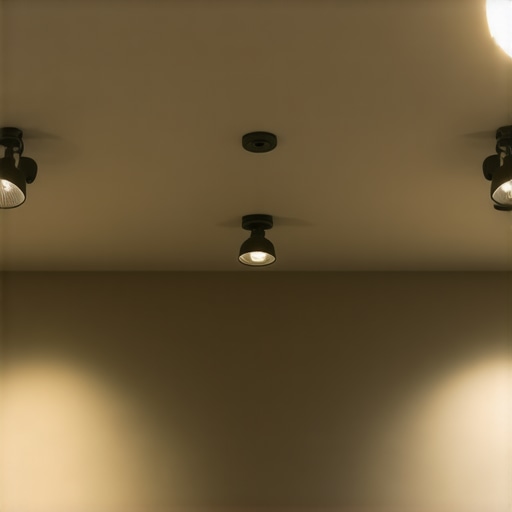
You smell it before you see it. That unmistakable, acrid scent of ozone and melting phenolic plastic wafting down from a vaulted ceiling. To a homeowner, it is a mystery; to me, a guy who has spent 35 years tracking down the failures that lead to structural fires, it is a crime scene. When I walk into a mid-century home with those beautiful, sweeping sloped ceilings, I do not see architecture; I see mechanical stress. Traditional heavy fixtures hanging from an angled junction box are a disaster waiting to happen. The physics of gravity combined with 1970s-era wiring is a recipe for a 3:00 AM call for storm damage electrical repair or worse. My old journeyman used to smack my hand if I stripped a wire with a pocket knife. ‘You nick the copper, you create a hot spot,’ he would scream. He was right. Every tiny imperfection, every bit of physical strain on a conductor, eventually becomes heat. On a sloped ceiling, that strain is constant. This is why I refuse to install heavy chandeliers on an incline. Instead, I advocate for track lighting—the only system that respects the laws of physics and the National Electrical Code in these challenging spaces.
The Forensic Breakdown: Why Traditional Fixtures Fail on Slopes
When you mount a standard fixture to a sloped ceiling, you are fighting a losing battle against leverage. A standard junction box is designed to hold weight pulling straight down. On a slope, the weight pulls at an angle, putting massive shear stress on the mounting screws and the box’s ears. In older homes with mid-century aluminum wiring, this is where the ‘Time Bomb’ starts ticking. Aluminum has a high coefficient of thermal expansion—it grows and shrinks significantly as current flows through it. This leads to a phenomenon called ‘Cold Creep.’ As the metal moves, and the weight of the fixture pulls at an angle, the connection at the wire nut loosens. Once you have a gap, you have an arc. I have seen boxes where the plastic has turned into a charred husk because the homeowner wanted a ‘trendy’ heavy pendant on a 12-pitch roof line. This is a primary focus during any troubleshooting for lighting installations. We use a Wiggy to test the voltage drop, and usually, the culprit is a loose neutral that has been vibrating in the wind for a decade.
“Aluminum wire connections can overheat and cause a fire without tripping the circuit breaker.” – CPSC Safety Alert 516
Track lighting solves this through weight distribution. By spreading the load across a three-to-eight-foot rail, you are not relying on a single set of 8-32 screws in a plastic box. You are anchoring into the structural rafters. This is part of what we call the rough-in phase: ensuring that the backbone of the system can handle the load. When we do a lighting installation, we aren’t just looking for light; we are looking for structural integrity. If you are in a coastal area, salt air corrosion can eat through standard steel fixtures in years, but a well-sealed aluminum track with stainless hardware can survive the humidity. I always pack my conduits with Monkey Shit (duct seal) to keep the moisture from traveling from the exterior to the interior junction points, especially if the track is near a whole house fan wiring system that creates pressure differentials.
The Anatomy of a Track System: Component Zooming
Let’s talk about the bus bars inside that track. A high-quality track uses solid copper bus bars housed in a PVC insulator. In cheaper, big-box store versions, these bus bars are flimsy and can easily pit if the track heads are not seated perfectly. If you have an RV hookup installation or a home backup generator install, you know that power quality matters. Poorly seated track heads create micro-arcs every time the house vibrates—from a passing truck or a heavy storm. These micro-arcs generate heat, and over time, the PVC housing becomes brittle. This is why preventative electrical maintenance is not a luxury; it is a necessity. During a trim-out, I always use my dikes to ensure every lead is cleanly cut and use a torque screwdriver to hit the exact inch-pounds required by the manufacturer. If you just ‘hand-tighten’ it, you are inviting thermal expansion to ruin your day. This is the same reason why we see so many holiday emergency calls; people plug too many strings of lights into a single circuit, and the weakest link—usually a poorly torqued connector in a junction box—glows cherry red.
Why the Slope Demands Flexibility
Sloped ceilings often lack the attic space for recessed cans. If you try to ‘trench’ into the insulation, you destroy your home’s R-value and risk a fire by burying a non-IC rated fixture. Track lighting sits on the surface. It allows us to run a single home run from the switch box and then distribute light exactly where it is needed without cutting twenty holes in your vapor barrier. For homeowners looking into rebate assistance programs, upgrading to high-efficiency LED track lighting often qualifies because you are reducing the overall wattage while improving the light distribution. It is a smarter way to handle permanent holiday lighting too; you can use the track to power accent lights that stay up year-round without looking like a tangled mess of Romex. When we perform a pathway lighting install or a backyard lighting project, we use the same logic: keep the connections accessible, keep the weight distributed, and never trust a mechanical fastener to do a structural job. If your lights flicker when the fridge kicks on, don’t ignore it. Use a tick tracer to see if you have voltage leaking onto your ground wire. Better yet, call a professional who knows the difference between a ‘handyman fix’ and a code-compliant solution.
“Electrical equipment shall be installed in a neat and workmanlike manner.” – NEC 110.12
In the end, track lighting isn’t about the ‘look’—it’s about the physics. It’s about ensuring that your home’s electrical system isn’t under constant mechanical stress. Whether you are doing an EV charging station setup or just changing out a bedroom fixture, you have to respect the wire. If you treat it like a hobby, it will bite you. Treat it like the high-energy, heat-producing system it is, and you can sleep at night knowing your connections are torqued and your house isn’t the next autopsy on my list.