
The Ghost in the Meter Socket: A Forensic Electrician’s Perspective
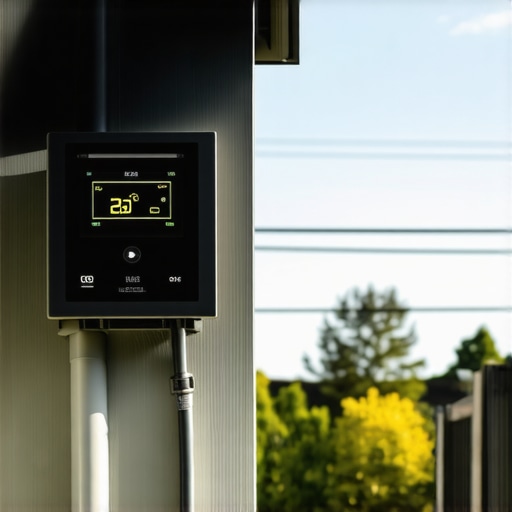
I’ve spent thirty-five years pulling dead mice out of disconnects and smelling the sickly-sweet scent of melting PVC. You learn a lot about a house when you pull the meter. Most homeowners treat that glass dome on the side of their house like a lawn ornament, but to a forensic inspector, it’s the heartbeat of the entire infrastructure. Right now, utilities across the country are pushing for Advanced Metering Infrastructure (AMI)—the industry term for smart meters. They aren’t doing it because they’re bored; they’re doing it because your 1974 mechanical meter is a ticking clock that’s about to run out of spring tension. My journeyman used to smack my hand if I stripped a wire with a knife. ‘You nick the copper, you create a hot spot,’ he’d scream. He was right. And those old mechanical meters? They are the ultimate ‘hot spot’ waiting to happen as our electrical demand skyrockets with things like hot tub wiring services and dual EV chargers.
“All services in dwelling units shall be provided with a surge protective device (SPD) as an integral part of the equipment or located immediately adjacent.” – NEC 2020/2023 Article 230.67
Blueprint of a Time Bomb: Why Old Infrastructure Fails
Let’s talk about the physics of the ‘Time Bomb’ scenario. Most mid-century homes were built with a 100-amp or maybe a 150-amp service. Back then, your biggest load was a toaster and a black-and-white TV. Now, we’re talking about smart home wiring, high-draw kitchen range hood wiring, and the massive current required for a modern 400 amp service entrance upgrade. When you keep the old mechanical meter, you’re relying on physical gears and a rotating disk. Over time, friction increases. The magnetic drag changes. But the real danger isn’t just inaccurate billing; it’s the physical connection. I’ve performed thermal imaging inspections on meter cans where the jaws holding the meter stabs had lost their ‘spring’ due to decades of thermal expansion and contraction—a phenomenon we call Cold Creep. In aluminum-heavy 1970s builds, this is a recipe for an arc flash. The utility wants smart meters because they can detect these voltage fluctuations and heat signatures remotely before the box melts off the side of your house.
The Forensic Breakdown: AMI vs. The Mechanical Dinosaur
When we do a rough-in for a new overhead service drop, we look at the tension on the mast. Old meters don’t communicate. If your neutral wire is corroding—a common issue in coastal or high-humidity areas—your lights might flicker, but the utility has no idea until you call them. A smart meter identifies that ‘floating neutral’ instantly. This prevents the dreaded 240V surge into your 120V circuits that fries every appliance in the house. If you’re planning on trenching electrical conduit for a backyard ADU or adding hot tub wiring services, that smart meter becomes your first line of defense. It monitors the total harmonic distortion and the peak load. We often find that people are exceeding their service capacity without knowing it until we come in with a Wiggy or a Tick Tracer and see the wires turning brown under the electrical tape.
“Aluminum wire connections can overheat and cause a fire without tripping the circuit breaker.” – CPSC Safety Alert 516
Code Updates and Modern Protection
Recent NEC code updates have made it clear that we are moving toward a more monitored environment. This isn’t just about ‘big brother’ watching your power usage; it’s about preventing the catastrophic failures I see in my forensic work. For instance, the transition to a 400 amp service entrance often requires a complete rethink of the overhead service drop or the underground feed. Without a smart meter to provide data on real-time demand, homeowners often over-invest or under-protect. When we do drone light inspections for commercial properties or large estates, we see the physical wear on the weather head that a smart meter’s data would have flagged months earlier as a ‘line-side’ resistance issue. If you are worried about your current setup, you should look into professional electrical inspections to ensure your system can handle the upgrade.
Thermal Imaging and the Invisible Enemy
Resistance is the enemy of every electrician. In a phone line installation, resistance just means a crackly call. In a service entrance, resistance means 3000 degrees Fahrenheit. During my thermal imaging inspections, I look for ‘hot lugs.’ A smart meter installation gives the utility a reason to have a technician actually look at your meter jaws. If they find ‘Monkey Shit’ (duct seal) that has dried out or signs of water ingress, they can stop a fire before it starts. This is especially critical for those with modern high-load tech. If you’ve recently performed an EV charging station setup at home, your load profile has changed. You aren’t just a residential consumer anymore; you’re running the equivalent of a small industrial shop’s load every night while you sleep. The utility needs to know if the transformer on the pole can handle that, and the smart meter is the only way they can balance that load across the neighborhood grid.
The Final Torque: Why You Shouldn’t Resist
I get the skepticism. People hate change, and they hate the idea of a digital eye on their house. But as someone who has stood in the ashes of a house because a Zinsco breaker didn’t trip or a meter stab arced out, I’m telling you: the data is your friend. Whether it’s ensuring your smart home wiring is functioning or checking that your kitchen range hood wiring isn’t overtaxing a branch circuit, the smart meter is the gateway to a safer home. It’s part of a larger ecosystem of safety that includes modern lighting installations and AFCI protection. Don’t be the person who waits for the smell of ozone to realize their 1960s electrical system is failing. Get the meter, get the inspection, and sleep at night knowing your lugs are torqued and your service is monitored. Use your dikes to cut the ties to the past and embrace a system that actually tells you when it’s dying.