
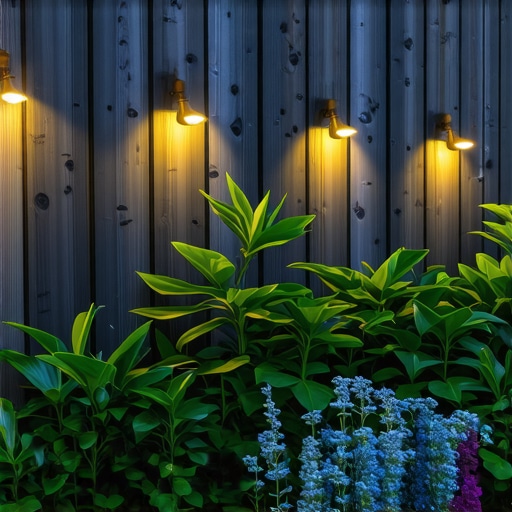
The Voltage Trap: Why Your Garden Lighting is a Potential Fire Hazard
I’ve spent thirty-five years pulling mud-caked Romex out of trenches that were dug with nothing but hope and a lack of respect for physics. Most homeowners look at a fence and see a decorative border; I see a giant, wooden lightning rod that people want to lace with 120 volts of electricity. Wiring outdoor fence lights isn’t just about making your hydrangeas look pretty at 10 PM. It’s about ensuring that a rainy Tuesday doesn’t turn your backyard into a live-wire graveyard. If you’re planning on adding lighting while balancing the load of a level 2 EV charger or a high-end home theater wiring setup, you need to understand that your service panel is a finite resource. One wrong move, and you’re looking at same day service appointments just to keep the fridge running.
The Old Timer’s Lesson: The Sin of the Nicked Conductor
My journeyman used to smack my hand if I stripped a wire with a knife. ‘You nick the copper, you create a hot spot,’ he’d scream. He was right. In the world of outdoor wiring, a nicked conductor is a death sentence. You might get the lights to turn on for the first month, but that small scratch in the copper becomes the focal point for resistance. Resistance creates heat. Heat in a garden setting, surrounded by mulch and dry cedar fencing, is how you end up calling the fire department instead of your landscaper. When we do a rough-in for outdoor lighting, we use dikes and specialized strippers to ensure the integrity of the wire remains surgical. We aren’t just ‘installing lights’; we are managing the thermal expansion and contraction of metal in a hostile environment.
“Wiring intended for wet locations must be specifically listed for such use to prevent insulation breakdown and hazardous leakage current.” – National Electrical Code (NEC) Article 300.5
The Enemy Below: Salt, Soil, and Cold Creep
If you live near the coast, your garden is a chemical war zone. Salt air doesn’t just sit on your fence; it bridges the gap between phases in your outdoor junction boxes. I’ve seen brass screws in ‘weatherproof’ fixtures turn into a pile of green dust because of galvanic reaction. This is where preventative electrical maintenance becomes your only shield. When we run a home run from the panel to the backyard, we aren’t just tossing wire in a hole. We’re talking about Schedule 40 PVC conduit buried at a minimum of 18 inches—or 24 if you’re under a driveway. I’ve seen ‘handymen’ bury UF-B cable three inches under the sod. One pass with a sharp spade during spring planting and you’ve got a widow maker hidden in the dirt. You need to use monkey shit—that’s duct seal in trade talk—to plug the ends of your conduits. If you don’t, the temperature differential between the warm house and the cold ground will turn your conduit into a straw, sucking moisture directly into your main service panel.
The Load Calculation: Is Your Panel Gasped Out?
Before you even think about lighting-installations-made-easy-a-step-by-step-electrician-guide, you need to look at your service mast. If you’re living in a mid-century home with cloth insulated wiring replacement needs, your 100-amp panel is likely already redlining. Adding a series of 150-watt halogen fence lights could be the straw that breaks the camel’s back, especially if you’re also looking into ensuring-safe-and-efficient-ev-charging-station-setup-at-home. This is where a service entrance upgrade becomes mandatory. Modern life demands more juice. Between your demand response systems and that new hot tub, your old Zinsco or Federal Pacific panel—which I call ‘the insurance adjuster’s nightmare’—isn’t going to cut it. These old breakers jam; they don’t trip. They just sit there and cook the bus bar until the whole enclosure glows cherry red.
“Aluminum wire connections can overheat and cause a fire without tripping the circuit breaker.” – CPSC Safety Alert 516
The Forensic Breakdown of a Garden Failure
When I’m called for how-electricians-tackle-troubleshooting-for-lighting-installations, I start at the GFCI. If it’s tripping, it’s doing its job. Usually, I find that someone used indoor-rated wire nuts inside a ‘weatherproof’ box. In the trade, we call that a ‘ticking time bomb.’ You need silicone-filled connectors that prevent oxygen and moisture from reaching the copper. Without them, oxidation layers form. This increases resistance, which drops the voltage, which makes your lights dim and your wires hot. If you’re seeing flickering, don’t ignore it. That’s the sound of electricity trying to jump a gap. If you’re worried about the cost of doing it right, many firms offer financing electrical upgrades to ensure you aren’t choosing between a beautiful garden and a safe house. Whether it’s home rewiring services or just a commercial electrical services grade outdoor setup, the physics remains the same: ground it, shield it, and torque it to spec.
Final Inspection: Sleep Better Knowing It’s Torqued
Don’t let a ‘trim-out’ fool you into thinking the job is simple. Every connection point is a potential point of failure. I always use my wiggy to test for phantom voltage and a tick tracer to ensure no one’s buried a live line where it shouldn’t be. If you’re running into ev-charger-troubleshooting-expert-tips-to-fix-common-issues while trying to wire your fence, it’s a sign your system is imbalanced. Electricity is not a hobby; it’s a force of nature that we’ve temporarily tricked into staying inside copper tubes. If you’re unsure, contact-us for a professional evaluation. We’ve also got top-ev-charger-maintenance-tips-for-optimal-performance for those who are fully modernizing their properties. At the end of the day, I want you to look at your illuminated garden and see beauty—not a forensic inspector like me standing there with a thermal camera wondering why your mulch is smoking. Check our privacy-policy for how we handle your data, but more importantly, check your grounding rods. Because the earth doesn’t care about your garden design; it only cares about completing the circuit.