
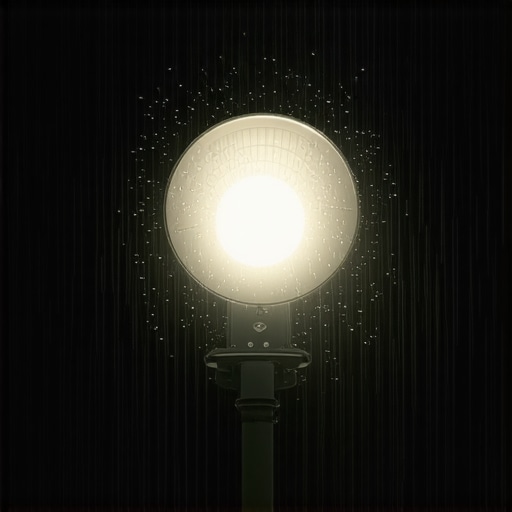
You smell it before you see the smoke. That metallic, ozone-heavy stench of a short circuit. I’ve spent thirty-five years pulling fried components out of soggy junction boxes, and it’s always the same story: a homeowner bought a ‘weatherproof’ light from a big-box store, and the first tropical downpour turned it into a high-voltage aquarium. When we talk about a lighting install for a driveway that faces heavy rain, we aren’t just picking out a pretty fixture; we are engaging in a battle against the relentless physics of water intrusion and electrolysis.
The Lesson of the Nicked Copper
My old journeyman used to smack my hand with a pair of dikes if I ever stripped a wire with a pocketknife. ‘You nick that copper, you create a hot spot,’ he’d scream over the sound of a jobsite generator. At the time, I thought he was just a mean old-timer. But decades later, I saw exactly what he meant. I was troubleshooting a driveway circuit after a week of torrential rain. The AFCI breaker services kept tripping, and the owner was frustrated. I traced the home run back to a sensor light where the previous installer had nicked the insulation. That tiny scratch allowed moisture to enter the wire’s core. Through capillary action, the water traveled six feet up the Romex inside the conduit, corroding the wire from the inside out until it reached the main housing. He was right; that tiny nick created a point of resistance that eventually cooked the fixture. If you want to understand the stakes, read our guide on lighting installations made easy, though ‘easy’ is a relative term when you’re fighting Mother Nature.
The Forensic Breakdown: Why Your Sensor Light Failed
Most driveway lights fail not because of the rain itself, but because of thermal expansion and contraction. During a heavy storm, the temperature of the fixture drops rapidly. This creates a vacuum effect. If the seals aren’t industrial grade, that vacuum sucks moisture through the gasket. Once water hits the PCB (printed circuit board) of the motion sensor, it’s game over. You get ‘ghost switching’ where the light stays on forever, or worse, a dead short that forces you to look into load center upgrades because your old Zinsco panel can’t handle the surge.
“Aluminum wire connections can overheat and cause a fire without tripping the circuit breaker.” – CPSC Safety Alert 516
While the CPSC focuses on aluminum, the same principle of ‘creeping failure’ applies to moisture in sensor lights. Water creates a bridge between the hot and neutral terminals. This resistance generates heat, which degrades the plastic housing, making it even more porous for the next storm. This is why we insist on warranty backed repairs and high-quality components.
Selecting the Right IP Rating
Don’t look at the box’s marketing fluff. Look for the IP (Ingress Protection) rating. For a driveway light in a high-rain environment, IP44 is a joke. You need at least IP65. This means the unit is dust-tight and protected against water jets. But even an IP65 rating won’t save you if you don’t use monkey shit—that’s trade talk for duct seal—around the entry point of the mounting box. If you don’t seal the back of the fixture, water will run down the siding, get behind the plate, and rot out your rough-in box. If you’ve already got a mess on your hands, you might need to see how electricians tackle troubleshooting to save the circuit.
The Infrastructure: More Than Just a Bulb
A heavy-duty lighting setup often reveals weaknesses in the rest of your system. If you’re adding high-output LED floods to a driveway, you need to ensure your 400 amp service entrance or even a standard 200 amp panel is up to the task. Modern outdoor lighting should ideally be on its own circuit, especially if you have sensitive electronics like fiber optic cabling or home theater wiring in the house that could be affected by electrical noise from a failing ballast. We often find that homes requiring robust outdoor lighting also benefit from a portable generator hookup or main disconnect services to ensure that if a storm does take out the local grid, your security lighting stays live via backup. For those with electric vehicles, remember that your outdoor lighting and charging infrastructure share the same environmental stressors; check out ensuring safe and efficient EV charging to see how we weatherize high-voltage systems.
“The technical requirements for outdoor installations must account for the corrosive effects of moisture and the mechanical protection of conductors.” – NFPA 70 (National Electrical Code)
The Forensic Fix: Professional Installation
When we do a trim-out on a driveway sensor light, we don’t just screw it in. We use stainless steel hardware to prevent galvanic corrosion. We apply dielectric grease to the bulb sockets and the sensor terminals. We use a Wiggy or a tick tracer to verify that the polarity is perfect, as reversed polarity in a wet environment is a widow maker waiting to happen. If your current lights are flickering or dimming during rain, it’s not a ‘quirk’—it’s a warning. You might need temporary power services while we perform load center upgrades to fix a compromised main lug. Don’t wait until the smell of ozone becomes a fire in the attic. Reach out to us at our contact page before the next storm rolls in. Picking the right light is about more than lumens; it’s about ensuring your home remains a fortress against the elements, not a liability.