
The Truth About Aluminum Wiring in Your Mid-Century Home
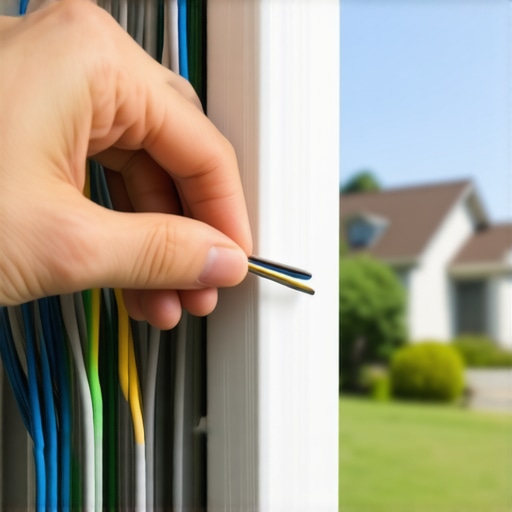
If your home was built between 1965 and 1978, you are likely living with a technical time bomb hidden behind your drywall. During that era, the price of copper skyrocketed due to the Vietnam War, and the construction industry pivoted to aluminum. It seemed like a brilliant cost-saving measure at the time, but thirty-five years of forensic electrical inspections have proven otherwise. Aluminum isn’t inherently evil, but it’s temperamental, and when it’s handled with the same tools and techniques as copper, it becomes a lethal fire hazard.
I recently walked into a ‘fully renovated’ 1972 split-level where the kitchen looked like a magazine cover. The flipper had installed high-end granite and subway tile, but my tick tracer was screaming near the backsplash even when nothing was plugged in. I pulled the cover plate off a GFI and found a disaster: the flipper had used standard yellow wire nuts to pigtail copper to the original aluminum home run. The insulation was already brittle, turning a charcoal black, and the smell of ozone was unmistakable. They’d buried three more junction boxes behind the new cabinets to avoid the cost of a proper rewire. That is how you burn a house down for a 20% profit margin. This wasn’t just a mistake; it was professional negligence.
The Physics of Failure: Why Aluminum Moves
To understand why aluminum wiring fails, you have to look at the metallurgy. Aluminum has a significantly higher coefficient of thermal expansion than copper. This means that every time you pull a load—whether it is a bathroom exhaust fan or a microwave—the wire heats up and expands. When the load stops, it cools and contracts. This cycle, known as ‘Cold Creep,’ causes the wire to slowly work its way out from under the terminal screws of your switches and outlets. As the connection loosens, the gap creates resistance. Resistance creates heat. Heat creates more oxidation.
“Aluminum wire connections can overheat and cause a fire without tripping the circuit breaker.” – CPSC Safety Alert 516
Furthermore, aluminum oxidizes the moment it is exposed to air. Unlike copper oxide, which is still somewhat conductive, aluminum oxide is an insulator. This layer of oxidation acts as a barrier to current flow, driving up resistance even further. When you combine cold creep with an insulating oxidation layer, you get a localized heat source that can exceed 1,000 degrees Fahrenheit. This is enough to ignite the plastic box, the wood stud, or the Romex jacket before a breaker ever thinks about tripping.
[IMAGE_PLACEHOLDER]
The Danger of the Legacy Panel
In many of these mid-century neighborhoods, aluminum wiring is paired with another nightmare: Federal Pacific Electric (FPE) or Zinsco panels. These panels are the ‘Widow Makers’ of the electrical world. In a forensic autopsy of a failed system, we often find that the breaker failed to trip during a dead short because the internal pivot points jammed. If you are looking at a Stab-Lok breaker, you aren’t looking at a safety device; you’re looking at a bus-bar-mounted fuse that’s been stuck in the ‘on’ position for forty years. A comprehensive electrical panel upgrade is often the only way to ensure the safety of your family. If your insurance company finds out you have an FPE panel with aluminum wiring, they may drop your coverage faster than a hot load. We offer financing electrical upgrades because we know that safety shouldn’t be a budget-breaking emergency.
The Solution: AlumiConn vs. The Handyman Special
You cannot just go to a big-box store, grab some dikes and a bag of wire nuts, and fix this yourself. The industry standard for a ‘repair’ (short of a total rewire) involves pigtailing. This is where we join the aluminum wire to a short piece of copper wire using a specialized connector, which then attaches to the switch or outlet. However, not all connectors are created equal. The ‘purple’ wire nuts often sold for this purpose have a high failure rate in the field. As a Master Electrician, I only trust two methods: the COPALUM crimp (which requires a high-pressure pneumatic tool) or AlumiConn lug connectors. AlumiConn uses tin-plated lugs and a specific torque setting to ensure the connection stays tight regardless of thermal expansion. We provide a lifetime workmanship guarantee on these repairs because if they aren’t done to the exact inch-pound of torque, they aren’t safe.
“Only certain repair methods are recognized by the CPSC as providing a permanent repair for aluminum wiring.” – NFPA 70E Safety Standard
Modern Demands on Old Systems
The homes of the 1970s weren’t designed for the electrical loads of 2024. If you are considering an ev charger station setup at home, you cannot simply tap into an existing aluminum circuit. The high, sustained current required for an EV charger will accelerate the failure of aluminum connections. For any high-draw installation, including a new workshop electrical setup or dock electrical services, we run dedicated copper lines directly from a new copper-bus panel. If you’re experiencing flickering lights or warm cover plates, you need after hours electrical repair immediately. This is not something that can wait until Monday morning. Our priority service membership clients get same day service appointments to catch these issues before they manifest as a structural fire.
Don’t let a flipper’s ‘renovation’ or a handyman’s quick fix put your home at risk. Whether it’s parking lot lighting for your business or securing your family’s home, the science of electricity doesn’t care about your budget—it only cares about the laws of physics. If you have questions about your home’s wiring or need an expert to tackle lighting-installations-made-easy-a-step-by-step-electrician-guide for your older home, reach out to us. For more information on maintaining your modern electrical additions, check our top ev charger maintenance tips or contact us for a forensic inspection today. Your safety is worth the torque.