
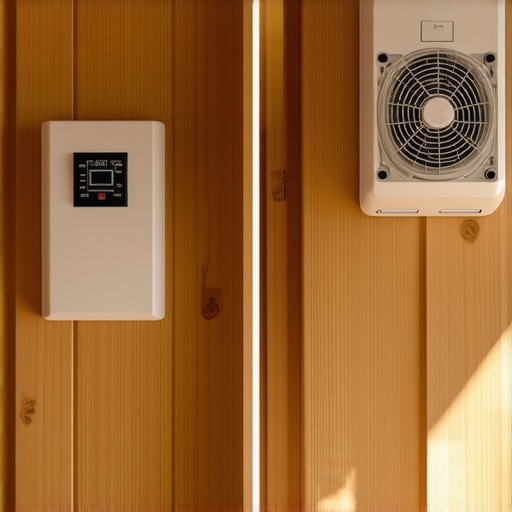
The Scent of a Smoldering Attic: A Master Inspector’s Warning
You never forget the smell of 40-year-old dust and fiberglass insulation baking under the heat of a failing electric motor. It’s a sweet, acrid stench that hits you the moment you pop the scuttle hole. I’ve spent over three decades dragging my Wiggy through cramped, sweltering spaces, and I can tell you that most homeowners treat their attic fans as ‘set and forget’ appliances. That’s a mistake that can turn your roof into a chimney for a structure fire. When we look at the safety difference between manual and thermostat-controlled attic fans, we aren’t just talking about energy efficiency; we’re talking about the forensic reality of electrical failure points.
My old journeyman used to smack my hand if I stripped a Romex lead with a pocketknife instead of proper dikes or strippers. ‘You nick that copper, you create a microscopic hot spot,’ he’d growl. ‘That’s where the fire starts when you aren’t looking.’ He was right. In the world of high-heat environments like an attic, those tiny imperfections are magnified by the constant expansion and contraction of metal. This is the core of the debate: manual control gives you oversight, while thermostats give you convenience at the cost of a hidden mechanical failure point.
The Anatomy of a Thermal Failure
The primary issue with thermostat-controlled fans is the bimetallic strip or the thermistor inside the controller. These components are designed to flex or change resistance based on temperature to bridge the gap and send power to the fan. However, in a mid-century home where load center upgrades haven’t been performed in forty years, these controllers are often the weakest link. Over time, the contacts inside the thermostat begin to pit and carbonize. This increases resistance, leading to Cold Creep—a phenomenon where the metal terminals expand and contract, loosening the screw terminals. Once those connections are loose, you get micro-arcing. You won’t see it, and your 1970s-era Federal Pacific breaker certainly won’t trip until the wood rafters are already charring.
“Aluminum wire connections can overheat and cause a fire without tripping the circuit breaker.” – CPSC Safety Alert 516
If your home was built between 1965 and 1975, there is a high probability that the home run to your attic fan was pulled with aluminum wire. This is a “Time Bomb” scenario. Aluminum has a higher coefficient of thermal expansion than copper. When that fan kicks on under the command of a thermostat, the surge of current heats the wire. The wire expands, pushes against the terminal, and when it cools, it doesn’t quite return to its original seat. This cycle repeats until the connection is so loose that the resistance generates enough heat to ignite the surrounding monkey shit (duct seal) or insulation. This is why we recommend troubleshooting for lighting installations and attic circuits with a critical eye toward material compatibility.
Manual Controls: The Forensic Advantage
A manual fan, controlled by a simple heavy-duty toggle switch, is inherently safer because it requires human intervention. When you flip that switch, you are usually present to hear the fan’s bearings screaming or notice if it takes too long to up-speed. If a motor is seized—a common result of the extreme heat and grit found in attics—a thermostat will keep trying to feed it power. A seized motor is just a localized space heater. It will sit there pulling Locked Rotor Amps (LRA), glowing red until the thermal overload finally gives up or the house starts to smoke.
The Modern Infrastructure Context
Modern homes are increasingly stressed by high-amperage demands. Between a level 2 EV charger in the garage and complex pool pump electrical systems, your overhead service drop and meter base replacement needs are likely overdue. When we perform infrared thermography scans, we often find that the attic fan circuit is operating at its absolute limit because it was tacked onto a bedroom circuit during a rough-in decades ago. This is why a safe EV charging station setup must always include a total load calculation of the home.
“Thermal imaging can identify hot spots in electrical systems that are invisible to the naked eye, preventing equipment failure and fire.” – NFPA 70E Standard for Electrical Safety
If you are insisting on a thermostat-controlled fan, it must be integrated with a demand response system or at least a modern AFCI (Arc-Fault Circuit Interrupter) breaker. These breakers are designed to detect the specific signature of an arc caused by a pitted thermostat contact or a loose aluminum connection. Without an AFCI, your thermostat is essentially a match waiting for the right temperature to strike.
Secondary Safety Risks: The Chimney Effect
There is a darker forensic side to automatic attic fans. In the event of a fire elsewhere in the house—say, a kitchen fire caused by a faulty appliance—an automatic attic fan can actually accelerate the spread. If the thermostat triggers because of the rising heat from the fire, the fan will turn on and create a massive negative pressure in the house. This pulls the flames and smoke upward through every wall cavity and ceiling penetration, essentially turning your home into a blast furnace. A manual fan would remain off, limiting the oxygen supply to the attic space.
Professional Mitigation Strategies
When I’m called for a doorbell camera install or a spa grounding services call, I always take a quick look at the load center upgrades. If I see a dedicated circuit for the attic fan, I’m relieved. If I see it double-tapped onto a 15-amp lighting circuit, I start writing a warning. We also look for an equipotential grid if the fan is near a rooftop solar array or pool area to ensure there are no stray voltages being introduced into the metallic housing of the fan unit.
For those who want the convenience of automation without the risk, we recommend a hybrid approach: a mechanical timer switch paired with a high-limit thermal cutoff. This ensures the fan cannot run indefinitely if the motor seizes and allows the homeowner to set a specific run time. If you’re unsure about the state of your attic’s wiring, check our contact page to schedule a forensic inspection. Don’t wait for the fishy smell of burning plastic to realize your attic fan has become a hazard.
The Verdict: Respect the Load
Electricity isn’t a hobby. It’s a force of nature that we’ve tricked into running our air conditioners and charging our cars. Whether it’s ev charger troubleshooting or inspecting an old attic fan, the physics remains the same: resistance creates heat, and heat creates fire. If your attic fan hasn’t been serviced or inspected in five years, it’s no longer a ventilation tool; it’s a liability. Ensure your meter base replacement and panel are up to the task of handling today’s electrical loads, and never trust a thirty-year-old thermostat to guard your roofline.