The Ghost in the Walls: Why 2026 is the Deadline for Cloth Wiring
When I walk into a crawlspace of a home built between the 1920s and late 1950s, I don’t just look; I listen. I listen for that faint, rhythmic crackle of electricity jumping a gap where the insulation has simply surrendered to time. If you’re living in a mid-century gem, your walls are likely hiding a ticking clock. Cloth-insulated wiring was the gold standard when the biggest electrical load in a house was a toaster and a few incandescent bulbs. Today, we’re plugging in high-draw appliances and demanding a home automation setup that would make a 1940s engineer’s head spin. The problem isn’t just that the wiring is old; it’s that it is physically decomposing.
The Old Timer’s Lesson: The Day the Insulation Turned to Dust
My first journeyman, a grizzly guy who could tell if a circuit was live by the smell of the air, once sent me into an attic to swap a junction box. He told me, ‘Kid, if you even breathe on that cloth wire too hard, it’ll flake off like dry skin.’ I didn’t believe him until I touched a home run near the chimney. The asphalt-impregnated cotton jacket didn’t just bend; it disintegrated into a fine, black powder, exposing bare copper while the circuit was hot. I barely got my hand back before it arced. That lesson stuck. You can’t ‘repair’ cloth insulation once the oils have evaporated. You can only replace it before the house decides to replace itself with a pile of ash.
“Aluminum and certain older copper wiring systems with deteriorating insulation are known fire hazards that often require professional inspection to mitigate risk.” – CPSC Safety Alert 516
1. The Chemistry of Decay: Why Asphalt and Cotton Fail
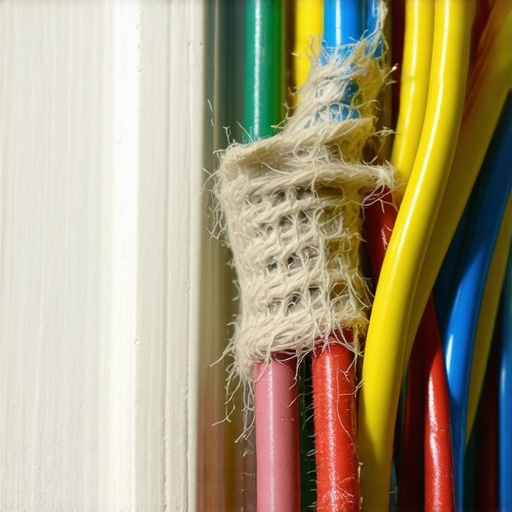
The core issue is thermal cycling. Every time you run your microwave or hair dryer, the copper wire inside the wall heats up and expands. When the load stops, it cools and contracts. Over seventy years, this constant movement causes the rubber and cloth jacket to become brittle. The cotton braid, once saturated with asphalt to repel moisture, eventually loses its flexibility. We call this ‘carbon tracking.’ When the insulation cracks, moisture from the air enters those microscopic fissures. In some cases, we use vibration analysis services to detect how mechanical stressors in the home accelerate this breakdown. Once that cotton becomes a conductor instead of an insulator due to carbonization, you’ve got a widow maker hidden behind your drywall. [image_placeholder_1]
2. The Absence of the Safety Net: No Equipment Grounding Conductor
In the era of cloth wiring, we didn’t have a dedicated ground wire. We relied on the neutral or, in some cases, nothing at all. This is where the ‘bootleg ground’ comes in—a dangerous trick where a handyman jumps the neutral screw to the ground screw on a modern outlet. It looks correct on a cheap tester, but it’s a death trap. Without a proper ground path, a fault in your toaster could energize the metal casing of your appliances. If you’re considering a modern upgrade like ensuring safe and efficient ev charging station setup at home, you absolutely cannot rely on these legacy systems. A tick tracer might show the line is hot, but it won’t tell you that the return path is a disaster waiting to happen.
3. The Wicking Effect and Flood Water Electrical Safety
Cloth is an absorbent material. In basements or areas with high humidity, that cotton braid acts like a wick, pulling moisture deep into the wire where it meets the copper. This leads to oxidation, which increases resistance. Higher resistance equals more heat. If your home has ever experienced a minor leak, the flood water electrical safety protocols demand a full inspection. We’ve seen instances where capillary action pulled water twenty feet up a vertical run, rotting the wire from the inside out. This is a primary reason why preventative electrical maintenance is non-negotiable for older structures.
4. Insurance Claim Electrical Work and The 2026 Mandate
Insurance companies are getting smarter. By 2026, many carriers are expected to implement stricter NEC code updates regarding ‘non-metallic sheathed cable’ without a ground. If an inspector finds cloth wiring, they may refuse to renew your policy or significantly hike your premiums. We often get called for insurance claim electrical work after a fire, and it’s heartbreaking to tell a homeowner their claim is being contested because they ignored a known hazard. Using infrared thermography scans, we can actually show adjusters the ‘hot spots’ where cloth wiring is arcing inside the walls, providing the evidence needed for a proactive replacement rather than a post-disaster rebuild.
5. The Load Limit: Beyond the Capacity of the Past
Modern living requires more ‘juice.’ From an electric gate opener to high-end HVAC systems, the demand on your electrical panel is immense. Cloth wiring was typically 14-gauge or even smaller, rated for 15 amps max. When people overfuse these circuits (putting a 20-amp breaker on a 15-amp wire), the cloth insulation cooks from the inside. If you’re seeing flickering lights, don’t just assume it’s a loose bulb. You might need a lighting installations expert to verify the integrity of the rough-in. To help our older community members, we offer senior discount services to ensure these critical safety upgrades are accessible before a catastrophe occurs.
“All electrical equipment shall be installed and used in accordance with the instruction included in the listing or labeling.” – NEC Article 110.3(B)
The Forensic Inspector’s Verdict
If you suspect your home has cloth wiring, don’t wait for the smell of ozone. You need an inspector who knows how to use a Wiggy and isn’t afraid to get dirty. Whether you need temporary power services during a full rewire or just a thorough check-up, the goal is the same: making sure you sleep through the night without the fear of a glowing lug. For those worried about their modern upgrades, checking our guide on EV charger maintenance or troubleshooting common issues is a good start, but it all begins with the foundation of your wiring. Contact us through our contact page to schedule a forensic inspection today. Your safety isn’t a hobby; it’s our trade.