
The Invisible Enemy Lurking Behind Your Drywall
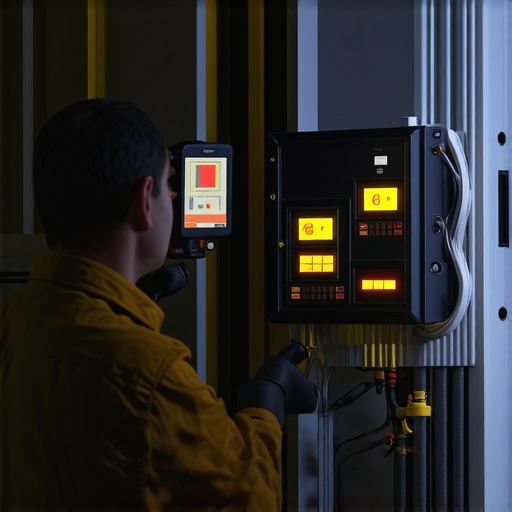
You ever walk into a room and catch a whiff of something fishy? Not ‘yesterday’s catch’ fishy, but that distinct, acrid stench of phenolic resin cooking at three hundred degrees? That is the smell of a house trying to burn itself down. As a master inspector with thirty-five years of pulling Romex through rat-infested crawlspaces, I can tell you that by the time you smell it, you are already in the danger zone. Most homeowners think a circuit breaker is a magic safety shield. It is not. A breaker only trips on overcurrent or a direct short. It does not give a damn about a high-resistance connection that is slowly turning your wall studs into charcoal. This is where infrared thermography becomes the only thing standing between you and a 911 call.
I remember a ‘fully renovated’ Craftsman I inspected last year. The flipper had installed beautiful subway tile in the kitchen, but I noticed a slight discoloration on the grout near the microwave outlet. I pulled out my thermal imager, and the screen lit up like a flare. There was a buried junction box—completely illegal and hidden behind the tile—where the installer had used cheap wire nuts and didn’t even bother with a rough-in box. The wire was hitting 190 degrees Fahrenheit. I found it with my tracer and my camera, but the homeowners would have found it with a fire extinguisher if I had stayed home that day. This is why we don’t trust ‘renovated’ until we see the heat signature.
“Infrared inspections of electrical systems can identify problems caused by loose connections, overloaded circuits, or unbalanced loads before they lead to equipment failure or fire.” – NFPA 70B: Recommended Practice for Electrical Equipment Maintenance
The Physics of the ‘Cold Creep’ and Thermal Stress
Why do these hot spots happen? It comes down to basic physics and the nightmare of Resistance Heating. In a workshop electrical setup or when running an electric gate opener, you are pulling significant current. If a terminal screw on a breaker is even an eighth of a turn loose, or if the bonding jumper services were poorly executed, you create a point of high resistance. According to Joule’s Law, the heat produced is proportional to the square of the current times the resistance. A tiny bit of resistance at 20 amps generates enough heat to melt insulation. In mid-century homes, we deal with aluminum wiring. Aluminum suffers from ‘Cold Creep’—it expands and contracts at a different rate than the copper or brass terminals it is attached to. Every time you turn on a space heater, that wire moves a microscopic amount. Over twenty years, it wiggles itself loose, oxygen gets into the gap, an oxide layer forms, and suddenly you have a heating element inside your wall.
High-Tech Detection: From Panels to Drones
We are no longer just poking at things with a Wiggy or a tick tracer. For larger estates or commercial properties, drone thermography scans are the new gold standard. We fly these birds over the service mast and the exterior disconnects. If the utility’s crimp connection is failing or if the transformer tap is arcing, the drone sees the heat plume before the lights even flicker. This is critical for standby generator install projects where the transfer switch must handle the entire house load without becoming a radiator. We also use these scans when performing a 100 amp service upgrade to ensure the new bus bars are seated perfectly and no factory defects are present in the main lugs. If you are setting up heavy infrastructure, like an RV hookup installation, the continuous draw of an A/C unit will expose every weak link in the chain. We scan it under load to be certain.
“Aluminum wire connections can overheat and cause a fire without tripping the circuit breaker.” – CPSC Safety Alert 516
Hardening Your Infrastructure
Thermal scans are the diagnostic, but the cure involves real-world electrical muscle. This means ensuring your grounding electrode install is deep enough to hit consistent soil moisture and that your CAT6 cabling services are physically separated from high-voltage lines to prevent inductive heating and data corruption. Many older folks on fixed incomes overlook these hidden risks, which is why we emphasize senior discount services—it is about getting an expert eye on those old Zinsco or Federal Pacific panels that are notorious for ‘welding’ shut rather than tripping. If your panel is humming or the lights dim when the fridge kicks on, you don’t need a handyman; you need a forensic scan. If you’ve recently noticed performance drops, checking ev charger troubleshooting guides can help, but for the heavy lifting, you need a pro to check the torque on every lug in that home run.
Don’t let a ‘small’ flicker become a total loss. Whether you are adding a workshop electrical setup or just want to sleep through the night without wondering what that ‘fishy’ smell is, a professional infrared audit is the only way to see the invisible. If you have concerns about your system’s integrity, contact us today for a full forensic inspection. We don’t just look at the wires; we look at the physics of your home. For more on maintaining high-draw equipment, see our top ev charger maintenance tips. Electricity isn’t a hobby—treat it with the respect it demands or it will bite back.
Comments
One response to “How Infrared Scans Spot Hidden Electrical Hot Spots Before They Cause a Fire”
This post highlights such an important yet often overlooked aspect of home safety. I’ve personally seen how infrared thermography can reveal hidden issues that might not be apparent during a standard inspection. I recall a property where the circuit panel was humming but showed no visible signs of trouble. The thermal scan uncovered a loose connection that was heating up only under load, which could have easily caused a fire if left unaddressed. The use of drone thermography for exterior inspections is fascinating too; it’s like giving us a bird’s eye view of potential trouble spots before they escalate. I wonder, how does the cost of these high-tech scans compare to traditional inspections for a typical homeowner? Do you think more insurance companies will start requiring this kind of testing for older homes to prevent catastrophic failures?