
The Sound of a Struggling Grid: Why Your Single-Phase Setup is Bleeding Cash
I have spent three decades in the field, and I can tell you exactly what money smells like: it smells like the sweet, metallic tang of ozone and the scorched phenolic resin of an overheating motor. When I walk into a commercial facility and hear that low-frequency, rhythmic 60-cycle thrumming of a single-phase motor trying to move a heavy industrial load, I know the owner is essentially lighting hundred-dollar bills on fire. My old journeyman used to smack my hand if I stripped a wire with a knife. ‘You nick the copper, you create a hot spot,’ he’d scream. He was right, and that same principle of unintended resistance applies to your entire building’s infrastructure. If you are running high-demand equipment on a standard residential-style phase, you are fighting physics—and physics always wins the billing war.
“Aluminum wire connections can overheat and cause a fire without tripping the circuit breaker.” – CPSC Safety Alert 516
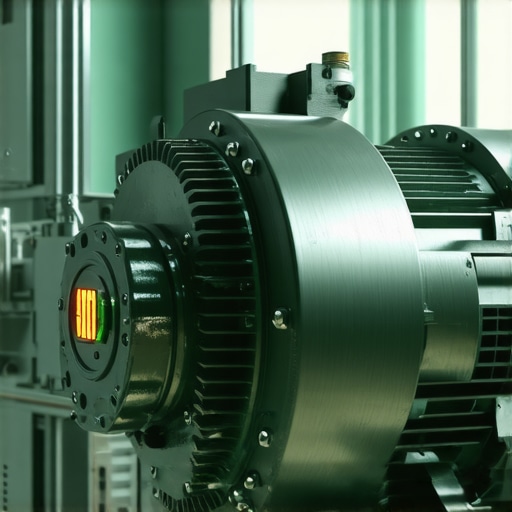
Commercial utility bills are not calculated like your home’s bill. You aren’t just paying for the energy you use; you are paying for demand and power factor. This is where three-phase motors become the silent heroes of the balance sheet. In a single-phase system, the power delivery drops to zero twice every cycle. This causes the motor to ‘shudder’—a microscopic hesitation that translates to vibration, heat, and massive mechanical wear. A three-phase system, however, delivers three overlapping waves of current, ensuring the power never drops to zero. The torque is constant. The efficiency is vastly superior. By upgrading to a three-phase system, you are reducing the ‘slip’ in your motors and lowering the total amperage required to perform the same work. If your building is currently maxed out, a service entrance upgrade to three-phase power might be the only thing standing between you and a catastrophic equipment failure.
The Forensic Breakdown: Why Your Single-Phase Equipment is Inefficient
Let’s talk about the physics of Cold Creep and thermal expansion. When a single-phase motor starts, it requires a massive inrush of current—sometimes five to seven times its running load. This surge generates intense heat in the windings and the branch circuit conductors. If you have any legacy aluminum wiring in your feeders, this heat causes the metal to expand and contract at different rates than the steel lugs in your panel. Over time, the connection loosens, resistance increases, and you begin paying for ‘ghost’ energy that never reaches the motor—it just radiates out of your panel as heat. We often see this during a 100 amp service upgrade where we find the main lugs have been ‘cooking’ for years. This is why aluminum wiring repair or replacement is critical when transitioning to high-efficiency three-phase equipment.
Using a Tick Tracer or a Wiggy, I’ve diagnosed hundreds of commercial sites where the voltage drop was so severe that the motors were essentially acting as heaters. By utilizing underground wiring services to bring in a dedicated three-phase feeder, we can distribute that load across three conductors instead of two, significantly reducing the I-squared-R losses (heat loss). This requires precision trenching electrical conduit to the utility transformer, ensuring that the home run back to the main distribution board is sized for the modern era. Even if you are just managing tiny home wiring projects on the side, the principles of load balancing remain the same: excessive heat is the enemy of your wallet.
“Continuous loads shall not exceed 80 percent of the rating of the branch circuit.” – National Electrical Code (NEC) Section 210.19
The Load Calculation: Modernizing Your Infrastructure
When we perform a service entrance upgrade, we aren’t just swapping boxes. We are recalculating the entire building’s demand factor. Most older commercial buildings were designed for incandescent lighting and basic machinery. Today, we are integrating smart lighting installation and low voltage lighting systems that require clean, stable power. If your three-phase motors are causing voltage sags every time they kick on, your LED drivers and sensitive electronics will suffer premature failure. This is why we often use augmented reality troubleshooting to visualize the heat signatures across a facility’s panels before we even pull the first wire. It allows us to see the ‘Widow Maker’ circuits—those overloaded neutrals that are one heavy load away from a fire.
For business owners concerned about the upfront cost, getting free electrical estimates is the first step toward understanding the ROI of a three-phase conversion. While the initial rough-in and trim-out of a three-phase system involve more copper and more complex switchgear, the reduction in peak demand charges alone often pays for the system within 24 months. Furthermore, modern three-phase motors are smaller and last significantly longer because they don’t require the failure-prone start capacitors found in single-phase units. Whether you are looking for expert consultation or a full-scale industrial overhaul, the goal is to move from a reactive maintenance posture to a forensic, proactive one. If you want to sleep at night knowing your lugs are torqued to spec and your utility meter isn’t spinning like a ceiling fan, it’s time to look at your phase balance.
Ensuring Safety from the Trench to the Terminal
Installing high-demand equipment like EV charging stations or large HVAC units on an inadequate service is a recipe for disaster. The same logic applies to commercial motor loads. We use ‘Monkey Shit’ (duct seal) to protect the conduits from moisture and ‘Dikes’ to clean up the terminations, but the real work happens in the math. Every trenching electrical conduit job we perform is a commitment to the next 40 years of your building’s life. We don’t just ‘get it working’; we ensure it’s code-compliant and optimized for efficiency. Don’t let a handyman’s ‘flipper special’ compromise your safety. Proper lighting installations made easy through professional electrician guides and industrial-grade motor management are the only ways to truly lower those monthly bills. If you’re ready to stop the bleeding, reach out for professional electrical services today.