
The Autopsy of a $20,000 Media Room
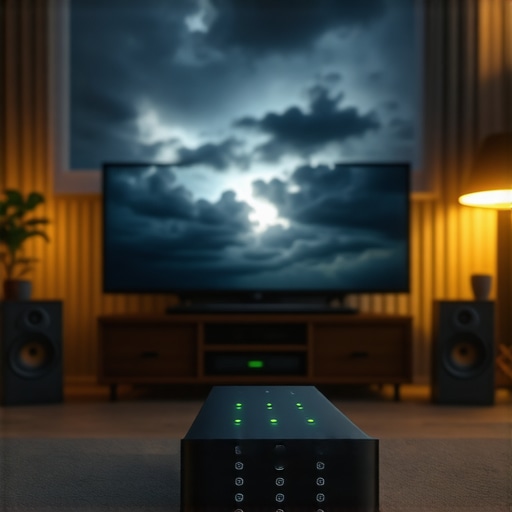
I walked into a basement last November where $20,000 worth of high-end McIntosh amplifiers and a custom 4K projector had been reduced to expensive doorstops because a ‘renovator’ thought a $15 power strip from a big-box store constituted ‘surge protection.’ I found the culprit with my tracer; the flipper had buried three live junction boxes behind the soundproofing panels, and one of them had a loose neutral that had been arcing for months. The heat had carbonized the Romex insulation until a minor utility spike pushed it over the edge. When I pulled the cover off the electrical panel upgrade that should have happened a decade ago, the smell of ozone was thick enough to chew on. This wasn’t just a failure of a device; it was a failure of infrastructure. If you are building a home theater, you aren’t just buying speakers; you are managing a complex electrical load that is hyper-sensitive to the quality of the sine wave coming off the grid.
The Physics of the ‘Death Snap’
When people talk about voltage spikes, they usually think of lightning. Lightning is the flashy villain, but the slow killer is the transient voltage caused by your own AC unit or refrigerator kicking on. Inside your theater gear are nanometer-scale transistors. Imagine a microscopic gate designed to handle 5 volts. Now imagine a 6,000-volt transient hitting that gate. The silicon doesn’t just melt; it vaporizes. This is where the Metal Oxide Varistor (MOV) comes in. Most cheap surge protectors are ‘one and done’ devices. They sacrifice themselves to shunt the excess voltage to ground. The problem? You never know when they’ve died. They stay ‘on,’ feeding dirty power to your gear while the internal protection is fried.
“Aluminum wire connections can overheat and cause a fire without tripping the circuit breaker.” – CPSC Safety Alert 516
This same principle applies to the internal components of your surge protection; once the MOV reaches its clamping limit, your protection is zero.
Why Your Mid-Century Panel is a Ticking Clock
If your home was built between 1960 and 1980, you might be sitting on a Federal Pacific or Zinsco panel. These aren’t just old; they are fundamentally flawed. The bus bars corrode, and the breakers have a documented history of ‘jamming’—meaning they won’t trip even under a massive short circuit. This is why infrared thermography scans are non-negotiable during our annual maintenance contracts. We use thermal imaging to see the heat blooming off a breaker before you ever smell the plastic melting. For homeowners with these legacy systems, we often recommend a complete changeout to a modern, copper-bus panel. To help with the cost, we provide senior discount services and military discount wiring packages, because nobody should have to choose between their pension and a house fire.
The Solution: Layered Protection and Harmonic Filtering
To truly protect a home theater, you need a ‘Home Run’ dedicated circuit. This means a direct line from the panel to your media rack with no other outlets in between. During the rough-in phase, we use heavy-gauge copper to minimize voltage drop. We also implement harmonic filter services. Modern electronics use switching power supplies that ‘pollute’ the electrical line with harmonic distortion. This ‘noise’ causes heat in your equipment’s transformers and can lead to premature failure. By installing a whole-house surge protective device (SPD) at the main panel, you catch the big hits from the grid. Then, you use a high-quality power conditioner at the rack for the ‘fine-tuning.’ It’s about creating a series of dams to catch the flood. If you are worried about your current setup, our weekend electrician services can perform a full site audit without you having to take time off work.
Code Compliance and the Safety Net
In the world of professional installs, we don’t just ‘hook things up.’ We follow OSHA compliance wiring standards for any commercial-grade home theater project to ensure maximum safety.
“The surge protective device shall be an integral part of the equipment or shall be located immediately adjacent thereto.” – NEC Article 285
This isn’t a suggestion; it’s the law of physics codified. For those looking at lighting installations made easy, remember that every LED driver is a potential source of electronic noise. Proper lighting installation services require separating your dimming circuits from your audio circuits to prevent that annoying 60Hz hum. If you’ve already noticed flickering, you might need to look into how electricians tackle troubleshooting to identify if it’s a loose ground or a failing capacitor. We also integrate emergency exit lighting into dedicated theater spaces to ensure that if the power does fail, you aren’t stumbling over a $5,000 subwoofer in the dark. Electricity isn’t a hobby; it’s a force of nature. Treat it with the respect it’s due, or it will eventually collect its debt in smoke and melted copper.