
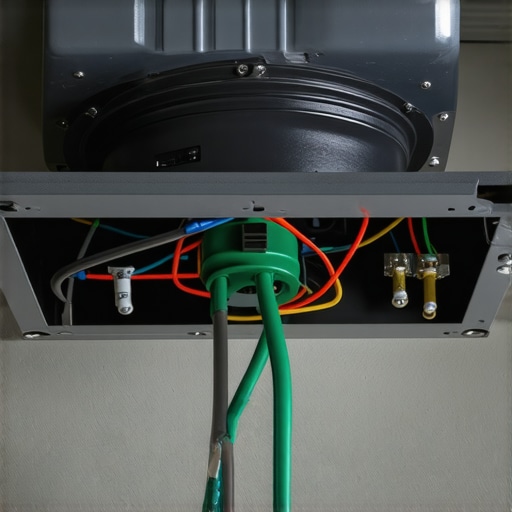
The first thing that hits you isn’t the sight of a sagging ceiling or a crooked grille; it’s the smell. In a bathroom with a failing or improperly grounded exhaust fan, there’s a specific, sharp metallic tang that cuts through the scent of lavender soap—that’s ozone. When electricity isn’t flowing where it belongs, it starts jumping gaps. It starts cooking the moisture-laden dust trapped in the housing. I’ve spent thirty-five years in the trade, and I can tell you that a bathroom is the most dangerous room in your house because it’s the only place where you’re naked, wet, and surrounded by grounded surfaces. If your fan isn’t grounded, you’re just one insulation failure away from becoming the shortest path to earth.
The Anatomy of a Flipper’s Shortcut
I remember a call-out last winter in an old 1920s Tudor. The homeowner had just finished a ‘high-end’ renovation. Everything looked perfect—marble floors, rain shower, the works. But every time she turned on the fan, the LED vanity lights would flicker just a hair. I pulled the fan cover and found what I call the ‘Invisible Ground.’ The flipper had used a modern fan but tied the ground wire to a rusted screw on the old steel box, which wasn’t actually connected to anything back at the main disconnect services. He’d even used a bit of monkey shit (duct seal) to hide the fact that the wire was just dangling there. I pulled out my tick tracer, and the entire housing of the fan was glowing red. The metal was energized because of a pinched hot wire during the rough-in, and because there was no path to ground, the breaker never tripped. It was a heart attack waiting to happen.
“The grounding of electrical systems and equipment is intended to provide a low-impedance path for fault current to facilitate the operation of overcurrent devices.” – NFPA 70: National Electrical Code (NEC)
Why Grounding Fails in High-Humidity Zones
In an environment like a bathroom, the physics of electricity changes. You aren’t just dealing with copper and plastic; you’re dealing with Galvanic Reaction and Electrolysis. When moisture enters an ungrounded fan housing, it creates a conductive bridge. If that fan is part of a smart lighting installation or connected to a demand response system, the sensitive electronics are even more prone to catastrophic failure. Without a solid ground, that moisture allows the current to ‘leak’ across the surface of the motor. This doesn’t always blow a fuse. Instead, it creates heat. This is where we see Thermal Expansion. The copper windings in the motor expand as they get hot, then contract when they cool. If they aren’t properly secured and grounded, that movement eventually nicks the varnish on the wires. Once that varnish is gone, you have a direct short to the metal frame. If your house still relies on an old temporary power service or an outdated panel, that frame will stay hot indefinitely. This is exactly why priority service membership exists—to catch these silent killers during routine inspections before the ‘tingle’ becomes a tragedy.
How to Spot the Warnings
If you want to know if your fan is a time bomb, look for these three forensic signs. First, look for soot tracking. If you pull the plastic cover and see fine black lines on the white plastic that look like spiderwebs, that’s not dirt. That’s carbonized dust from micro-arcing. Second, use a Wiggy or a reliable multimeter to check the voltage between the fan’s metal housing and the nearest faucet. If you see even three volts, your ground is compromised. Third, check the home run back to the panel. Many DIYers will install a fan and think that because the lights turn on, everything is fine. But grounding is about what happens when things go wrong, not when they go right. If you’re planning a sauna heater installation or adding patio cover outlets, you’re likely already pushing your panel’s capacity. An ungrounded fan in a stressed system is the first thing that will fail when a surge hits.
“Aluminum wire connections can overheat and cause a fire without tripping the circuit breaker.” – CPSC Safety Alert 516
The Physics of the ‘Bootleg Ground’
In older mid-century homes, I often find the ‘Bootleg Ground.’ This is where someone has jumped the neutral wire to the ground screw. In a bathroom fan, this is lethal. Because the neutral carries current, you are essentially energizing the metal case of the fan by design. If that neutral wire ever breaks or develops high resistance—common in houses with tree mounted lights or access control wiring that wasn’t properly weather-sealed—the fan housing becomes live. I’ve seen this happen during portable generator hookup tests where the floating neutral on the generator causes the entire grounding system of the house to shift potential. If you’re worried about your lighting or fan setup, you should read more about how electricians tackle troubleshooting for lighting installations to see the complexity involved in modern circuitry.
Conclusion: Don’t Gamble with Grounding
Electricity is a lazy, dangerous beast; it will always take the easiest path to the dirt. Your job as a homeowner is to make sure that path is a thick green wire and not your ribcage. Whether you’re dealing with a simple fan or a complex access control wiring system, the principles of bonding and grounding remain the same. If you see flickering, smell ozone, or feel a ‘hum’ in the air, don’t wait for the fire department to find the problem. For expert help, you can contact us to ensure your home meets the current NEC standards. Remember, a priority service membership isn’t just about convenience; it’s about forensic-level safety for the things you can’t see behind the drywall.