How to Win the Local Map Pack Without Spending a Fortune on Ads
Stop paying $50 per lead for Google Local Services Ads (LSAs) while your competitor sits in the top three results of the Map Pack for free. If you are a contractor or a small business owner, you’ve likely felt the sting of a marketing budget that feels more like a tax than an investment. The reality is that many businesses are trapped in a cycle of “pay-to-play” because they haven’t built the necessary digital infrastructure to rank organically.
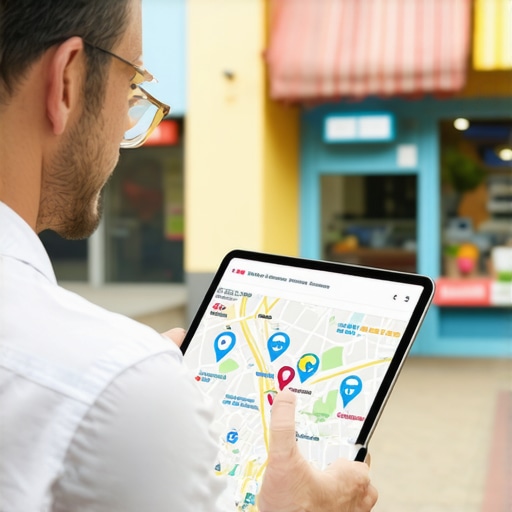
Data from a comprehensive BrightLocal study reveals that 78% of local mobile searches lead to an in-store visit or a phone call within 24 hours. When someone in your city searches for “electrician near me” or “emergency panel repair,” they aren’t looking at page two. They are looking at the “Map Pack” – the trio of businesses featured prominently alongside a map of the area. As Rashid Rehman often notes, local SEO is not just a marketing tactic; it is “infrastructure.” Just as you wouldn’t build a house on a cracked foundation, you cannot expect to dominate local search without a solid, optimized Google Business Profile (GBP).
In this guide, I will break down how to move away from the addiction to PPC and LSAs by focusing on sustainable, high-impact google business profile seo. By the end of this post, you will understand the mechanics of the algorithm and how to position your business as the most authoritative option in your service area.
The Three Pillars of Local Ranking: Relevance, Proximity, and Prominence
Google’s local search algorithm isn’t a black box; it operates on three core pillars. To win the Map Pack, you must understand which of these you can control and which you must simply account for.
1. Relevance
Relevance is how well a local business profile matches what someone is searching for. If a user searches for “EV charger installation,” and your profile only mentions “Electrician,” you may lose out to a competitor who has specifically listed EV services. Google looks at your categories, your business description, and your services to determine if you are the right fit for the query.
2. Proximity
Proximity is the distance of a potential customer from the business location. This is the one factor you cannot “hack.” Google prioritizes results closest to the searcher to ensure the best user experience. However, proximity is not the only factor. A highly prominent business five miles away will often outrank a mediocre business two blocks away. Understanding why your Google Business Profile isn’t ranking and how to fix it today often starts with realizing that proximity can be overcome by excelling in the other two pillars.
3. Prominence
Prominence refers to how well-known and authoritative a business is in the eyes of Google. This is calculated based on information Google has about a business from across the web, such as links, articles, and directories. Review count and score also factor into prominence. This is where the “infrastructure” of your SEO pays off. While you can’t change where the searcher is standing, you can absolutely dominate relevance and prominence through strategic optimization.
Google Business Profile Optimization: Building the Infrastructure
According to the “Whitespark Local Search Ranking Factors” report, the completeness and optimization of your Google Business Profile is the single most important foundational factor for ranking in the Map Pack. Many businesses treat their GBP like a “set it and forget it” directory listing. This is a mistake. To improve google maps rankings, you must treat your profile as a living asset.
Primary and Secondary Categories
Your Primary Category carries the most weight. For an electrical contractor, “Electrician” is the obvious choice. However, your secondary categories allow you to capture more specific traffic. If you handle commercial projects, ensure “Electrical Engineer” or “Lighting Contractor” is selected. Choosing the wrong primary category is a common reason for ranking drops. If you’re unsure if your current setup is worth the cost, consider what you should actually pay for local SEO packages to get a professional audit.
The Power of Visual Content
Google’s data shows that profiles with high-resolution photos receive 35% more click-throughs to their websites than those without. Don’t just upload a logo. Upload photos of your team in uniform, your branded trucks, and “before and after” shots of your work. These images provide “social proof” to the user and “data points” to Google about the nature of your business.
Keyword-Rich Service Lists
Use google business profile seo techniques to build out an exhaustive list of services. Instead of just “Residential Services,” list “Circuit Breaker Repair,” “Ceiling Fan Installation,” and “Home Automation Wiring.” Each of these acts as a signal to Google that you are a relevant result for those specific long-tail searches.
The Review Strategy: Beyond “Just Get More”
Reviews are the lifeblood of local prominence, but the strategy must go deeper than simply asking for five stars. Google’s algorithm has become incredibly sophisticated at reading the content of reviews. If you want to how to rank on Google Maps fast without buying fake reviews, you need to focus on velocity, diversity, and keywords.
Expert Tip: Encourage your customers to be specific. Instead of “Great job,” a review that says, “Reliable Electric Pro did an amazing job with our panel upgrade in Seattle,” is worth ten generic reviews. Google sees the service (“panel upgrade”) and the location (“Seattle”) and associates your profile with those terms. This increases your prominence for those specific keywords.
Furthermore, your response to reviews is a ranking signal. Responding to every review – good or bad – shows Google that you are an active, engaged business. It also builds trust with potential customers who are reading your responses to see how you handle conflict or appreciation.
Citations and NAP Consistency
NAP stands for Name, Address, and Phone Number. In the early days of local SEO, you could rank just by blasting your NAP across thousands of low-quality directories. Today, the algorithm is more discerning. Google looks for consistency across major data aggregators and local directories like Yelp, Yellow Pages, and the BBB.
Inconsistent information – like a different phone number on your Facebook page than on your GBP – creates “friction” for Google. If the algorithm isn’t 100% sure where you are or how to contact you, it won’t risk showing you in the top three. This is especially critical for contractors looking for high-ticket work. Performing the NAP consistency check that actually wins trust for commercial electrical bids ensures that you look professional to both the algorithm and the general contractor or property manager looking to hire you.
Local Backlinks & Hyperlocal Content
To truly dominate the Map Pack, you must prove to Google that you are an authority in your specific geographic area. This is achieved through “Local Authority” building. While a link from a national tech blog is nice, a link from your local Chamber of Commerce, a neighborhood blog, or a local charity you sponsor is often more impactful for local rankings.
Consider creating “City Pages” on your website. If you serve multiple suburbs, create a dedicated page for each one. Don’t just copy and paste the text; include local landmarks, mention local building codes, and embed a Google Map of your service area in that specific town. This hyperlocal content signals to Google that your business is deeply rooted in the community, boosting your prominence in those specific zones.
Tracking and Tools: How to Know You’re Winning
You cannot manage what you do not measure. Traditional SEO tools often fail at local tracking because they only show you a single ranking for a whole city. In reality, you might rank #1 when someone is standing in your office and #10 when they are three miles away. To get a clear picture, you need a google maps rank tracker that provides a “GeoGrid” view.
A GeoGrid shows you exactly where your visibility drops off, allowing you to target your local backlink and content efforts where they are needed most. For those looking to automate this process, using high-quality local seo tools is essential for maintaining a competitive edge. I also recommend checking out our list of the 5 tools we actually use to track Google Business Profile growth to stay ahead of the curve.
Conclusion: The Map Pack is a Marathon
Winning the Google Map Pack without ads is not about “tricking” the algorithm; it is about providing Google with the most accurate, authoritative, and relevant information possible. By focusing on the three pillars – Relevance, Proximity, and Prominence – you build a digital asset that generates leads for years, not just for as long as your credit card is on file with Google Ads.
If you’re ready to stop overpaying for leads and start owning your local market, perform a google business profile audit today. For a deeper dive into your specific market and a custom strategy, contact me, Kevin Pauls, for a professional consultation. Let’s build your infrastructure together.