
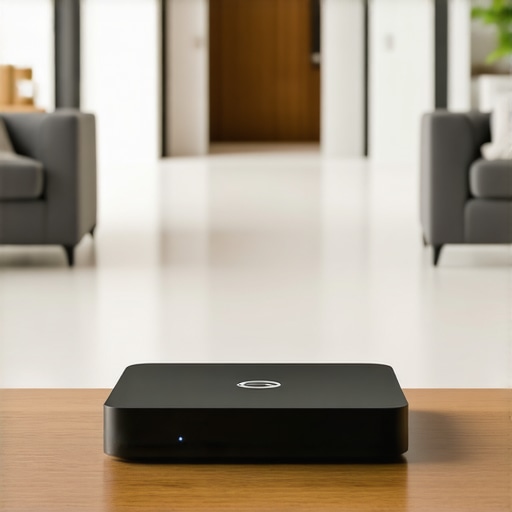
The Sensory Warning: Why Your Hub Location is an Electrical Liability
Most homeowners treat a smart home hub like a fancy router—they tuck it behind a stack of books or shove it into a dusty entertainment center. But as someone who has spent 35 years smelling the acrid tang of melting PVC and chasing ‘ghost voltages’ through crawlspaces, I can tell you that where you place your hub is as much an electrical safety decision as it is a connectivity one. When a client calls me because their smart lights are flickering or their hub keeps rebooting, I don’t look at their Wi-Fi signal first. I look for the heat. I’ve walked into living rooms where a hub was plugged into a loose, un-grounded outlet that was radiating 110 degrees through the drywall. That’s not a tech support issue; that’s a fire waiting for a reason to start. You see, electricity isn’t just a utility; it’s a living force of resistance and heat. If your hub is in the wrong room, you aren’t just losing signal; you’re stressing a circuit that might already be at its breaking point.
“Aluminum wire connections can overheat and cause a fire without tripping the circuit breaker.” – CPSC Safety Alert 516
The Journeyman’s Lesson: The Physics of the ‘Nick’
My journeyman used to smack my hand if I stripped a wire with a knife. ‘You nick the copper, you create a hot spot,’ he’d scream. He was right. That tiny gouge in the metal creates a bottleneck, a point of high resistance where electrons pile up and generate localized heat. Now, imagine your smart home hub—a device that is constantly drawing a steady stream of power to manage dozens of sensors—plugged into a circuit that was ‘trimmed out’ by a guy who didn’t care about nicks. You’re asking for trouble. Before you worry about your 5GHz frequency, you need to worry about the ‘Rough-in’ quality of the room you’ve chosen. If you’re in a mid-century home with a 60-amp service, your smart hub shouldn’t be competing with a window A/C unit or a microwave. It’s about the ‘Home Run’—the direct line back to the panel. If your hub is at the end of a long, daisy-chained circuit with six other outlets, every time the compressor on your fridge kicks in, your hub is going to feel that voltage sag. Over time, that ‘brownout’ effect fries the delicate capacitors inside your smart devices.
Component Zooming: The Reality of Cold Creep and Resistance
Let’s talk about the physics of why your hub belongs in a room with updated wiring. If your home is a mid-century build, you might have aluminum wiring. This is where ‘Cold Creep’ becomes your enemy. Aluminum expands and contracts at a different rate than the steel screws on your outlets. Over years, this movement loosens the connection. A loose connection creates an arc—a microscopic spark that generates intense heat. When you plug a modern smart hub into an old aluminum-wired outlet, the constant draw can exacerbate this loosening. This is why ev-charger-troubleshooting-expert-tips-to-fix-common-issues often starts with checking the physical integrity of the wire-to-terminal bond. If you haven’t had ensuring-safe-and-efficient-ev-charging-station-setup-at-home done, your whole system is built on a foundation of sand. You need to ensure your hub is on a circuit that has been vetted through how-electricians-tackle-troubleshooting-for-lighting-installations. We look for ‘Widow Makers’—those old non-contact voltage testers that can lie to you—and use a ‘Wiggy’ or a solenoid tester to see if the circuit can actually carry a load.
The Setup Checklist: Electrical Safety Audit for Your Hub
- 1. Proximity to the Main Panel: Your hub should ideally be on a circuit as close to the ‘Home Run’ as possible. This minimizes voltage drop and electrical noise.
- 2. Avoid the ‘Kitchen/Garage Trap’: Never place your hub on a circuit shared with high-draw appliances. If you have had lighting-installations-made-easy-a-step-by-step-electrician-guide performed, you know that dedicated circuits are king. Garage wiring services are often necessary to isolate your smart tech from the motor noise of a garage door opener or power tools.
- 3. The Grounding Factor: A ‘bootleg ground’ (where a lazy guy jumps the neutral to the ground screw) will kill a smart hub’s sensitive electronics during a minor surge. Use a ‘Tick Tracer’ to check for basic presence, but get a real electrical safety audit to ensure your grounding rod isn’t just a rusted piece of rebar.
- 4. Heat Dissipation: Smart hubs are mini-computers. They shouldn’t be in unventilated closets or near heat sources like radiators. I’ve seen ‘Monkey Shit’ (duct seal) used to plug holes where wires enter a hub box—don’t do that; you need airflow.
- 5. Moisture and Corrosion: If you are near the coast, salt air is the enemy. It bridges the gap between phases in your outlets. If your hub is controlling top-ev-charger-maintenance-tips-for-optimal-performance or dock electrical services, ensure your interior hub is protected from the corrosive humidity that rots meter cans and boat lift wiring from the inside out.
“Each branch circuit shall be sized to prevent a voltage drop exceeding 3 percent at the farthest outlet of power, heating, and lighting loads…” – National Electrical Code (NEC) 210.19(A)
Why a ‘Fuse Box to Breaker Conversion’ is Your Hub’s Best Friend
If you’re still running on glass fuses, stop thinking about smart hubs and start thinking about a fuse box to breaker conversion. Fuses are great at one thing: blowing when they get too hot. But they don’t handle the ‘noisy’ power requirements of modern smart homes very well. A smart meter installation paired with a modern panel allows for better surge protection and more stable voltage. When we do a panel changeout, we ensure every screw is torqued to spec. I’ve seen brand-new hubs fried because someone didn’t use a torque screwdriver on the neutral bar. If you’re planning a contact-us for privacy-policy reasons or tech upgrades, realize that the permit pulling services we provide aren’t just red tape—they’re your guarantee that your home rewiring services were done to code. Whether it’s a ceiling fan installation or complex boat lift wiring, the load calculation matters. Your 100-amp panel wasn’t designed for an EV charger, a hot tub, and 50 smart switches. Don’t treat electricity like a hobby. Use annual maintenance contracts to ensure those ‘Monkey Shit’ seals and Romex staples haven’t compromised your system over time. Sleep at night knowing your hub is where it belongs—on a safe, torqued, and dedicated line.