
The Sound of a Sizzling Service
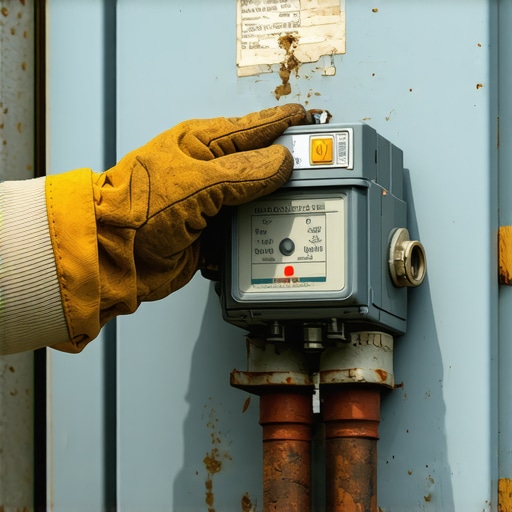
I can usually smell a failing service before I even pull my truck into the driveway. It is a distinct, metallic stench—half ozone, half burnt plastic. If you are standing near your meter and you hear a sound like bacon frying, you are not smelling breakfast; you are smelling the slow-motion destruction of your home’s electrical gateway. Replacing a corroded meter socket without killing the power is what we call ‘hot work,’ and in my thirty-five years of forensic inspections, it is the closest a master electrician gets to defusing a bomb. You are standing in front of an enclosure that is fed directly by the utility transformer. There is no breaker between you and the grid. If you slip with your wrench, there is no ‘trip’—there is only a blinding arc flash that can reach 35,000 degrees Fahrenheit, turning your tools into vapor and your skin into a memory.
The Forensic Breakdown: The Flipper Special
I remember a call out to a ‘renovated’ beach house where the new owners were complaining that their electric gate opener would only work when the kitchen lights were off. I walked up to the meter, and my tick tracer started screaming before I even touched the enclosure. I opened the door and found the ‘Flipper Special.’ The previous owner had tried to save a buck by scrubbed the green corrosion off the meter jaws with a wire brush and smeared some monkey shit (duct seal) over the pitting to hide the damage. I found three buried junction boxes behind the new shiplap siding using my tracer, but the real crime was the meter socket itself. The salt air had literally eaten through the steel of the enclosure, and the neutral lug was held on by a single strand of oxidized copper. If that strand had snapped while they were sleeping, the resulting floating neutral would have sent 240 volts through every 120-volt circuit in the house, frying their appliances and potentially starting a fire. This is why arc flash studies aren’t just for industrial plants; they represent the reality of what happens when high-amperage systems fail at the residential level.
The Physics of Salt-Air Corrosion and Galvanic Reaction
In coastal environments, the enemy is invisible but relentless. Salt spray acts as a perfect electrolyte, facilitating a galvanic reaction between the steel of the meter can and the aluminum or copper of the service conductors. When moisture enters the socket—often through a degraded weatherhead or a cracked service mast—it creates a bridge between phases. This is where ‘Component Zooming’ becomes critical to understand. We aren’t just talking about ‘rust.’ We are talking about the molecular degradation of the meter jaws. Most meter sockets use spring-loaded jaws to hold the meter blades. Over time, heat cycles cause the metal to lose its ‘temper.’ As the spring tension fails, the contact resistance increases. According to Ohm’s Law, as resistance goes up, heat goes up. This heat causes the metal to expand and contract, a process known as thermal cycling, which further loosens the connection. Eventually, you get Cold Creep, where the conductor literally moves away from the lug.
“Aluminum wire connections can overheat and cause a fire without tripping the circuit breaker.” – CPSC Safety Alert 516
The Widow Maker: Working Live
When we talk about replacing a socket without killing the power, we are referring to ‘Live-Swapping’ or working on the line-side conductors while they are energized. This requires specialized PPE: arc-rated face shields, insulated gloves with leather protectors, and insulated tools. I use my Wiggy (a solenoid voltmeter) to verify the voltage because, unlike digital meters, a Wiggy puts a small load on the circuit, which prevents ‘ghost voltage’ from lying to me. The most dangerous part is the neutral. In any electrical system, the neutral is the return path. If you disconnect a loaded neutral while the system is hot, you become the path. This is why a workshop electrical setup or a home backup generator install must always be preceded by a thorough inspection of the service entrance. If your service is rotten, adding a high-draw load like a welder or a generator transfer switch is the straw that breaks the camel’s back.
The Process: Rough-in to Trim-out
A professional replacement starts with a rough-in of the new enclosure, ensuring it is plumb and level. We look at the underground wiring services to ensure the lateral isn’t being pinched by soil settlement. We often see ‘sinkholes’ where the conduit enters the bottom of the meter can, pulling the conductors down and putting immense strain on the lugs. When we perform the actual swap, we use ‘bypass’ jumpers if the socket is equipped with them, allowing power to flow to the house while the meter is pulled. However, many older sockets don’t have bypasses. In those cases, we have to carefully disconnect the line-side conductors one by one, insulating them with ‘gutters’ or rubber blankets. It’s a dance of precision. If you’re interested in how we handle other high-stakes installations, you can see our approach to ensuring safe and efficient ev charging station setup at home, which involves similar load calculations and safety checks.
Code Compliance and the AFCI Requirement
Modern codes are written in blood. Every time a house burns down, the National Electrical Code (NEC) gets a new paragraph. When we replace a meter socket and the associated panel, we are often required to bring the home up to current standards, which includes AFCI breaker services. Arc-Fault Circuit Interrupters are designed to detect the specific signature of an electrical arc—like the one caused by a loose wire in a wall or a frayed cord—and shut the power down before a fire starts. This is a far cry from the old days when a fuse would only blow if you overloaded the circuit.
“The service-entrance conductors shall be connected to the service disconnecting means by pressure connectors, clamps, or other approved means. Solder shall not be used.” – NEC Section 230.81
This rule exists because solder melts. If a connection gets hot enough to melt solder, the wire falls out, creates a massive arc, and burns the house down. We use mechanical lugs torqued to specific inch-pound requirements to ensure the connection stays tight for decades. We apply this same level of detail to everything from holiday light installation to deck lighting services, because even a low-voltage outdoor light can cause a ground fault if the insulation is nicked.
Why DIY is a Death Wish
I have seen people try to fix these issues themselves. They see a little flickering, they read a blog post, and they think they can just tighten the lug. What they don’t realize is that the lug might be so brittle that the moment they put a wrench on it, it snaps off, and the live 120V or 240V lead hits the grounded enclosure. That is an instantaneous arc flash. If you are lucky, you get a ‘sunburn’ on your face and lose your eyebrows. If you aren’t, you lose your sight or your life. This is why smoke detector installation is so vital; it’s the last line of defense when a service failure goes unnoticed. Even something as simple as a temporary power services pole for a construction site requires a grounded, bonded, and inspected meter socket because the grid does not care if you are ‘just testing it.’ If you’re having trouble with your home systems, you should check out our guide on how electricians tackle troubleshooting for lighting installations to see the complexity involved.
Final Thoughts: The Peace of Mind of a Proper Torque
Electricity is a physical force, governed by the laws of thermodynamics and physics. It is not a hobby. When we replace a corroded meter socket, we aren’t just swapping a box; we are restoring the structural integrity of your home’s lifeblood. We check the grounding electrode system, we ensure the bonding jumper is sized correctly, and we make sure the weatherhead is positioned to prevent ‘drip-loop’ failures. Whether we are doing a home backup generator install or just a workshop electrical setup, the meter is where it all starts. Don’t let a ‘handyman’ with a pair of dikes and a roll of electrical tape touch your service. Sleep at night knowing your lugs are torqued, your neutral is solid, and your meter isn’t a ticking time bomb. For professional help, you can always contact us directly. If you are also managing modern loads like electric vehicles, staying on top of top ev charger maintenance tips for optimal performance is essential to prevent overloading an aged service. Check out our privacy policy for more information on how we handle your data.