
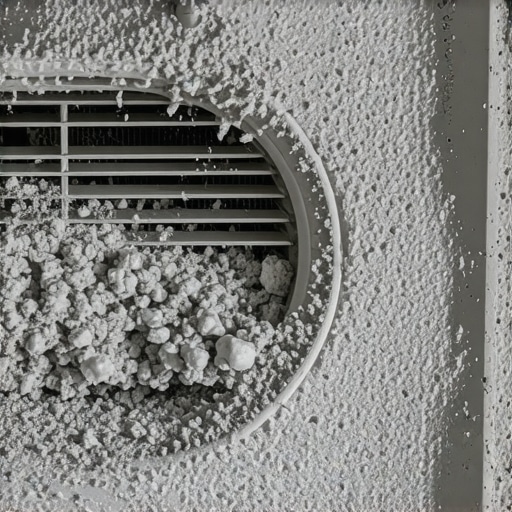
The Autopsy of a Failed Exhaust System: Beyond the Hum
You walk into the master bath, flip the switch, and hear that familiar low-frequency drone. You assume the steam is being sucked away, but ten minutes later, the mirror is a foggy mess and the walls are weeping. Most homeowners think a bathroom fan is a simple box with a blade. As a forensic inspector who has spent 35 years tracing faults from the service mast to the last outlet in the crawlspace, I can tell you: that fan is a diagnostic window into your home’s respiratory and electrical health. When a fan fails to exhaust, it isn’t just a nuisance; it is a precursor to structural rot and electrical fire. If you are smelling something fishy or seeing ‘tea staining’ around the housing, you aren’t looking at a bad motor—you are looking at a system failure.
I recently walked into a ‘fully renovated’ mid-century ranch in a high-humidity zone. The flipper had installed high-end marble and a sleek, modern fan. But my moisture meter was pegged at 30% in the drywall. I pulled my tick tracer and realized the fan was pulling 1.5 amps but moving zero air. After cutting a hole in the ceiling, I found the flipper had buried a live junction box behind the unit and vented the fan directly into a pile of blown-in insulation. There was no duct. They’d used a widow maker (a non-contact voltage tester) to check for power, but they hadn’t checked for physics. The heat from the stalled motor was already charring the Romex sheath. This is why you hire bonded insured electrical professionals, not guys who find ‘clever’ shortcuts.
The Physics of Resistance: Why the Motor Screams But Doesn’t Work
To understand why your fan is failing, we have to look at the shaded-pole motor. These are common in exhaust fans because they are cheap and rugged, but they have zero starting torque. If there is any resistance—dust buildup, a stuck damper, or a crushed duct—the motor will enter a ‘locked rotor’ state. When a motor can’t spin, the electrical energy doesn’t disappear; it converts into heat. This is where thermal expansion becomes your enemy. In homes built between 1960 and 1980, we often see aluminum wiring feeding these circuits. Aluminum has a high coefficient of expansion. Every time that fan struggles and heats up the circuit, the wire expands and contracts, leading to Cold Creep. Eventually, the connection at the switch or the fan housing loosens, creating a high-resistance junction that can ignite.
“Aluminum wire connections can overheat and cause a fire without tripping the circuit breaker.” – CPSC Safety Alert 516
We see this same thermal stress when we do a meter base replacement after storm damage electrical repair. High resistance at any point in the system, whether it’s a fan motor or a main lug, is a fire waiting for an invitation. If your fan sounds like a jet engine, the bearings are likely shot, or the squirrel cage is caked in grime, increasing the load on the motor and the circuit. If you are experiencing this, you need same day service appointments to prevent a motor fire from spreading to the attic rafters.
The Ductwork Disaster: The Static Pressure Trap
Even if the motor is spinning perfectly, the air has to go somewhere. I frequently see fans vented with 4-inch flexible foil ducting that looks like an accordion. Every rib in that duct creates turbulence. If the duct runs more than 10 feet or has a 90-degree bend, the static pressure can exceed the fan’s ‘Sones’ rating. The air literally hits a wall of its own friction and pushes back into the bathroom. We often use monkey shit (duct seal) to ensure airtight connections at the housing, but no amount of sealant can fix a crushed duct. During a rough-in, we insist on rigid metal ducting whenever possible to minimize this resistance.
This is the same logic we apply to RV hookup installation or setting up a camper electrical panel. You can’t shove too much current through a small, poorly managed conductor without consequences. In a bathroom, the consequence is mold. In an RV or a home panel, the consequence is a melted bus bar. For those looking at modern upgrades, we often integrate smart thermostat wiring into the broader home HVAC strategy to manage humidity levels automatically, ensuring the fan runs until the dew point is cleared, but only if the physical infrastructure can handle the load.
The Hidden Electrical Culprits
Sometimes the fan isn’t the problem; it’s the electrical wiring services feeding it. If your fan slows down when the hair dryer is turned on, you have a shared neutral or a voltage drop issue. Modern code requires a dedicated 20-amp circuit for bathrooms, but many old homes have the fan, the lights, and the outlets all daisy-chained on a single 15-amp home run. Using your Wiggy (solenoid voltmeter) to check the load under stress will often reveal a drop that is starving the fan motor, causing it to run hot and inefficiently.
“All electrical equipment shall be installed in a neat and workmanlike manner.” – NFPA 70 (National Electrical Code)
If you’re dealing with failing systems, it’s often worth looking at your total home safety. When I’m in an attic checking a fan, I almost always find outdated smoke detector installation—units that are yellowed and expired. It’s part of the forensic process: if they neglected the fan ducting, they likely neglected the life-safety systems too. Whether it’s a malfunctioning electric gate opener or a flickering bathroom light, these are symptoms of a house that needs a professional eye. For more on how we diagnose these issues, you can see how electricians tackle troubleshooting for lighting installations.
The Fix: Reclaiming Your Air Quality
The repair isn’t just about swapping the fan. It’s about an autopsy of the entire installation. First, we use dikes to trim back any oxidized copper or aluminum wiring and ensure a fresh, torqued connection. Second, we verify the venting path. If the fan isn’t exiting through the roof or a soffit with a proper flapper, it’s not finished. Third, we check the circuit. If you are upgrading to a high-CFM unit, we might need to pull a new Romex line to handle the load without interfering with your lighting installations. You can read more about that in our lighting installations guide.
In the end, you want to sleep at night knowing your fan isn’t a heat source. Electricity isn’t a hobby, and moisture isn’t just a ‘bathroom smell’—it’s a slow-motion wrecking ball for your home’s structure. Get it checked, get it torqued, and get it vented correctly. If you have concerns about your home’s electrical integrity, especially after a storm, don’t wait for the smell of ozone to call us. We offer same day service appointments to catch these ‘time bombs’ before they blow. You can reach out through our contact page to get a pro on-site.