The Forensic Autopsy of a Failed Perimeter
I’ve spent thirty-five years pulling wire through the kind of attics that make your lungs feel like they’re lined with fiberglass and sweat. I’ve seen the industry transition from simple mechanical locks to complex smart home wiring systems, and I’m here to tell you: the technology has outpaced the installers’ brains. Last month, I was called to a forensic site where a high-end electric gate opener had failed during a security breach. The homeowner was baffled; they’d spent five figures on a system that supposed to be a fortress. I pulled the cover off the exterior control box, and my Wiggy barely had to touch the terminals before I saw the crime. It wasn’t a software hack. It wasn’t a master thief. It was a lazy contractor who didn’t understand the physics of a ‘fail-safe’ relay. My old journeyman used to smack my hand if I stripped a wire with a knife. ‘You nick the copper, you create a hot spot,’ he’d scream. He was right. That tiny nick creates a point of high resistance where the metal is thinner, leading to thermal expansion and eventual failure. But the flaw I found at this site was even more basic: the control wiring was accessible from the unsecured side of the gate. A simple short-circuit across the request-to-exit (REX) leads—easily accessible behind a plastic faceplate—told the system the homeowner was leaving, and the gate swung wide open for the intruder.
The ‘Low Voltage’ Delusion
Most electricians and security ‘techs’ treat CAT6 cabling services and phone line installation like they’re harmless toys because they aren’t pushing 240 volts. They’re wrong. While 12V or 24V DC won’t kill you with a shock, the amperage in a speaker system setup or an access control loop is enough to cause significant heat if there’s a bad connection. This is where Cold Creep comes into play. Even with copper, if a terminal screw isn’t torqued to spec, the cycle of heating and cooling causes the wire to slowly migrate out from under the pressure plate. Eventually, you get an arc. I’ve seen smart thermostat wiring char a piece of drywall because a ‘pro’ didn’t use a ferrules on stranded wire. They just twisted the strands, shoved them in, and hoped for the best. When we perform infrared thermography scans on these systems, those connections glow like a cigarette cherry in a dark room.
“Aluminum wire connections can overheat and cause a fire without tripping the circuit breaker.” – CPSC Safety Alert 516
While we mostly use copper for low-voltage signal wires today, many older homes undergoing a whole house fan wiring or generator transfer switch install still have legacy wiring that reacts poorly to modern smart hubs. If you are integrating new security tech into a mid-century home, you are likely dealing with insulation that has the structural integrity of a potato chip. You touch one wire to install a keypad, and three inches of brittle rubber flake off, leaving a Widow Maker hiding inside your wall. This is why how electricians tackle troubleshooting for lighting installations often begins with a complete assessment of the existing infrastructure before a single new device is added.
The Infrastructure Gap: CAT6 and Security Vulnerabilities
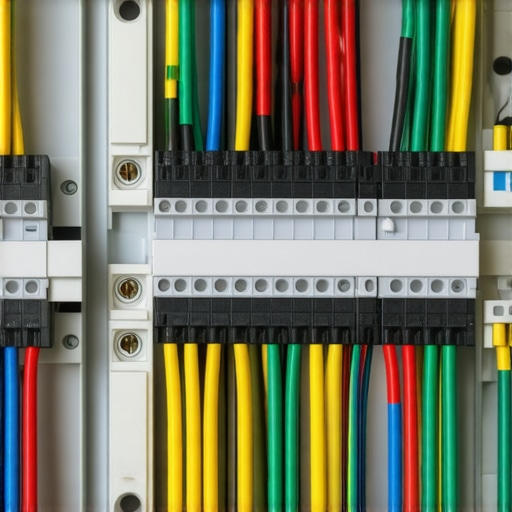
The flaw most contractors miss is the lack of physical hardening for signal wires. If your security camera wiring is just Romex or exposed CAT6 stapled to a fence post, you don’t have security; you have a suggestion of security. In coastal areas, salt air corrosion is the silent killer. Salt bridges the gap between phases in your outdoor boxes, leading to phantom triggers. I always tell my guys: if it’s outside, it gets Monkey Shit (duct seal) in the conduit ends and dielectric grease on the terminals. Without it, the moisture wicks up the wire through capillary action, rotting the controller board from the inside out. This is as critical as ensuring safe and efficient ev charging station setup at home; the environment will always win if you don’t seal it out. When we do a rough-in, we ensure every low-voltage run is protected by EMT or rigid conduit at any point where it is accessible to human hands. If a thief can reach your electric gate opener wires with a pair of Dikes, your encryption doesn’t matter.
Thermal Expansion and the Physics of Failure
Let’s talk about resistance. In a speaker system setup or a long-run CAT6 cabling service, the gauge of the wire matters more than the fancy gold-plated connectors. Voltage drop is real. If your smart home wiring is under-gauged, the resistance increases, the heat increases, and the signal degrades. I’ve seen ‘smart’ locks fail to retract because the installer used 24AWG wire for a 50-foot run that required 18AWG. The motor struggles, the solenoid gets hot, and eventually, the internal insulation melts. It’s the same principle we see when ev charger troubleshooting expert tips to fix common issues are ignored; heat is the enemy of electronics. During the trim-out phase, I use my tick tracer to ensure no stray induction is bleeding from high-voltage lines into my signal wires. If you run your security lines parallel to a 240V dryer circuit without 12 inches of separation, your ‘encrypted’ signal is going to be buried in electronic noise.
“All electrical equipment shall be installed in a neat and workmanlike manner.” – NEC Article 110.12
That ‘workmanlike manner’ is the difference between a system that lasts thirty years and one that fails in three. It means using the right zip ties, avoiding 90-degree bends that kink the copper, and ensuring every generator transfer switch or whole house fan wiring job is grounded back to the main service bus, not some ‘bootleg ground’ on a cold water pipe. For those looking for lighting installations made easy a step-by-step electrician guide, the first step is always acknowledging that you don’t know what you don’t know. If you’re unsure about the integrity of your phone line installation or how it interacts with your new VOIP-based security system, you need a forensic eye, not a handyman with a screwdriver. You want to sleep at night knowing your access control is actually controlling access, not just providing a convenient bypass for someone with a 9-volt battery and a pair of pliers. If you have concerns about your current setup, it’s time to contact us for a real inspection before the ‘time bomb’ in your walls decides to go off. We also recommend checking our top ev charger maintenance tips to see how we handle high-load safety and longevity. Don’t let a nicked wire be the reason your security fails.
Comments
One response to “The Security Flaw in Your Access Control Wiring Most Contractors Miss”
Reading this post really highlights how often the fundamentals get skipped in high-end security installations. I’ve seen countless setups where contractors overlook the importance of proper physical protection for signal wires, especially in outdoor environments. Running CAT6 or security wiring without proper conduit and sealant is like leaving a door open for interference or vandalism. One thing I’ve learned over years of troubleshooting is that the problem often isn’t just the equipment, but the conditions and installation quality that compromise long-term reliability. Has anyone else noticed a significant difference in system longevity after adopting more rigorous sealing and grounding practices? I’d love to hear some proven tips from others who have tackled similar vulnerabilities. It’s a stark reminder that good workmanship and attention to detail in wiring can save a lot of headaches down the road—and ensure those systems keep working when it really matters.