
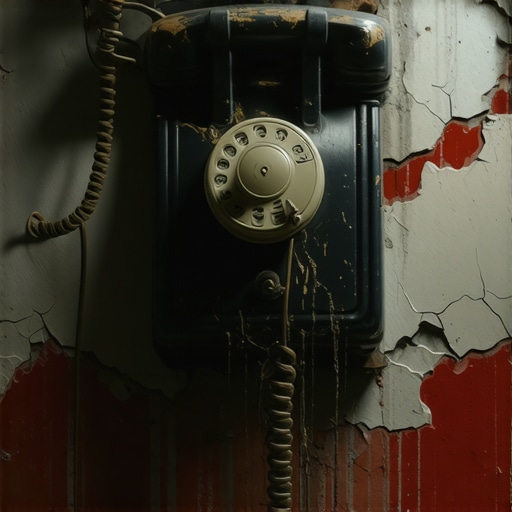
The Ghost in the Walls: A Forensic Look at Analog Vulnerabilities
My journeyman used to smack my hand if I stripped a wire with a knife. ‘You nick the copper, you create a hot spot,’ he’d scream. He was right. That lesson, pounded into me forty years ago, applies to every electron moving through your house, whether it is the 200-amp feed for your service entrance upgrade or the measly 48 volts sitting in those ancient, dust-caked analog phone lines. Most homeowners treat those old beige jacks like furniture—harmless relics of a pre-fiber era. But as a forensic inspector, I see them for what they really are: unmonitored copper highways that bypass your modern security and create physical fire hazards through neglected electrical safety audits.
“Communications circuits shall be installed in a neat and workmanlike manner. Cables and conductors installed exposed on the surface of ceilings and walls shall be supported by the building structure in such a manner that the cable will not be damaged by normal building use.” – National Electrical Code (NEC) Article 800.24
The problem with that ‘workmanlike manner’ is that most phone lines were slapped in during the rough-in phase by guys who weren’t even thinking about bonded insured electrical standards. They ran that thin, twisted-pair wire right over top of high-voltage home run lines. When the insulation on those old wires gets brittle—a process called polymer degradation—the physical gap between a lethal 120V circuit and your low-voltage phone line disappears. I have seen cases where a staple, driven too hard into a joist in 1974, finally cut through the jacket, energizing the entire phone system and melting a ceiling fan installation two rooms away. This is not just a ‘glitch’; it is a localized thermal event waiting for an oxygen source.
Component Zooming: The Physics of the Demarcation Point
Let’s talk about the ‘demarc’—the Network Interface Device (NID) on the side of your house. In older installations, these boxes are often forgotten, their seals rotted away by salt air or dry rot. Inside, you have a lightning arrestor that likely hasn’t been tested since the Reagan administration. When a surge hits, the gas-discharge tube or carbon-block protector is supposed to shunt that energy to ground. But if your service entrance upgrade didn’t include a proper bond to the communication system, that surge has nowhere to go but into your house. We’re talking about nanosecond-fast voltage spikes that can bypass your smoke detector installation and fry the control boards of your energy storage systems.
I’ve walked into restaurant kitchen electrical inspections where the old phone lines were coated in a thick layer of conductive grease. One spark from a failing compressor, and those lines act like a fuse. The physics of Cold Creep—usually discussed during aluminum wiring repair—actually has a cousin in the low-voltage world. Loose screw terminals on old 66-blocks or 110-blocks create high-resistance connections. Resistance generates heat. Heat causes the metal to expand and contract, further loosening the connection. Eventually, you get micro-arcing. You can’t see it, but your tick tracer will scream when you get near it. It’s a slow-motion fire that your breakers won’t catch because the current draw is too low to trip a standard thermal-magnetic breaker.
The Security Breach: Analog is an Open Door
Beyond the fire risk, there is the literal security risk. Analog lines are ‘clear text’ in the physical world. Any hacker with a pair of dikes and a basic butt-set can tap into a line at the exterior box. If your alarm system still relies on that POTS (Plain Old Telephone Service) line, it is a liability. It takes five seconds to cut that line, rendering your professional monitoring useless. This is why I always recommend contacting a pro to decommission these legacy systems during any major renovation. If you are doing augmented reality troubleshooting for your home network, you’ll see those old lines are nothing but interference-generating antennas that degrade your actual high-speed data.
“Aluminum wire connections can overheat and cause a fire without tripping the circuit breaker.” – CPSC Safety Alert 516
While the CPSC was talking about 120V circuits, the principle of thermal runaway applies to any poor connection. I once found a ‘handyman special’ where a guy had used old phone wire to jump a thermostat connection for a furnace. The wire was never rated for the current, even at 24V. It turned the jacket into a liquid puddle of toxic smoke. If you’re dealing with after hours electrical repair, 90% of the time it’s because someone ignored a ‘small’ issue like a flickering light or a humming phone line until it became a widow maker. Check your panels. If you see ‘monkey shit’ (duct seal) drying out and cracking where the lines enter, you have an air-leak and a moisture path. Moisture leads to galvanic corrosion, especially if you have copper phone lines touching aluminum chassis components without a transition. My wiggy has told me more truth than any realtor ever has: if the bones of the electrical system are rotting, the rest of the house is just a pretty mask. Ensure you’re troubleshooting properly and don’t let a legacy phone line be the reason your new ev charger installation fails its first safety check. Sleep at night knowing every lug is torqued and every dead line is pulled.