
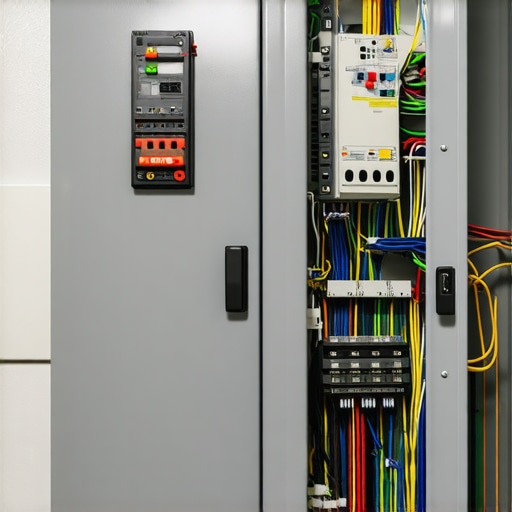
The Humming Wall: Why Your Panel is Screaming for Help
You’re sitting in your living room when the lights do that slow, nauseating dim. Then comes the sound—a faint, high-pitched sizzle, like bacon frying behind the drywall. Most homeowners ignore it until the smell hits. It’s a sharp, chemical stench that sticks to the back of your throat: the smell of phenolic resin cooking. As a master electrician with over three decades in the trade, I’ve smelled that scent more times than I’d like. It’s the smell of a 60-amp or an outdated 100-amp service reaching its thermal limit. When you try to run a modern HVAC, a microwave, and a hair dryer on a mid-century service, you aren’t just using electricity; you’re conducting a slow-motion arson experiment. Modern life demands a robust 100 amp service upgrade at the bare minimum, yet many people are still relying on infrastructure designed when the most high-tech thing in the house was a toaster.
My old journeyman, a guy we called ‘Static’ Pete, used to slap my hand with a pair of dikes if he saw me rushing a terminal screw. ‘You don’t just tighten it, kid,’ he’d growl. ‘You torque it. If it’s loose, it’s a heater. If it’s a heater, it’s a fire.’ He was obsessed with the physics of the connection. He knew that even a slightly loose lug creates resistance, and resistance at high amperage generates heat that can reach over 1,000 degrees Fahrenheit without ever tripping a breaker. That lesson stayed with me every time I opened a load center. Today, we see the same issues with tiny home wiring or neglected suburban split-levels where the homeowners think they can just keep adding circuits to a panel that was obsolete before they were born.
“Aluminum wire connections can overheat and cause a fire without tripping the circuit breaker.” – CPSC Safety Alert 516
The Forensic Breakdown: Why Old Panels Fail
If your home was built between 1960 and 1980, you’re likely sitting on a ticking time bomb. It isn’t just about the capacity; it’s about the metallurgy. During this era, aluminum wiring was the darling of the industry. The problem is a phenomenon called ‘Cold Creep.’ Aluminum expands and contracts at a much higher rate than copper when it carries current. This constant movement eventually backs the wire out of the terminal. Once that happens, you get an air gap. Electricity hates a gap, so it jumps it, creating an arc. This arc-flash potential is why modern pros perform arc flash studies on larger systems, but in your home, it just means a charred bus bar and a potential house fire. If you have cloth insulated wiring replacement needs, you’re dealing with insulation that turns to dust the moment you touch it, leaving bare copper exposed inside your walls.
When we talk about load center upgrades, we aren’t just swapping a box. We are looking at the entire path of power. This includes the meter socket replacement. I’ve pulled meter heads where the jaws were so pitted from arcing that they’d welded themselves to the glass. In coastal areas, the salt air acts as a catalyst, creating a galvanic reaction between the steel enclosure and the copper conductors. The salt bridges the phases, creating a path for current to leak where it shouldn’t. This is where we use ‘monkey shit’—that’s duct seal for the laypeople—to plug the service mast and keep moisture from migrating down the pipe into your main lugs. Without proper sealing, your panel becomes a humid terrarium for corrosion.
The Homeowner’s Upgrade Checklist
Before you call an electrician to discuss ensuring safe and efficient EV charging station setup at home, you need to know if your service can handle the draw. A 100 amp service upgrade isn’t just a recommendation; it’s a safety floor. Here is the checklist you need to follow:
- The Load Calculation: Don’t guess. We use Article 220 of the NEC to calculate the demand. You have to account for the square footage, the fixed appliances, and the ‘continuous loads’ like your HVAC. If you’re adding energy storage systems or a hot tub, your 100-amp panel might already be at 80% capacity.
- Meter Socket Inspection: Is the tinning on the lugs flaking? Is there rust at the bottom of the can? If the meter socket is compromised, the best panel in the world won’t save you. Storm damage electrical repair often starts right here at the service entrance.
- The Grounding Electrode System: A 100-amp service requires a specific grounding path. This usually means two eight-foot copper-clad ground rods driven into the earth, spaced at least six feet apart. Without this, your surge protectors are useless ornaments.
- Main Breaker Integrity: If you have a Federal Pacific or Zinsco panel, the ‘stop’ is non-negotiable. These brands are notorious for ‘jamming.’ The breaker looks like it’s in the off position, but the internal contacts are welded shut. You think the circuit is dead, you grab a wire, and you become the path to ground. We call that the ‘widow maker’ for a reason.
“The grounded conductor shall be connected to the equipment grounding conductor and to the grounding electrode conductor at each service.” – NEC Article 250.24
The Process: From Rough-In to Trim-Out
A proper 100 amp service upgrade is a choreographed dance. First, the rough-in involves mounting the new enclosure and pulling the ‘home run’ cables—the main feeders that bring the juice from the street. If we are dealing with a transformer installation nearby, we have to ensure the step-down voltage is stable. During the trim-out phase, every wire is stripped with precision. I never use a knife; I use calibrated strippers because a single nick in the copper creates a ‘hot spot’ where the cross-sectional area is reduced, increasing resistance. We then apply dielectric grease to aluminum connections to prevent oxidation and torque every lug to the manufacturer’s inch-pound specifications. You’ll see me using a ‘tick tracer’ or a ‘Wiggy’ (solenoid tester) to verify the presence of voltage before I ever touch a terminal. If you don’t see your electrician using a torque wrench, they aren’t finishing the job; they’re just starting a future fire.
For those looking into top EV charger maintenance tips for optimal performance, remember that the charger is a continuous load. It draws high current for hours. This heat soak will find every weakness in a 100-amp panel. If you have old Romex with a reduced-size ground, you might find that your charger keeps tripping because of ground-fault leakage. This is why annual maintenance contracts are vital for homes with high-demand electronics. A pro will come in with a thermal imager and find the heat before the smoke starts. If you’re experiencing issues already, you might need ev charger troubleshooting expert tips to fix common issues to determine if the panel or the device is the culprit. Often, it’s just a loose neutral in the load center that’s causing a voltage imbalance.
Sleep Better with a Torqued Connection
Electricity is a lazy, dangerous beast. It always takes the path of least resistance, and if that path is through your body or your attic insulation, it doesn’t care. Upgrading to a 100 amp service is about more than just being able to run the toaster and the vacuum at the same time. It’s about ensuring the protection devices—the breakers—actually work when they are supposed to. Whether you are dealing with lighting installations made easy or a complex troubleshooting for lighting installations, the foundation is always the panel. If your foundation is cracked, the house won’t stand. Don’t wait for the fishy smell of burning plastic. Check your panel, look for the brand name, and if you see ‘Federal Pacific’ or a nest of messy, un-labeled wires, it’s time to make the call. You can contact us to get a real pro to look at your service before the lights go out for good. For more information on how we handle your data, please see our privacy policy.