
The Smell of Impending Disaster
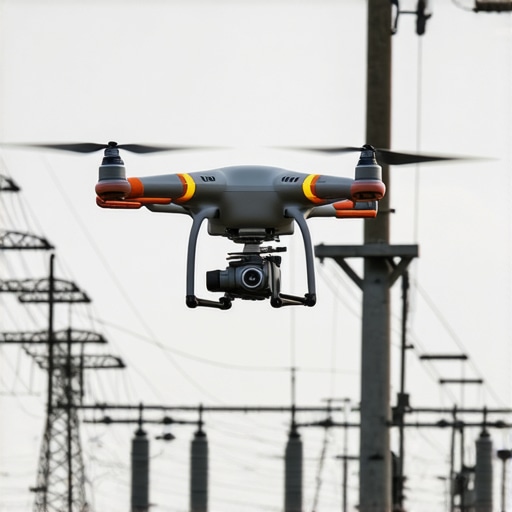
You never forget the scent of ionized air. It is a sharp, metallic tang that hits the back of your throat right before a 480-volt bus duct decides to vent its soul through the roof. I have spent three and a half decades chasing those smells, often climbing shaky ladders in industrial basements where the air is thick with the hum of three phase power services. But the game has changed. We are no longer just relying on a Wiggy and a prayer. Today, we use drone light inspections and AI fault detection to see the invisible killers lurking in the rafters of a distribution center before they turn into a 24 hour emergency electrician call. This is not about some fancy tech hobby; it is about forensic precision in a world where a single loose lug can cost a company millions in downtime.
The Flipper’s Ghost: A Forensic Reality
I walked into a supposedly ‘state-of-the-art’ distribution hub last year that had just undergone a massive office lighting upgrade. The flipper who handled the electrical ‘renovation’ had buried three-phase junction boxes behind twenty feet of industrial racking. I could not see them, but my drone’s thermal sensor could. We found a Home Run that was pulling 140 degrees because the installer had used a Tick Tracer to check for dead wires instead of actually testing the load. They had pigtailed copper to old aluminum busbars without using an anti-oxidant joint compound. In the electrical trade, we call that a ‘time bomb.’ The heat was so intense it was beginning to liquefy the ‘monkey shit’ (duct seal) used to plug the conduit entries. If we had not flown that audit, that building would have been a charcoal remains within a month.
“Electrical equipment shall be maintained in accordance with manufacturer’s instructions and NFPA 70B to ensure safe operation and longevity.” – NFPA 70B Standard for Electrical Equipment Maintenance
Component Zooming: The Physics of Thermal Runaway
When we talk about circuit breaker replacement or lighting install projects, most people think about a screwdriver and some Romex. They do not understand the molecular nightmare of contact resistance. Every electrical connection is a microscopic mountain range. If those peaks do not mash together with enough torque, electricity has to jump the gaps. This creates micro-arcing. Micro-arcing creates carbonized paths. Carbon is conductive, but highly resistive, which creates more heat. This is a feedback loop called thermal runaway. In a commercial setting, especially with three phase power services, this heat can expand the metal (Cold Creep), which then cools and contracts when the load drops at night. This cycle eventually vibrates the bolt loose. A drone equipped with a high-resolution FLIR camera captures these thermal signatures from fifty feet away, identifying a 5-degree temperature delta that a human eye would never spot until the sparks start flying.
The Infrastructure Context: Modern Commercial Load Demands
Modern buildings are not just light bulbs and heaters anymore. We are integrating demand response systems and high-speed data centers into aging skeletons. This is where AI fault detection becomes critical. AI can analyze the flicker frequency of a LED lighting install or the harmonic distortion in a motor bank to predict a bearing failure or a neutral overload. When we perform a shed wiring install for a secondary utility building, we are looking at how that load impacts the primary transformer. Is the transformer hum increasing? Is there ‘tracking’ visible on the porcelain insulators? Drone scans allow us to inspect high-voltage masts and service drops without putting a lineman in a bucket where an arc-flash could turn them into a statistic.
“Arc-flash hazard analysis shall be performed before any person is exposed to electrical hazards.” – NFPA 70E Standard for Electrical Safety in the Workplace
Why Manual Audits Fail the Modern Test
The old way involved a guy with dikes and a flashlight wandering the floor. But you cannot see the hairline fracture in a ceramic insulator from the ground. You cannot see the salt-air corrosion eating through a stainless steel enclosure on a rooftop unit in a coastal environment. Salt bridges the gap between phases, creating a path for a phase-to-ground fault. By the time that fault trips a breaker, the equipment is already toast. Our lifetime workmanship guarantee is built on the fact that we use these audits to ensure every circuit breaker replacement is backed by a load calculation that actually reflects the real-world stress of the system. Whether it is lighting installations or complex power distribution, the data does not lie.
The Solution: A Proactive Forensic Approach
If you are managing a commercial property, you need to stop thinking about your electrical system as a static utility. It is a living, breathing, and aging entity. Using drone scans is the only way to audit the entire infrastructure safely and comprehensively. From the rough-in phase of a new build to the trim-out of a major renovation, seeing the thermal and structural integrity of your wiring is paramount. If you suspect your system is struggling under the weight of new equipment, or if you’re seeing weird voltage drops during peak hours, it’s time for a professional audit. Don’t wait for the 24 hour emergency electrician to tell you your building is unsafe. You can contact us today to schedule a forensic drone audit that identifies the heat before the fire starts. It is cheaper to replace a breaker than to rebuild a warehouse. Sleep at night knowing your lugs are torqued and your thermal signatures are cold. That is the only way to run a business in this high-voltage world.