
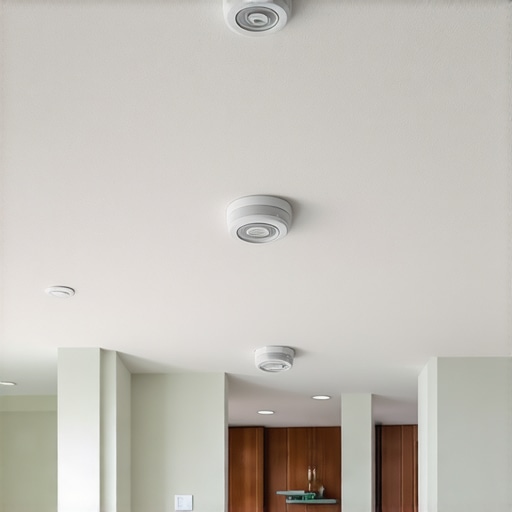
The Autopsy of a House Fire: Why Your Smoke Detector Strategy is Failing
I’ve spent 35 years pulling burned-out Romex from wall cavities and staring at the charred remains of main disconnect services. You don’t forget the smell. It’s a mix of burnt hair, acrid plastic, and the metallic tang of ozone. Most people treat smoke detectors like a nuisance—something to be silenced with a broom handle when the toast burns. But as a forensic inspector, I look at those white plastic discs as the only thing standing between your family and a statistics report. If you think sticking one unit in the hallway from 1984 is enough, you’re betting your life on a widow maker.
My old journeyman used to smack my hand with a pair of dikes if I stripped a wire with a pocket knife. ‘You nick the copper, you create a hot spot,’ he’d scream. He was right. That microscopic nick causes resistance, resistance causes heat, and heat causes the home run in your wall to ignite long before a breaker ever thinks about tripping. This is especially true in mid-century homes where aluminum wiring is present. Aluminum suffers from ‘cold creep’—it expands and contracts more than copper, eventually backing out of screws and creating high-resistance arcs. When that happens in the middle of the night, your smoke detector placement determines if you wake up or succumb to carbon monoxide before the flames even reach the bedroom door.
“Smoke alarms shall be installed in every sleeping room, outside each separate sleeping area in the immediate vicinity of the bedrooms, and on each additional story of the dwelling.” – NFPA 72 National Fire Alarm and Signaling Code
The Physics of Smoke: Why Dead Air Zones Kill
Smoke doesn’t just fill a room like water; it follows the laws of fluid dynamics. As hot gases rise, they create a ‘laminar flow’ that hits the ceiling and spreads outward. However, corners are ‘dead air’ spaces. If you mount a detector right in the junction where the wall meets the ceiling, the smoke will actually swirl around it, delaying the alarm by critical seconds. You need that detector at least 4 inches away from the wall-ceiling corner. If you’re dealing with a vaulted ceiling, that ‘dead air’ pocket is even larger at the peak. You have to mount the sensor 3 feet from the highest point to ensure it actually catches the thermal plume.
During my electrical inspections, I often find detectors placed right next to AC vents or ceiling fans. This is a death trap. The moving air creates a high-pressure zone that pushes smoke away from the sensor. It’s like trying to smell a candle while standing behind a jet engine. We also need to talk about ‘nuisance tripping.’ Most people put their detectors too close to the kitchen or bathroom. Steam from a shower or burnt grease from a steak triggers the alarm, the homeowner gets annoyed, pulls the battery, and then forgets. If you have patio cover outlets that are poorly sealed with monkey shit (duct seal), moisture can even travel back through the conduit into the interior, causing false alarms or corroding the sensor’s delicate circuitry.
Interconnectivity: The Silent Sentinel
In the old days, smoke detectors were islands. If a fire started in the basement near your three phase power services or standby generator install, you wouldn’t hear the alarm in the third-floor attic bedroom until the floorboards were melting. Modern home rewiring services focus on interconnectivity. If one goes off, they all go off. This is non-negotiable. If your home was built between 1960 and 1980, you likely have individual battery units. You need a rough-in for a hardwired, interconnected system. If we are performing a lighting installation, it’s the perfect time to pull the extra travelers for a fire safety circuit.
“Aluminum wire connections can overheat and cause a fire without tripping the circuit breaker.” – CPSC Safety Alert 516
When I conduct thermal imaging inspections, I’m looking for the heat signatures that smoke detectors can’t see yet. I see the overhead service drop vibrating under load, the main disconnect glowing at 180 degrees because of a loose neutral, and the access control wiring that’s been chewed by rodents. These are the precursors to the smoke. If your power quality is poor, your sensitive electronics—including those fancy smart smoke detectors—can fail prematurely. A power quality analysis can reveal surges that fry the ionization chambers in your detectors, rendering them useless plastic shells.
Strategic Placement: A Room-by-Room Breakdown
Every bedroom needs its own detector. Period. Most fire deaths occur while people are sleeping because your sense of smell shuts down when you’re in deep REM. You won’t smell the Romex melting; you need the 85-decibel scream of a piezo siren to rattle your eardrums. Outside the sleeping areas, you need another unit. If you have a long hallway, one at each end is the standard. Don’t forget the basement. Fires often start near the main disconnect services or the furnace. Placement here should be on the ceiling at the bottom of the stairs to catch smoke before it chimneys up into the living quarters.
If you’ve recently performed a home EV charging station setup, you’ve just added a massive continuous load to your electrical system. This increases the thermal stress on your entire panel. I’ve seen 100-amp panels struggle to keep up, leading to bus bar pitting. If your charger is in the garage, you need a heat detector there—not a smoke detector. Smoke detectors in garages are prone to false alarms from exhaust or dust, but a heat detector will trigger when the temperature spikes from a lithium-ion runaway. Regular maintenance is key; check our EV charger maintenance tips to ensure your high-draw appliances aren’t becoming fire hazards.
The Forensic Conclusion: Don’t Be a ‘Handyman’ Statistic
I’ve seen enough ‘handyman specials’ to know that people underestimate electricity. They think a tick tracer is all they need to be an expert. They bury junction boxes behind drywall and hope for the best. But physics doesn’t hope. Resistance leads to heat, and heat leads to fire. When that fire starts, your smoke detector placement is the final line of defense. If you haven’t had an inspection in the last five years, or if you’re hearing strange pops from your panel, contact us immediately. We don’t just ‘install’ things; we engineer safety. We use Wiggys to verify voltage and ensure every screw is torqued to spec because that’s what stops the fire before the smoke even starts. Sleep at night knowing your family is protected by more than just luck and a 9-volt battery.
Comments
2 responses to “Where to Place Smoke Detectors to Actually Save Your Family in an Emergency”
This article really highlights the importance of precise placement and maintenance of smoke detectors—something that can easily be overlooked until it’s too late. I appreciate the detailed explanations about dead air zones and how airflow can hinder detection; it’s a reminder that layout and environmental factors are just as critical as the device itself. I wonder, with the proliferation of smart home systems, how others are integrating interconnected alarms with real-time monitoring? Have any of you found effective ways to ensure these devices are consistently working at optimal levels, especially in complex HVAC environments or vaulted ceilings? It’s fascinating to see how physics and proper electrical practices come together in home safety. Personally, I’ve started inspecting my own detectors every six months and ensuring they’re away from vents and high-moisture areas—less of a hassle than dealing with a catastrophic fire. Would love to hear any tips on common mistakes or innovative placement ideas that have worked for others here.
This post really emphasizes how critical strategic placement of smoke detectors is for real safety, not just compliance. I’ve also learned that many homeowners underestimate how air flow and room layout impact detection times. I remember installing detectors in my own home, making sure to avoid areas next to vents or near windows that could cause drafts—this simple adjustment actually improved the alarm’s responsiveness. It’s interesting that you mention vaulted ceilings; I never thought about how much the peak can hinder smoke detection. In my experience, using long-range detectors or heat sensors in tricky spots like that can make a big difference. I’d love to hear how others have handled the challenge of placing detectors in large spaces or in homes with complex architectural features. Do you think integrating smart interconnected alarms with regular maintenance routines offers a significant safety improvement? Ensuring these devices are correctly placed and functional might just be the best investment in family safety.