
The August Meltdown: When the Vintage Service Meets Modern Climate Reality
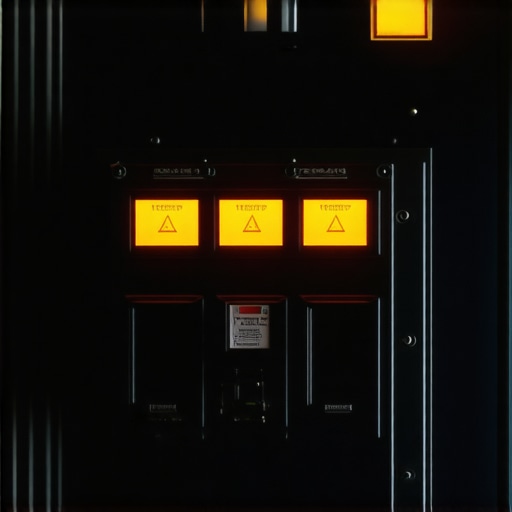
You can smell a cooking electrical panel before you see it. It is a sharp, chemical stench—the unmistakable perfume of phenolic plastic baking at 200 degrees Fahrenheit mixed with the dry, metallic sting of vaporizing copper. I walked into a basement in early August during a blistering heatwave. The homeowner complained that their window AC units were “blowing lukewarm” and the living room lights were doing a slow, rhythmic brownout cycle. I bypassed their digital voltmeter and pulled out my trusted analog Wiggy tester. When I probed the bus bars of that ancient 60-amp split-bus panel, the vibration in my hands told me everything I needed to know. The main lugs were drawing near-capacity currents, and one side of the service line was dropping to 94 volts under load. It was a miracle the house hadn’t burned down while they slept.
“Where aluminum or copper-clad aluminum conductors are used, connection failures can occur under thermal cycling conditions, creating high-resistance contact points that do not trip standard overcurrent devices.” – NFPA 70E Electrical Safety Standard
If your home is still running on a 60-amp service installed during the Eisenhower administration, you are playing Russian roulette with your infrastructure. These services were engineered for a world where a family’s peak draw consisted of a 100-watt bulb in the kitchen, a tube television, and maybe a refrigerator with a compressor the size of a toaster. Today, you are plugging in dual-compressor refrigerators, multi-ton air conditioners, induction cooktops, and perhaps even attempting an EV charger installation on a system designed when vacuum tubes were cutting-edge technology.
The Physics of Mid-Century Failures: Cold Creep and Thermal Expansion
To understand why these legacy panels fail during peak summer loads, we have to look at the metallurgy and mechanical physics occurring inside that dark metal box. During the 1960s and 1970s, many of these 60-amp services were wired using aluminum branch circuits or copper-coated aluminum. Aluminum has a thermal expansion coefficient that is significantly higher than copper. When your air conditioner kicks on, drawing a massive inductive surge, the aluminum wire heats up and expands. Because it is trapped under a steel terminal screw on the breaker, it cannot expand outward. Instead, it deforms, squishing out of the sides of the connector—a physical phenomenon known as Cold Creep.
When the air conditioner cycles off, the wire cools down and contracts. But because it was permanently deformed during the expansion cycle, it shrinks back smaller than its original size. A microscopic air gap forms between the wire and the terminal screw. This gap introduces oxygen, which instantly reacts with the aluminum to form an aluminum oxide layer. This oxide layer acts as an insulator, drastically increasing the electrical resistance at the joint. According to Ohm’s Law, when resistance increases while current draw remains high, the result is localized heat. The next time the compressor starts, that connection gets even hotter. This cycle repeats until the screw loses all holding force, the insulation melts, and you have an active, arcing fire hazard hidden inside your wall.
Why Summer Peaks Turn Minor Resistance into Catastrophic Failure
Summer is the ultimate stress test for residential electrical systems. It is not just about the ambient indoor temperature; it is about the sustained, non-linear load profile that modern air conditioning demands. When the outside temperature passes 95 degrees, your AC system does not cycle; it runs continuously for six, eight, or twelve hours. This sustained draw eliminates the cool-down periods that normally allow compromised connections to dissipate heat.
Furthermore, many homeowners run additional high-draw appliances simultaneously. Our diagnostic team often performs electrical troubleshooting on homes where a family has added extensive outdoor features like high-power tree mounted lights, pool pumps, or outdoor entertainment centers. When we conduct detailed infrared thermography scans on these systems during peak afternoon hours, the thermal imaging inspections paint a terrifying picture. Circuit breakers designed to operate at room temperature are glowing white-hot on the flir screen, radiating heat directly into the bus bars of the panel.
“Fires caused by old wiring or overloaded panels frequently originate at high-resistance connection points rather than from direct short circuits, rendering traditional breakers ineffective at stopping the ignition.” – CPSC Safety Alert 516
An outdated 60-amp panel simply lacks the physical real estate and thermal mass to dissipate this heat. When a breaker heats up due to high ambient temperatures within the enclosure, its internal bi-metallic strip deforms prematurely. This causes “nuisance tripping” where the breaker shuts down even though the current draw is slightly below its nominal rating. Many homeowners respond to this by replacing the breaker with a larger one—a fatal mistake that overrides the safety limits of the underlying Romex or knob-and-tube wiring.
The Forensic Breakdown: The Mechanics of Legacy Panel Brands
If you have a 60-amp service, there is a high probability it is housed in a panel manufactured by Federal Pacific Electric (FPE) or Zinsco. These brands are notorious in the forensic inspection community. In FPE “Stab-Lok” panels, the breakers utilize a design where the female prong of the breaker pushes onto a male bus bar tab. Over time, the tension on these spring clips degrades, especially under the heavy thermal cycling of summer loads. The loose connection arcs, carbonizing the surrounding plastic housing. This carbon buildup creates a semi-conductive path, allowing current to flow continuously, even when the breaker is manually switched off.
Zinsco panels suffer from a similar flaw where the aluminum bus bars are prone to severe corrosion when exposed to any humidity. As the aluminum oxidizes, it creates a high-resistance joint where the breaker clips onto the bus bar. Under heavy loads, these components fuse together. The breaker is physically welded to the bus bar, rendering its internal trip mechanism useless. You can have a dead short in your branch circuit, but the breaker will refuse to trip because its mechanical parts are fused solid. This is why forensic inspectors refer to these old panels as “widow makers.”
Resolving the Bottleneck: Modern Code and Load Management
The only safe, permanent solution to an overloaded 60-amp service is a complete service entrance upgrade. This is not a simple DIY project or a task for a neighborhood handyman using some electrical tape and monkey shit duct seal. It requires a licensed master electrician to perform meticulous electrical load calculations to determine the true demand of your modern household before pulling new service conductors.
A proper modern upgrade transitions your home to a 200-amp service. This process involves installing a new, weather-proof meter socket on the exterior of the house, heavy-gauge copper service entrance cables, a new main breaker panel with ample branch circuit capacity, and bringing your grounding system up to modern NEC standards. This includes installing dual copper-clad grounding rods spaced at least six feet apart and ensuring proper connection to your cold water pipe with robust bonding jumper services. During the rough-in phase, we also ensure that high-voltage lines are separated from low-voltage runs like ethernet wiring services to prevent electromagnetic interference.
Preventative Diagnostic Technologies
For homeowners who cannot immediately execute a full service upgrade, modern diagnostics can help identify critical risks before they become emergency calls. We utilize advanced remote electrical diagnostics and real-time power monitoring to track phase imbalances and voltage drops. Additionally, performing periodic power factor correction and torque testing on all mechanical connections inside your panel can mitigate some thermal risks. However, these are temporary safety measures. When you are drawing 55 amps on a 60-amp system on a 100-degree afternoon, you are operating on borrowed time. Upgrading your service is not about adding luxury; it is about ensuring that the sanctuary of your home does not become a statistics report on electrical fires.