
The Ghost in the Walls: A Forensic Look at Vintage Circuits
When I step into a crawlspace of a home built before the 1950s, my nose usually catches it before my eyes do. It is a specific scent—a mixture of ancient dust, ozone, and the faint, sweet smell of deteriorating vulcanized rubber. For a forensic inspector, that smell is a siren song of impending failure. You see, the era of cloth-insulated wiring was a time of different physical assumptions. Back then, we didn’t worry about R-value or energy efficiency; we worried about keeping the lights on. My old journeyman used to smack my hand if I stripped a wire with a knife. ‘You nick the copper, you create a hot spot,’ he’d scream. He was right. Those tiny nicks in a solid-core conductor, hidden under layers of brittle cotton braid, are where the trouble starts, especially when you decide to ‘improve’ your home with modern insulation. This is the story of how a well-intentioned energy upgrade can turn a 70-year-old electrical system into a thermal time bomb.
The Physics of the Thermal Blanket
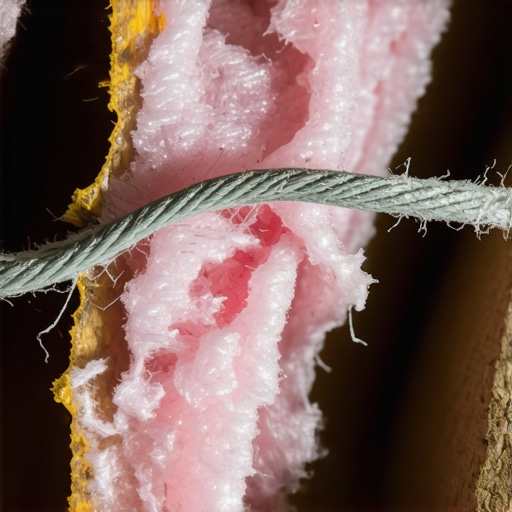
The fundamental problem isn’t just the age of the wire; it’s the thermodynamics of the installation. Cloth wiring, whether it’s the old-school Knob and Tube (K&T) or early versions of Romex, was designed to dissipate heat into the open air of your joist bays. Electricity flowing through a conductor creates heat—this is Joule heating, a simple matter of resistance. In an uninsulated attic, that heat radiates away harmlessly. However, when a homeowner decides to blow in eighteen inches of cellulose or fiberglass to save on the heating bill, they are effectively wrapping those conductors in a thick wool sweater.
“Continuous loads on old conductors, when surrounded by thermal insulation, can lead to temperatures exceeding the insulation’s rating, creating a significant fire hazard.” – NFPA 70 Safety Report
This insulation traps the heat. In a modern rough-in, we use THHN or NM-B wire with 90°C heat-rated plastic jackets. But that old cloth stuff? It was lucky to be rated for 60°C on the day it left the factory in 1944. Over decades, the rubber under the cloth braid undergoes a process called pyrolysis. It becomes brittle, cracks, and eventually turns into a carbonized powder. Carbon, unfortunately, is a conductor. Once that insulation fails, you have two energized conductors separated by nothing but a thin layer of carbonized dust and flammable cotton. One small surge, and you have an arc-fault that no standard breaker from that era will ever detect.
Component Zooming: The Anatomy of a Failure
Let’s look at the chemistry of the failure. The ‘rubber’ used in the mid-century wasn’t synthetic polymer; it was a vulcanized natural rubber compound. Over time, the sulfur used in the vulcanization process migrates, making the material ‘check’ or crack like a dry desert floor. When you add high-demand modern technology—like a demand response system or a multi-stage HVAC—you are pulling more current through those brittle lines than they were ever meant to handle. If you’ve got a holiday light installation that pulls 10 amps on a circuit already shared with a refrigerator, those old cloth wires are screaming. I’ve performed thermal imaging inspections where the wires behind the plaster were glowing at 140 degrees Fahrenheit. At that temperature, the wood lath starts to ‘bake.’ It doesn’t catch fire instantly; it undergoes a chemical change that lowers its ignition temperature. This is why houses with cloth wiring often burn down in the middle of the night, long after the lights are turned off.
The Grounding Gap and the Equipotential Nightmare
Modern electrical safety relies on a solid grounding electrode install. In the old days, they didn’t even use a green wire. They relied on the steel armor of BX cable or, worse, nothing at all. If you are trying to install a modern electric gate opener or an equipotential grid for a backyard pool, you cannot tie into these old circuits. I’ve seen ‘handymen’ try to create a ‘bootleg ground’ by jumping the neutral to the ground screw on a three-prong outlet. That’s a widow maker move. It puts the entire metal chassis of your appliances under a potential load. If you’re dealing with three phase power services in a residential shop or a heavy-duty garage, trying to integrate that with cloth-wired house circuits is asking for a phase-to-ground catastrophe. Proper OSHA compliance wiring during a renovation requires the total removal of these legacy systems because there is no way to verify their integrity once they’ve been disturbed. When we do a trim-out on a house with this history, we find that just moving the wire to install a new outlet causes the insulation to fall off like dry leaves.
Forensic Evidence: Why Your Insurance Company is Scared
Insurance companies aren’t in the business of losing money, and they know that cloth wiring is a liability.
“Aluminum wire connections and aged cloth-insulated systems are leading causes of residential electrical fires due to insulation breakdown and oxidation.” – CPSC Safety Alert 516
If you have a structured wiring panel feeding a high-tech home, but the home run back to the panel is cloth-covered, you are essentially plugging a supercomputer into a frayed extension cord. I’ve seen insurance adjusters walk straight to the attic, pull back a handful of insulation, and if they see that tell-tale braid, the policy is cancelled on the spot. You might think you can hide it with a new coat of paint, but a tick tracer or a Wiggy (solenoid tester) will tell the true story of the voltage drop occurring across those corroded splices. If you are worried about your current setup, you can see how we handle troubleshooting for lighting installations to see the difference between a simple fix and a systemic failure.
The Solution: Beyond the Band-Aid
Don’t fall for the ‘Handyman Special.’ Some guys will tell you they can just ‘inspect’ the wiring. You can’t inspect what you can’t see through a wall. The only real solution is a full rewire. This involves pulling new Romex or THHN in conduit to replace every inch of that vintage fire hazard. If you’re planning on modern lighting installations, you need to ensure the backbone of the house can handle the temporary power services required during the transition. While you’re at it, you should consider ensuring safe and efficient EV charging station setup at home, because an EV charger on a cloth-wired service is like trying to shove a firehose through a straw—the heat will melt the service entrance before the car even gets half a charge. You can’t just put ‘monkey shit’ (duct seal) over a problem and hope it goes away. You need to torque the lugs, drive the ground rods, and sleep at night knowing your house isn’t trying to kill you.