
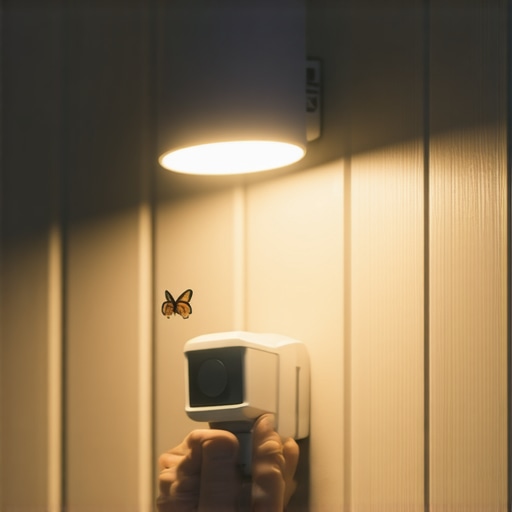
The Ghost in the Machine: Why Your Driveway Lights Won’t Behave
You’re sitting in your living room, the house is quiet, and suddenly the driveway floodlights kick on. You look at the monitor—nothing. No car, no raccoon, not even a stray leaf. Ten minutes later, it happens again. This isn’t a haunting; it’s a failure of physics and a lack of respect for the National Electrical Code. As someone who has spent nearly four decades chasing electrical phantoms with a Wiggy and a Tick Tracer, I can tell you that driveway sensor lights are the most lied-about components in your home’s ecosystem. Homeowners think they’re buying security; what they’re actually buying is a sensitive piece of laboratory equipment and mounting it in a hurricane-prone, spider-infested war zone.
“Aluminum wire connections can overheat and cause a fire without tripping the circuit breaker.” – CPSC Safety Alert 516
My old journeyman, a man who smelled exclusively of solder and menthol cigarettes, used to cuff me on the ear if I didn’t treat a Rough-in like it was going into a space shuttle. “Kid,” he’d say, “if you don’t torque those terminals until the copper screams, the vibration of a passing truck will turn that connection into a space heater.” He was right. Most ‘ghost’ triggers in outdoor lighting aren’t caused by movement; they’re caused by micro-arcing at the terminal or thermal expansion in the Home Run. If you’re dealing with flickering or phantom triggers, it’s time to stop looking at the sensor and start looking at the infrastructure.
The Forensic Breakdown: The Physics of the PIR Sensor
To fix the problem, you have to understand the Component Zooming of a Passive Infrared (PIR) sensor. These devices don’t ‘see’ movement like a camera; they detect changes in heat signatures across a Fresnel lens. This lens divides the world into ‘zones.’ When a heat source moves from one zone to another, the pyroelectric sensor inside generates a tiny voltage pulse. Here is where the smart home wiring era has complicated things. Modern driveway sensors are often integrated into home automation systems, which introduces high-frequency noise into the line. If your low voltage lighting or a nearby solar panel electrical hookup is dumping RFI (Radio Frequency Interference) back onto the neutral wire, that sensor’s logic board is going to hallucinate a heat signature that isn’t there.
The Enemy: Cold Creep and Thermal Expansion
In mid-century homes, we often see overhead service drops that are decades old. These systems were never designed for the rapid on-off switching of high-wattage LED arrays or the sensitive electronics of modern sensors. If your home has aluminum branch wiring from the 70s, you’re likely a victim of Cold Creep. Aluminum expands and contracts at a different rate than the brass or steel screws on your outlet switch repair or sensor terminals. Over time, this creates a high-resistance gap. This resistance generates heat. That heat, located just inches from the sensor’s infrared eye, is interpreted as motion. You aren’t seeing a burglar; you’re seeing your own house struggling to breathe. For a deeper look at how we diagnose these ghosts, see how electricians tackle troubleshooting for lighting installations.
The Grounding Trap and the ‘Widow Maker’
I’ve performed thermal imaging inspections on exterior junction boxes where the temperature was pushing 160 degrees Fahrenheit because of a ‘bootleg ground.’ A common ‘handyman special’ involves tying the neutral to the ground wire inside the fixture to make a Tick Tracer glow green. This is a lethal shortcut. In an outdoor environment, moisture turns that junction box into a conductor. I once found a camper electrical panel hooked into a residential driveway circuit where the lack of a proper ground rod was causing 50 volts of stray current to leak into the metal siding of the garage. If your sensor light stays on or flickers wildly, you might have a neutral wire that is partially severed or oxidized, a common issue in home rewiring services. When the neutral fails, the electricity looks for any path back to the transformer—often through your sensor’s delicate circuitry.
The Forensic Checklist: How to Silence the Ghost
First, check your smoke detector installation logic; if the sensors in your house are also chirping or acting up, you have a power quality issue at the overhead service drop. For the driveway light itself, start with the ‘Monkey Shit’ (duct seal). Most installers forget to seal the back of the junction box where the Romex enters. Cold air from the wall cavity blows onto the back of the warm sensor, causing a thermal shift that triggers the light. Second, ensure you aren’t overlapping your ceiling fan installation circuits with your outdoor lighting. High-inductive loads (like fan motors) create a ‘kickback’ voltage when they turn off, which can trick a cheap PIR sensor into thinking someone just walked by. If you’re planning a more robust setup, following a step-by-step electrician guide is vital to ensure your Rough-in is actually up to code.
“All equipment shall be installed and used in accordance with any instructions included in the listing or labeling.” – NEC 110.3(B)
The Solution: Professional Grade Stability
If you’re tired of the flickering, stop buying $20 plastic specials from big-box stores. You need a sensor with ‘Dual Technology’—one that uses both PIR and microwave detection. Microwave sensors can see through plastic and glass, but they aren’t fooled by wind or temperature changes. When paired with PIR, the light only turns on when both sensors agree there’s a human-sized heat source moving. Furthermore, ensure your installer uses dielectric grease on all outdoor connections to prevent the oxidation that leads to resistance-based heat triggers. Whether you’re dealing with a complex smart home wiring setup or just need a simple outlet switch repair, electricity is a science of containment. Treat it with the respect it deserves, or it will keep you up all night—one phantom trigger at a time.