
The Scent of a Time Bomb: Why Your Attic is a Rodent Buffet
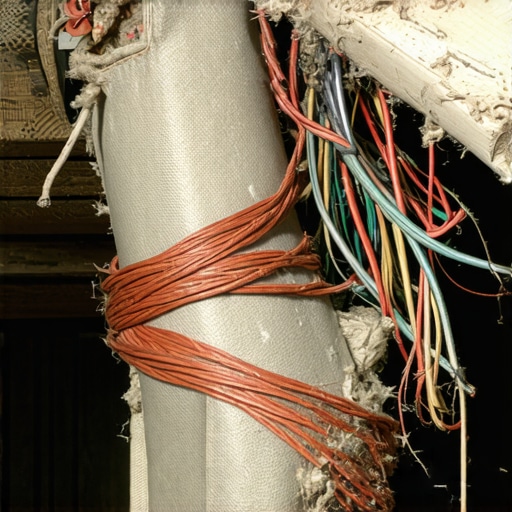
I’ve spent 35 years in the trade, and I can tell you exactly what 1940s-era cloth insulation smells like when it’s being toasted by a dead short: it’s a sickly-sweet mix of burnt marshmallow and ozone. Most homeowners see a house with ‘character’; I see a 2,000-square-foot tinderbox where the mice are the primary tenants. If you are living in a mid-century home, you aren’t just sitting on history—you’re sitting on a bio-organic feast for vermin. My old journeyman, a grizzled guy who could bend conduit with his teeth, used to smack my hand if I stripped a wire with a knife. ‘You nick that copper, you create a hot spot,’ he’d scream. ‘And in these old houses, that hot spot is the spark that lights the cotton wick.’ He wasn’t exaggerating. Cloth-insulated wiring is, for all intents and purposes, a series of flammable fuses running through your wall cavities.
“Arc-fault circuit interrupters (AFCIs) are necessary because they detect the specific signature of a dangerous arc, which often occurs when wire insulation is damaged by rodents or age.” – NFPA 70: National Electrical Code
The Forensic Breakdown: The Physics of Edible Insulation
To understand why rodents treat your electrical system like a snack bar, we have to look at the chemistry of cloth insulated wiring replacement. Unlike modern PVC or THHN insulation, early wire coatings were made from organic materials: cotton, hemp, and even paper, often saturated with an asphaltic compound to keep out moisture. Over time, that asphalt dries out through a process called outgassing. The insulation becomes brittle, cracking every time the wire undergoes thermal expansion from a heavy load. Rodents, specifically rats and squirrels, have incisors that never stop growing. They have an instinctual drive to gnaw on anything that provides the right resistance. The texture of petrified, asphalt-soaked cotton is, unfortunately, the perfect teething toy. This isn’t just a nuisance; it’s a precursor to a structure fire. When they chew through the cloth to get to the copper, they create a ‘widow maker’—a live, exposed conductor buried in a nest of flammable nesting material.
The Anatomy of Failure: From Arcing to Ash
When a rodent nicks a Home Run (the main circuit back to the panel), it doesn’t always trip the breaker immediately. If the mouse nicks the hot wire but doesn’t touch the neutral or a ground, that wire remains live and exposed. However, the carbonized path created by their urine or the nesting debris provides a bridge for electricity to jump. This is where AFCI breaker services become a non-negotiable safety upgrade. A standard breaker only trips on a massive surge of current (a short circuit) or an overload. An AFCI is smarter; it listens for the ‘noise’ of an arc—that tiny, sizzling spark that happens when electricity jumps across the gap the rodent chewed. Without these breakers, that arc can reach temperatures exceeding 10,000 degrees Fahrenheit, igniting the very cloth insulation the rodent found so tasty. If you haven’t had electrical inspections recently, you are essentially gambling that your rodents aren’t hungry today.
Component Zooming: The Danger of Carbon Tracking
In the trade, we talk about ‘carbon tracking’ as a silent killer. When the organic fibers of cloth insulation are subjected to low-level arcing, they don’t just burn away; they turn into carbon. Carbon is conductive. Once a path of carbon is established across the insulation, electricity begins to leak across it. This leakage generates heat, which creates more carbon, which allows more current to flow. It’s a runaway thermal reaction. I’ve seen rough-in boxes in old attics where the ‘monkey shit’ (duct seal) used to plug holes had been eaten away, allowing mice to use the conduit as a highway. They leave behind dander and waste that accelerates the corrosion of the copper. If you’re seeing flickering in your lighting installations, don’t assume it’s a bad bulb. It’s often the sound of a rodent-chewed wire finally giving up the ghost.
“Aluminum wire connections and aged cloth insulation can overheat and cause a fire without tripping the circuit breaker, especially when the integrity of the covering is compromised.” – CPSC Safety Alert
The Modern Audit: Beyond the Tick Tracer
Fixing this mess requires more than just a tick tracer (non-contact voltage tester) and a prayer. We now use drone light inspections to check for thermal signatures on rooflines where heat might be escaping—often a sign of compromised insulation or nesting. We also integrate remote electrical diagnostics through smart meter installation to monitor for unusual fluctuations in load that suggest a ‘phantom’ draw from a leaking circuit. If your panel is a relic from the 1960s, it’s time to talk about financing electrical upgrades. Modern systems aren’t just about convenience; they include a robust grounding electrode install to ensure that if a rodent does cause a fault, the path to ground is clear and the system shuts down instantly. We’re also seeing a massive trend toward energy storage systems (home batteries), which require pristine wiring to function safely. You can’t put a Tesla Powerwall on a house wired with rodent-chewed cotton and expect it to work. If you’re planning on ensuring safe and efficient EV charging, the very first step is purging that old cloth wire from the property.
The Solution: Why a Full Rewire is the Only Way to Sleep
A ‘patch job’ on cloth wire is like putting a band-aid on a gunshot wound. I’ve walked into too many ‘renovated’ homes where the flipper just spliced new Romex into old cloth wire and hid the mess in a junction box buried behind drywall. That’s a recipe for a 3 AM visit from the fire department. A proper cloth insulated wiring replacement involves a total gut of the old circuits. We pull new, THHN-insulated conductors through the existing pathways or run new lines entirely. During the trim-out, we ensure every outlet is grounded and every bedroom is protected by AFCI technology. We also look at the exterior, specifically pathway lighting install, to ensure that the entry points for these pests are sealed with steel wool and high-density foam. If you’re worried about the cost, remember that most insurance companies are now flagging homes with cloth wiring and either jacking up premiums or dropping coverage entirely. It’s a safety issue, a financial issue, and a ‘not-getting-your-house-burned-down’ issue. Don’t wait for the smell of ozone. If you suspect your home is a rodent buffet, it’s time to get a pro in there to pull the plug on the past. Contact us today for a forensic inspection of your home’s infrastructure.