
The Scent of a Looming Electrical Disaster
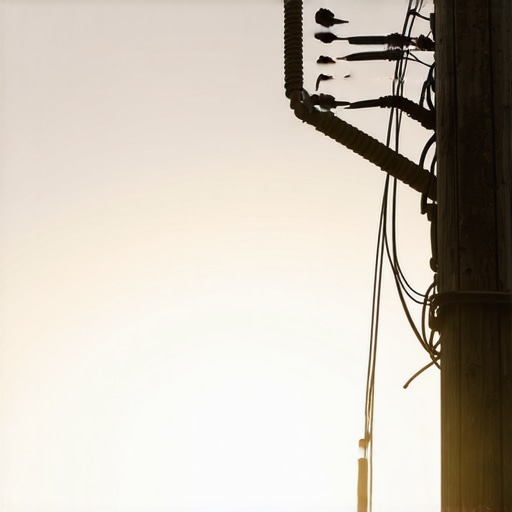
You smell it before you see it. It is a sharp, metallic tang—ozone mixed with the acrid stench of cross-linked polyethylene (XLPE) insulation reaching its glass transition temperature. As a forensic inspector who has spent thirty-five years diagnosing the sins of lazy contractors, I can tell you that heatwaves do not create electrical problems; they merely unmask the incompetence hidden within your walls and service masts. When the mercury hits triple digits, your overhead service drop isn’t just a wire; it is a thermal battlefield. Most homeowners are busy worrying about their smart thermostat wiring, but they ignore the fact that the very lifeline of their home is literally stretching and oxidizing under the sun’s relentless hammer.
The Flipper Special: A Forensic Case Study
I recently walked onto a property in an older neighborhood where a ‘fully renovated’ mid-century ranch was experiencing rhythmic brownouts. The flipper had installed a beautiful new kitchen, but I found they had buried a massive junction box behind the new siding right where the service mast entered the structure. I didn’t need a tick tracer to know something was wrong; the cedar siding was warm to the touch. When I pulled the cover, I found they had used ‘monkey shit’ (duct seal) to plug a hole where they’d mangled the weatherhead, trapping moisture and heat. The neutral lug was glowing a dull, angry orange. This is the reality of the industry: people prioritize CAT6 cabling services and aesthetics while the overhead service drop is screaming for mercy. If the original installers had followed rough-in protocols instead of cutting corners, the home wouldn’t have been a matchstick waiting to strike.
“Aluminum wire connections can overheat and cause a fire without tripping the circuit breaker.” – CPSC Safety Alert 516
The Physics of Failure: Cold Creep and Thermal Expansion
To understand why these systems fail during a heatwave, we have to look at the molecular level—what I call ‘Component Zooming.’ Your service drop is likely triplex aluminum. Aluminum is a fickle beast; it has a high coefficient of thermal expansion. In the heat of the afternoon, that wire expands significantly. In the cool of the night, it contracts. This cycle leads to a phenomenon known as ‘Cold Creep.’ Every time the metal expands, it exerts pressure on the lugs in your meter can or the connectors at the weatherhead. Over time, the aluminum literally ‘creeps’ out from under the screw. This creates a tiny gap. That gap increases resistance. According to Ohm’s Law, as resistance increases under the heavy load of a restaurant kitchen electrical setup or a whole-home AC system, the temperature at that connection point spikes. It’s a feedback loop that ends in a molten mess.
The Smart Meter Complication
Many failures occur shortly after a smart meter installation. This isn’t because the smart meter is inherently dangerous, but because the process of pulling the old glass jar meter disturbs the brittle, oxidized jaws of the meter socket. If those jaws have lost their spring tension due to decades of heat cycles, the new meter won’t seat properly. This creates an arc—a ‘Widow Maker’ scenario where the heat can reach thousands of degrees in seconds. If you’re seeing flickering lights when the compressor kicks on, don’t just search for troubleshooting for lighting installations; look at your meter can. You might have a failing connection that is one degree away from total vaporization.
The Load Profile: Why Your Panel is Choking
Modern life is an electrical glutton. We are adding subpanel installation projects for workshop tools and 240V circuits for EV charging station setups without reconsidering the age of the service drop. When you combine a heatwave—which forces your refrigerator and AC to run at a 100% duty cycle—with the high-draw requirements of a restaurant kitchen electrical environment, the old #2 or #4 aluminum drop becomes a heating element. The insulation undergoes thermal degradation, becoming brittle and cracking. Once those cracks appear, UV rays and rainwater enter the picture, leading to ‘tracking’ and eventual phase-to-phase shorting. I have used drone light inspections with thermal cameras to identify these hot spots from the air, and it is terrifying how many service heads are running at 200 degrees Fahrenheit on a July afternoon.
“The service-entrance conductors shall have a vertical clearance of not less than 8 feet from roof surfaces.” – NEC 230.24
Hard Truths and Real Solutions
If your system is decades old, stop looking for a ‘quick fix’ or a ‘handyman special.’ A generator transfer switch or a fire alarm system install won’t save you if the main lungs of the house are failing. You need a heavy-up. This involves replacing the mast, the weatherhead, the service entrance cables, and often the meter can itself. I always tell my clients to look into rebate assistance programs offered by local utilities; often, they will subsidize the cost of upgrading to a more efficient and safer service entry because it reduces the strain on their transformer. When we do a trim-out on a new service, we use oxide-inhibitor paste and torque every lug to the exact inch-pound specified on the equipment. Anything less is negligence.
Final Forensic Thoughts
Electricity isn’t a hobby, and it certainly isn’t ‘seamless.’ It is a volatile force held back by thin layers of plastic and tight mechanical connections. If you hear a buzzing sound near your mast or see the lights dim every time the neighbor’s AC starts, you are looking at a system in the middle of an autopsy. Don’t wait for the fire department to be the ones to tell you that your overhead service drop failed. Contact a professional who knows the difference between a ‘Wiggy’ and a ‘Tick Tracer’ and get your service inspected before the next heatwave turns your home into a statistic. [image_placeholder_1]