
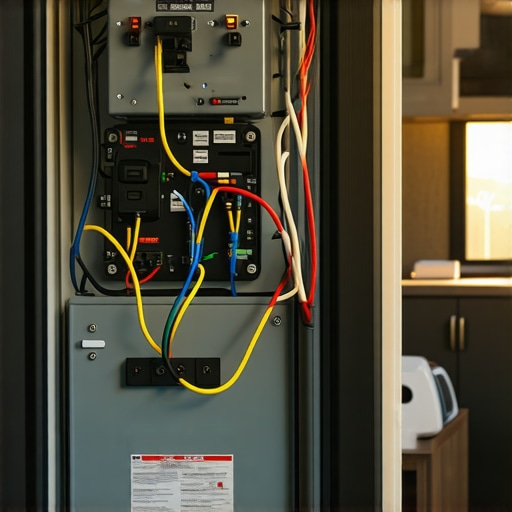
The 2:00 AM Thud: Why Your Comfort Just Killed the Circuit
You’re laying there in your camper, the humidity is thick enough to chew, and just as the air conditioner compressor tries to kick over, you hear it: that hollow clack of a breaker giving up the ghost. Then comes the silence. For thirty-five years, I’ve seen this play out from job sites to campgrounds, and let me tell you, that sound isn’t just an inconvenience—it’s a thermal warning. When that breaker trips, it isn’t being a jerk; it’s preventing your mobile investment from turning into a pyrotechnic display.
Electricity isn’t some magical fluid that just shows up when you flip a switch. It’s a physical force governed by the harsh laws of physics, specifically Ohm’s Law. In a sticks-and-bricks house, you might have 200 amps to play with. In a camper, you’re likely living on a 30-amp or 50-amp ‘budget.’ When your AC tries to start, it demands a massive ‘inrush current’ to get that compressor piston moving. If your voltage is low or your connections are sketchy, that current spikes, the heat rises, and the bi-metallic strip inside the breaker bends until it releases the spring. That’s the clack. If you keep resetting it without fixing the root cause, you’re just asking for a ‘widow maker’ scenario where the breaker fails to trip and the wire becomes the fuse.
“Aluminum wire connections can overheat and cause a fire without tripping the circuit breaker.” — CPSC Safety Alert 516
The Old Timer’s Lesson: The Sin of the Nicked Copper
My journeyman used to smack my hand if I stripped a wire with a pocket knife instead of proper dikes or strippers. ‘You nick the copper, you create a hot spot,’ he’d scream. At the time, I thought he was just a cranky old man. He was right. In a camper, which is essentially an earthquake on wheels, every single connection is under constant vibration. If a wire was nicked during the rough-in phase at the factory, or if a screw in the load center wasn’t torqued to spec, that small imperfection becomes a point of high resistance. Resistance creates heat. Heat causes the copper to expand and contract, which further loosens the screw. This is ‘cold creep’ in action. By the time I get called in with my tick tracer, I usually find a terminal block that looks like it spent a weekend in a charcoal grill. This isn’t just about campers; the same principles apply whether we are talking about a lighting install or a complex home EV charging station setup. Precision is life.
Component Zooming: The Physics of the Startup Spike
Let’s talk about Locked Rotor Amps (LRA). When your AC is sitting idle, the refrigerant is at equalized pressure. To get that motor spinning, it needs about 3 to 5 times its running current for a fraction of a second. If your AC unit is rated for 15 amps, it might pull 50 or 60 amps for a heartbeat during startup. On a 30-amp pedestal, you’re already riding the edge. If your water heater is on, or your wife is running a hair dryer, you’ve overdrawn your account. The breaker senses the heat generated by that 60-amp spike. If it’s already warm because the sun is beating on the exterior load center, it trips instantly.
Then there’s the ‘Voltage Drop’ monster. Campgrounds are notorious for ‘daisy-chained’ electrical pedestals. If you’re at the end of the line and everyone else has their AC on, the 120 volts you expect might actually be 105 volts. Here’s the kicker: P=IV (Power = Current x Voltage). If the voltage drops, the amperage must go up to do the same amount of work. That increased amperage is what cooks your Romex and kills your compressor. I’ve seen boat lift wiring and electric gate openers fail for the exact same reason—undersized wire over a long distance leading to voltage starvation.
The Forensic Breakdown: Why Your Panel is Screaming
When I perform insurance claim electrical work, the first thing I look for is signs of arcing at the bus bar. In many campers, the breakers are snapped onto a thin metal rail. Over time, vibration and heat cycles cause the tension in the breaker clip to weaken. This creates a microscopic gap. Electricity will jump that gap—that’s an arc. Arcing creates ozone (that metallic smell) and temperatures exceeding 3,000 degrees Fahrenheit. It doesn’t just trip the breaker; it melts the plastic housing. If you’re dealing with an older unit, you might even have an outdated panel that needs a full load center upgrade. This isn’t like a simple lighting guide fix; this is major surgery. If your camper is a vintage model, you might even run into knob and tube removal requirements if it was a DIY conversion from an old bus. Trust me, you don’t want ‘Monkey Shit’ (duct seal) holding your mains together.
“Overloaded circuits are a leading cause of electrical fires in mobile structures, often exacerbated by degraded insulation and loose terminations.” — NFPA 70E Reference
The Solution: Don’t Be a Handyman Victim
First, get a ‘Wiggy’ or a decent multimeter and check your voltage at the pedestal. If it’s below 108V, shut it down or use a dedicated auto-former. Second, inspect your load center. Every screw should be torqued. If you see discoloration on the white neutral wire, you have a high-resistance connection that’s ready to fail. For those looking for long-term stability, I recommend a ‘Soft Start’ kit for the AC. It uses capacitors to ramp up the motor speed gradually, reducing that 60-amp spike to something manageable. If your panel is ancient, don’t wait for the fire. Look into underground wiring services to ensure your shore power is actually capable of delivering what it promises. Whether it’s a portable generator hookup for boondocking or a warehouse lighting retrofit, the math remains the same: balance your load or pay the price. If you’re unsure, it’s time to contact a pro before the ‘clack’ becomes a ‘bang.’
Comments
2 responses to “Why Your Camper Electrical Panel Keeps Tripping When the AC Kicks In”
Reading this post gave me a new perspective on why my camper’s breaker keeps tripping during hot summer nights. I’ve noticed that the issue worsens after I’ve run the water heater or used the hair dryer while the AC is on, which makes sense given what you explained about overloads and increased inrush current. A few months ago, I replaced my old load center with one that has better contact points, but I still experience occasional trips. I wonder if installing a soft start kit for the AC could help manage that initial startup spike more effectively, especially since my camper is an older model. I’ve also considered checking the wiring connections myself, but I worry about overlooking some high-resistance spots caused by vibration. Has anyone here had success with installing a soft start, and did it significantly reduce breaker trips? It seems like a worthwhile investment to prevent potential fire hazards from loose or overheated connections, especially in a mobile setting where vibration and constant movement are unavoidable.
This post really sheds light on how complex camper electrical systems are, especially when you’re trying to keep everything running smoothly in rugged environments. I’ve experienced similar issues with my RV, and I agree that the inrush current during AC startup can be a real culprit. Installing a soft start kit has made a noticeable difference in preventing breaker trips for us, particularly on crowded campgrounds with long daisy chains. One thing I learned is that regular inspection of the wiring and connections is crucial, since vibration can cause high-resistance points over time, leading to heat buildup. Has anyone tried upgrading to a heavy-duty load center or adding additional surge protection? I’d be interested in hearing if that helps with these kinds of intermittent issues, or if it’s better to focus on the soft start and voltage stability first.