
The Invisible Sizzle: A Lesson from the Old School
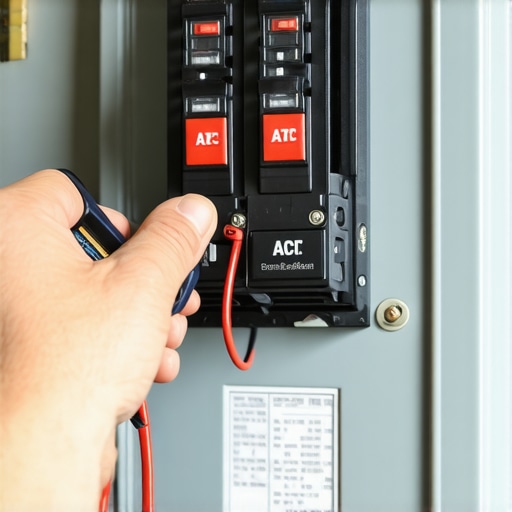
My journeyman used to smack my hand if I stripped a wire with a knife. ‘You nick the copper, you create a hot spot,’ he’d scream. He was right. That tiny notch in the metal reduces the cross-sectional area, increasing resistance at that exact point. When current flows, that resistance generates heat. Do that in a mid-century home with aging insulation and you’ve just built a slow-motion arson device. I’ve spent 35 years in the trade, from the rough-in stage of massive industrial complexes to forensic inspections of houses that were nothing but charcoal and regrets. Most people think their electrical system is like plumbing—if it isn’t leaking, it’s fine. But electricity doesn’t leak; it arcs. It finds a way to jump through the air, ionizing the oxygen and creating temperatures that would make a welder blush. That’s why we need to talk about the Arc-Fault Circuit Interrupter (AFCI) and why your home is likely a ticking time bomb without a regular inspection of these critical components.
The Anatomy of a Failure: Why Standard Breakers Are Blind
Standard thermal-magnetic breakers are designed to protect your wires from melting due to overload or dead shorts. If you plug in three space heaters, the bi-metal strip inside the breaker heats up and trips. If you drive a nail through a Romex cable, the magnetic trip mechanism shuts things down instantly. But what about the ‘sizzle’? What about the loose screw on a receptacle that’s vibrating at 60Hz every time the refrigerator kicks on? That creates a series arc. It’s not enough current to trip a standard 20-amp breaker, but it’s enough heat to turn the surrounding plastic into carbon. Once that plastic is carbonized, it becomes conductive. Now you have a path for a fire. This is where AFCI technology comes in. It uses a microprocessor to analyze the waveform of the electricity. It’s essentially AI fault detection in your panel, looking for the specific ‘signature’ of an arc—that chaotic, high-frequency noise that indicates electricity is jumping a gap it shouldn’t.
“Arc-fault circuit interrupters (AFCIs) are necessary to protect against fire-causing electrical arcs.” – NEC 210.12
The Mid-Century Menace: Aluminum and Cold Creep
If your home was built between 1965 and 1973, you’re likely sitting on a specific kind of danger: aluminum wiring. The physics here is a nightmare. Aluminum has a much higher coefficient of thermal expansion than copper. It expands and contracts significantly every time you turn on a light or a bathroom exhaust fan. This process, known as ‘Cold Creep,’ eventually pushes the wire out from under the terminal screws on your outlets. Once the connection is loose, oxidation sets in. Aluminum oxide is an insulator, not a conductor. This creates massive resistance, more heat, and eventually, a sustained arc. A standard breaker will watch your house burn down and never trip. If you haven’t had an aluminum wiring repair involving AlumiConn connectors or COPALUM crimps, your system is failing right now; you just can’t see it yet. This is especially dangerous in areas requiring architectural lighting or low voltage lighting where transformers add inductive loads to already stressed circuits. Understanding how electricians tackle troubleshooting is the first step in identifying these hidden hazards.
The Forensic Breakdown of Storm and Flood Damage
Nature is the ultimate enemy of your electrical integrity. After a major weather event, you might need a storm damage electrical repair. High winds shake service masts, loosening the neutral connection at the weather head. This can cause voltage fluctuations that fry your electronics and create arcing conditions in your panel. Even worse is flood water electrical safety. If water has touched your outlets or entered your conduits, the silt and salt left behind create conductive bridges. I’ve seen camper electrical panels and home sub-panels where dried mud served as a path for tracking, leading to a catastrophic failure months after the water receded. You can’t just dry it out and hope for the best. You need a forensic eye to check for compromised insulation. Often, we use a Tick Tracer or a Wiggy (solenoid voltmeter) to verify potential before we even touch a suspect circuit. For those managing complex systems, lockout tagout training is non-negotiable to prevent accidental re-energization during these sensitive repairs.
Component Zooming: The Physics of the Loose Neutral
Let’s zoom in on a single wire nut. Inside, you have two copper wires twisted together. If they aren’t torqued correctly, the contact patch is microscopic. As current flows, the electrons are forced through a tiny bottleneck. This causes the copper to oxidize. The oxide layer is resistive. Now, the heat starts to bake the Romex jacket. It turns brittle and flakes off like old parchment. You now have bare conductors exposed. If a mouse scurries past or the house settles, those wires touch—but only slightly. That’s your arc. It’s a 5,000-degree plasma bolt happening inside your wall. Without a functional AFCI breaker to sense that specific harmonic distortion, the fire is inevitable. We often find these during a trim-out when we realize the previous ‘handyman’ used Monkey Shit (duct seal) to hide a melted junction box instead of fixing the root cause. This is why we insist on step-by-step guides for even ‘simple’ lighting jobs—to prevent these amateur mistakes.
“Aluminum wire connections can overheat and cause a fire without tripping the circuit breaker.” – CPSC Safety Alert 516
The Modern Load: Why Your Panel is Screaming
We are asking 1970s infrastructure to handle 2024 demands. Between EV charging station setup and high-end appliances, the power factor correction in most homes is non-existent. Inductive loads from motors and compressors create ‘dirty’ power that can cause nuisance tripping in cheap AFCI breakers, but that doesn’t mean you should swap them back for standard ones. It means you have a underlying fault. If you are experiencing issues, you might need expert troubleshooting for EV chargers or other high-draw devices. A home run from the panel to a new appliance is the only way to ensure you aren’t overloading old, brittle circuits. I’ve seen people try to run a whole-home theater and a hot tub off a single 60-amp sub-panel. That’s not a configuration; it’s a suicide pact.
Conclusion: Sleep at Night Knowing It’s Torqued
Electricity isn’t a hobby, and it isn’t a ‘do-it-yourself’ project you wing after watching a five-minute video. It’s a physical force that wants to return to the earth, and it will go through your floor joists to do it if you give it half a chance. Regular AFCI inspections aren’t an upsell; they are a forensic audit of your home’s safety. We check the torque on every lug, look for signs of ‘Widow Maker’ circuits (multi-wire branch circuits on the same phase), and ensure your grounding system isn’t just a rusted rod in dry dirt. If you’re worried about your home’s wiring, especially if you have aluminum or an aged panel, contact us today. Don’t wait for the smell of ozone to tell you there’s a problem. By then, it’s usually too late to save the drywall.