
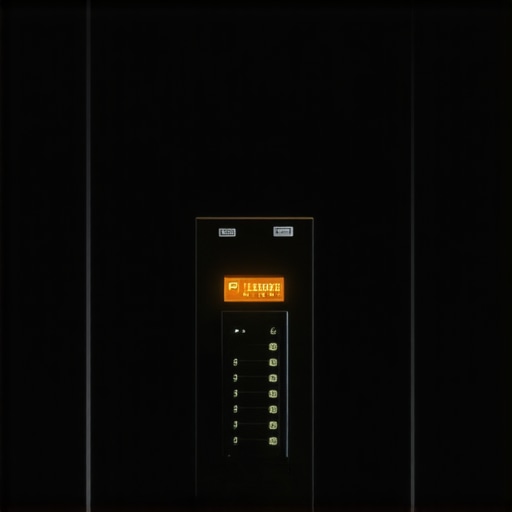
The Sound of a 100-Amp Disaster Waiting to Happen
You probably don’t think about your electrical panel until the lights flicker when the refrigerator compressor kicks in. But if you’ve recently renovated a kitchen in a home built between 1960 and 1980, you’re likely sitting on a ticking time bomb. I’ve spent 35 years in the trade, and nothing makes my skin crawl like a homeowner telling me they just installed a 40-amp induction range in a house with a 100-amp service. It’s not just about the breaker tripping; it’s about the physics of heat, resistance, and the eventual degradation of your home’s central nervous system.
I remember walking into a ‘fully renovated’ property last spring. The backsplash was Italian marble, and the appliances cost more than my first truck. But when I pulled the dead front off the panel, I found a ‘Widow Maker’ special. The previous contractor had buried three live junction boxes behind that expensive stone, and the main bus bar was so pitted from arcing that it looked like the surface of the moon. They’d used ‘Monkey Shit’ (duct seal) to try and stop a water leak from the service mast, but the damage was done. The owner wondered why their luxury kitchen smelled like a burning hair dryer every time they ran the dishwasher. That’s the reality of pushing a mid-century panel to modern limits.
The Cold Creep and the Physics of Failure
To understand why your 100-amp panel is gasping for air, you have to look at Component Zooming. In mid-century homes, aluminum service entrance cables were the standard. Aluminum isn’t inherently evil, but it has a high coefficient of thermal expansion. This leads to a phenomenon we call Cold Creep. Every time you turn on your high-wattage air fryer or dishwasher, the wire heats up and expands. When it cools, it contracts. Over forty years, this cycle causes the wire to literally ‘creep’ out from under the terminal screws. This creates a microscopic air gap. Electricity, being the lazy, violent force it is, jumps that gap, creating an arc. That arc is 3,000 degrees Fahrenheit. It doesn’t trip the breaker immediately, but it turns the insulation into a charred, conductive mess.
“Aluminum wire connections can overheat and cause a fire without tripping the circuit breaker.” – CPSC Safety Alert 516
Modern kitchens are power-hungry monsters. A standard 100-amp service provides 24,000 watts of total capacity. That sounds like a lot until you realize an induction cooktop can pull 7,000 watts, a water heater pulls 4,500, and a central AC unit pulls 3,500. Add in a toaster, a microwave, and a few lights, and you are operating at 80% capacity—the threshold where components start to heat up significantly. If you are considering ensuring safe and efficient EV charging station setup at home, a 100-amp panel is a non-starter.
The Load Calculation Reality Check
We use Ohm’s Law (Voltage x Amperage = Wattage) to determine your home’s limits. When I do a Rough-in for a modern kitchen, I’m looking for dedicated circuits. Most old 100-amp panels lack the physical space for the number of circuits required by modern code. You need two 20-amp small appliance branch circuits just for the counter, a dedicated circuit for the dishwasher, one for the disposal, and usually a separate one for the microwave. If your panel is full of ‘twin’ breakers—those skinny things that let you cram two circuits into one slot—you are likely exceeding the thermal rating of the bus bar.
“The total connected load shall be calculated in accordance with Section 220.10, and the service-entrance conductors shall have an ampacity not less than the load to be served.” – National Electrical Code (NEC) Article 230.42
If you’re noticing heat radiating from your panel or a persistent ‘fishy’ smell, you need expert troubleshooting for lighting installations and power distribution. Often, we find that the old Zinsco or Federal Pacific panels are the culprits. These brands are notorious for ‘jamming.’ The breaker looks like it’s in the ‘on’ position, but internally, the pivot has seized. It won’t trip even if the wire is glowing red. This is why forensic inspectors like me focus on AI fault detection and Arc-Fault Circuit Interrupters (AFCIs) during a Trim-out. These modern devices can detect the signature of an arc before a fire starts.
Infrastructure and External Upgrades
It’s not just about the panel inside. Your three phase power services (for commercial) or standard residential service masts are often under-sized. If you’re adding an attic fan installation to combat summer heat or a complex landscape lighting install, you are adding continuous loads. Continuous loads are those that run for three hours or more, and code requires us to size the conductors at 125% of that load. This is where most DIYers fail. They think a wire can handle what the label says, but they don’t account for the heat buildup in a cramped 100-amp enclosure.
When we perform a service upgrade, we aren’t just selling you a bigger box. We are installing new grounding rods, a new service mast, and high-conductivity copper Home Runs to your most vital appliances. We also integrate lighting installations made easy with smart controllers that can manage load shedding. Don’t forget the importance of network cable installation during this phase; running Cat6 while the walls are open for a rewire is the only way to do it right. If you’re worried about the cost, many states offer rebate assistance programs for energy-efficient upgrades, especially when tied to panel heavy-ups for heat pumps or EV chargers.
Final Inspection: Sleep Better Tonight
Electricity is not a hobby. It is a utility that wants to return to the ground by any means necessary, including through your floorboards. If you have an older 100-amp panel and a modern kitchen, you are asking for a Widow Maker event. Whether you need driveway sensor lights, emergency exit lighting for a home business, or garage wiring services for a workshop, the foundation must be a panel that can handle the surge. Don’t wait for the smell of ozone to call us. Take your Tick Tracer and stay away; leave the Wiggy and the Dikes to the pros. Contact us today to schedule a forensic load calculation before your kitchen renovation becomes a fire department training exercise. It’s better to torque your lugs now than to smell the smoke later.