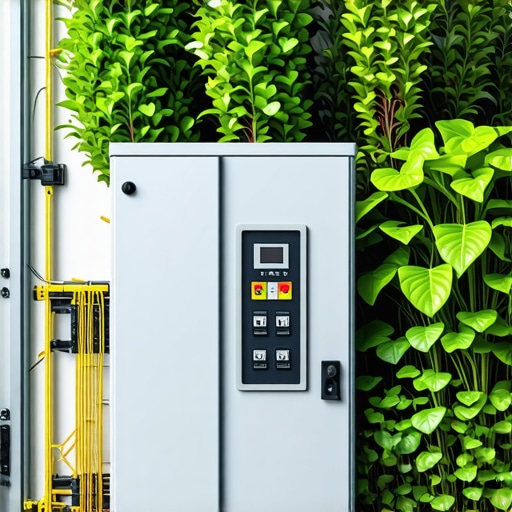
The Myth of the ‘Standard’ Panel: Why Your Current Service is a Liability
I’ve spent three and a half decades staring into the guts of electrical panels, and I can tell you exactly what 2026 looks like: it looks like a fire hazard for anyone still clinging to a 200-amp service in a commercial or high-demand residential setting. We’ve reached a tipping point where the physics of electricity is colliding with the reality of modern consumption. When I walk into a facility for commercial electrical services and see a 200-amp main breaker humming like a hornet’s nest, I don’t see ‘efficiency.’ I see a Widow Maker waiting for the right moment to let the magic smoke out. My old journeyman used to tell me, ‘Kid, if you treat a wire like a piece of string, it’ll bite you like a snake.’ He used to smack my hand if I even thought about stripping a 500 kcmil feeder with a pocket knife. ‘You nick that copper, you create a microscopic hot spot, and that resistance will cook this building down while you’re home sleeping,’ he’d bark. He was right. That lesson is more relevant now than ever as we look toward the massive infrastructure demands of 2026.
“Aluminum wire connections can overheat and cause a fire without tripping the circuit breaker.” – CPSC Safety Alert 516
1. The Relentless Demand of Continuous Loads and EV Infrastructure
The first reason 2026 plants and modern large-scale homes require a 400 amp service entrance is the shift in how we define ‘load.’ In the old days, we calculated demand based on lights and a few motors that cycled on and off. Today, we are dealing with continuous loads that would make an old-school sparky’s head spin. Between massive server arrays for local data processing and the mandatory inclusion of high-speed EV charger stations, the ‘demand factor’ has shifted. If you are ensuring safe and efficient EV charging station setup at home or at a plant, you aren’t just adding a toaster; you’re adding the equivalent of a small central air unit that runs at full tilt for eight hours straight. A 200-amp panel hit with 160 amps of continuous load for hours experiences a phenomenon known as thermal saturation. The bus bars get hot. The breakers get soft. Eventually, the spring tension in the breaker fails, and you get an arc. By upgrading to a 400-amp service, you aren’t just buying ‘more’ electricity; you are buying thermal headroom. This is especially critical when dealing with garage wiring services where multiple Level 2 chargers are being installed. Without that 400-amp backbone, you’re constantly dancing on the edge of the trip curve.
2. The Physics of Resistance: Why Your Voltage Drop is Costing You Money
Let’s talk about the ‘Forensic’ side of things. When I pull a Wiggy out of my bag to troubleshoot a flickering line, I’m often looking for Cold Creep or oxidation. In a 2026 environment, where precision electronics and security camera wiring are sensitive to the slightest voltage dip, a 200-amp service under heavy load is a recipe for equipment failure. Certified journeyman services understand that a 400-amp service allows for larger parallel feeders or a single massive set of 500-600 kcmil conductors. This reduces the circular mil resistance. When you draw 150 amps on a 200-amp main, your voltage might sag 3-5%. That sag generates heat ($I^2R$ losses). That heat further increases resistance. It’s a death spiral. A 400-amp service entrance handles that same 150-amp load with a yawn, maintaining rock-solid voltage stability. This is vital for insurance claim electrical work where we often find that ‘mystery’ equipment failures were actually caused by chronic undervoltage. To prevent this, a surge protector installation is a start, but it won’t fix a service that’s fundamentally too small for the plant’s heart rate.
“Overloaded electrical systems are a leading cause of commercial structure fires, often originating in service equipment that was never designed for the modern load profiles of high-density electronics.” – NFPA 70E Safety Synthesis
3. Future-Proofing Against ‘The Handyman Special’ and Code Compliance
By 2026, the NEC (National Electrical Code) is only getting stricter. We’re seeing requirements for AFCI and GFCI protection in places we never imagined. If you’re doing a bathroom exhaust fan install or a full rough-in for a new wing, you need space in that panel. A 200-amp panel is usually full after the first decade. When a panel is packed, people start using ‘cheater’ breakers or tandem breakers, which increases the heat density on the bus bar. This is where I find the most ‘forensic’ evidence of impending doom—charred plastic around the center bus stabs. A 400-amp service usually utilizes a 320-amp continuous / 400-amp peak meter socket (often called a Class 320) which feeds two separate 200-amp panels. This ‘dual-heart’ system means you have twice the circuit space. It allows for dedicated runs for high-draw items without overcrowding. For those looking at senior discount services, this is about safety and longevity; you want a system that will last thirty years without needing a frantic 2:00 AM emergency call. Whether you are lighting installations made easy or how electricians tackle troubleshooting for lighting installations, having the amperage to support those separate zones is non-negotiable. Don’t wait for the smell of ozone to tell you your service is obsolete. Proper top EV charger maintenance and service upgrades are the only way to sleep soundly. Check our contact us page to get a real pro out there before your panel becomes a forensic case study. Check our privacy policy for details on how we handle your data.