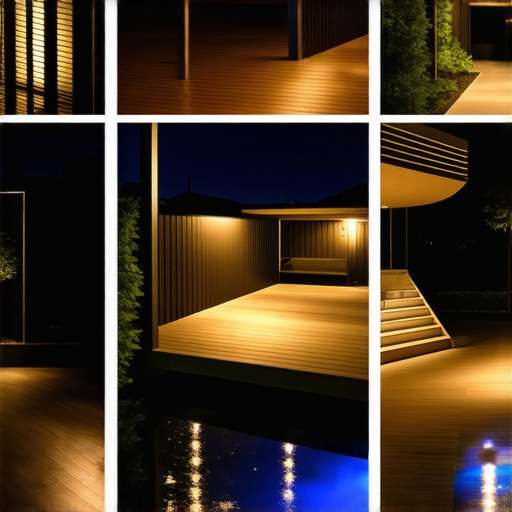
The Salt-Stained Reality of Outdoor Power
I’ve spent 35 years pulling Romex through spider-infested crawlspaces and diagnosing why a deck built in 2018 is already a fire hazard. By 2026, the real estate market won’t care about your ‘mood lighting’ if the underlying infrastructure is a corroded mess. In coastal environments, the air is essentially a slow-motion acid bath. I’ve seen meter cans that looked solid from the street but were literally held together by the paint, the copper bus bars inside reduced to a green, flaky powder. This isn’t just about aesthetics; it’s about the physics of Galvanic Reaction and Salt Bridging. When salt ions deposit on your terminals, they create a conductive path where one shouldn’t exist, leading to arcing that a standard breaker might not even notice until the wood is charring.
My journeyman used to smack my hand if I stripped a wire with a knife. ‘You nick the copper, you create a hot spot,’ he’d scream. He was right. That tiny notch becomes a point of high resistance. Under the 24/7 load of modern exterior systems, that resistance generates heat, the copper expands, then it cools and contracts—a cycle we call Cold Creep. Eventually, the screw terminal loses its bite, the arcing starts, and you’re calling me for a forensic report instead of an upgrade. If you want your property value to move the needle in 2026, you need to stop thinking like a decorator and start thinking like a forensic inspector.
“Receptacles installed in wet locations shall have an enclosure that is weatherproof whether or not the attachment plug cap is inserted.” – NEC 406.9(B)(1)
1. Tree Mounted Lights: Engineering for Growth and Tension
Everyone wants tree mounted lights to create that moonlight effect, but most ‘pro’ installers treat a living tree like a 4×4 post. I’ve seen 12-gauge wire swallowed by the cambium layer of an oak tree until the pressure shorted the conductors, turning the tree into a 120-volt widow maker. For a 2026-ready installation, we use stainless steel standoff bolts that allow the tree to grow without tensioning the cable. We don’t use staples; we use expansion loops. When I do a rough-in for landscape lighting, I’m looking at the next ten years of biological growth. If you don’t account for the tree’s diameter increasing, that wire is going to snap, and you’ll be hunting for a break with a tick tracer for six hours. You can read more about the technical side of this in our step-by-step electrician guide.
2. Load Center Upgrades: The Backbone of the Modern Deck
You can’t hang a 2026 lifestyle on a 1980s 100-amp service. Between the EV charger, the whole house fan wiring, and the new heater on the patio, your old Federal Pacific or Zinsco panel is a ticking time bomb. These legacy panels are notorious for ‘jammed’ breakers that refuse to trip during an overcurrent event. I call them ‘no-blow’ breakers. A load center upgrade is the single most important investment for property value. We’re talking about moving to a 200-amp service with AFCI (Arc-Fault Circuit Interrupter) protection that can sniff out a spark in a salt-corroded deck outlet before it ignites. It’s also the time to discuss financing electrical upgrades, because a full panel swap isn’t cheap, but it’s cheaper than a total loss fire claim.
3. The ‘Heavy-Up’ with Generator Transfer Switches
Resilience is the new luxury. In 2026, a high-value property must be able to function when the grid goes dark. Installing a generator transfer switch as part of your deck’s electrical hub ensures that you can run critical loads—and those beautiful new lights—during a blackout. I’ve walked into too many ‘DIY’ setups where some genius used a male-to-male cord (the ‘suicide cord’) to backfeed their house. Don’t do it. A code-compliant transfer switch is the only way to ensure you don’t kill a lineman working on the poles. While we are at it, we often look at power factor correction for larger estates to ensure the inductive loads of pool pumps and HVAC units aren’t wasting energy and heating up your conductors unnecessarily.
4. Thermal Management: Whole House and Attic Fan Installation
Heat is the enemy of electrical insulation. If your attic is hitting 150 degrees, the Romex feeding your second story is baking, becoming brittle and prone to cracking. Integrating attic fan installation or whole house fan wiring into your 2026 upgrade plan does more than lower your AC bill; it preserves the integrity of your home’s wiring. When I do a forensic inspection, I look for ‘heat-scarred’ insulation. It’s a dead giveaway that the system has been running too hot for too long. A well-ventilated home keeps the electrical system within its design temperature range, preventing the very failures that lead to expensive lighting installations troubleshooting sessions. For those struggling with existing setups, checking out how electricians tackle troubleshooting can be a real eye-opener.
5. CAT6 Cabling Services for the ‘Smart Deck’
By 2026, ‘outdoor living’ means ‘outdoor working.’ If your deck doesn’t have hardwired CAT6 cabling services for weatherproof WAPs (Wireless Access Points), your property value is lagging. Relying on Wi-Fi signals to penetrate brick and stucco is a fool’s errand. We run shielded, outdoor-rated Ethernet to specific nodes, ensuring the signal is as strong as the home run circuit back at the panel. We seal every exterior penetration with monkey shit (duct seal) to prevent moisture from wicking into the walls. It’s a messy, grey compound, but it’s the difference between a dry junction box and a mold colony inside your wall. If you’re unsure where to start, getting free electrical estimates is the first step toward a system that actually meets 2026 standards.
“Aluminum wire connections can overheat and cause a fire without tripping the circuit breaker.” – CPSC Safety Alert 516
The Forensic Inspector’s Final Warning
I’ve used my Wiggy (solenoid voltmeter) to find ghost voltages that would make your skin crawl. Electricity is lazy; it’s always looking for the easiest path to ground, and if your deck wiring is compromised by salt or poor workmanship, that path might be through your metal railing—or you. Don’t let a ‘handyman’ touch your outdoor lighting. They don’t know about lockout tagout training, and they certainly don’t understand why we use dielectric grease on every bulb base to prevent Atmospheric Oxidation. If you want to see how we handle high-performance setups properly, check our guide on safe EV charging station setup, which follows the same rigorous standards as our deck projects. When you’re ready to do it right, contact us before the salt air decides for you.