
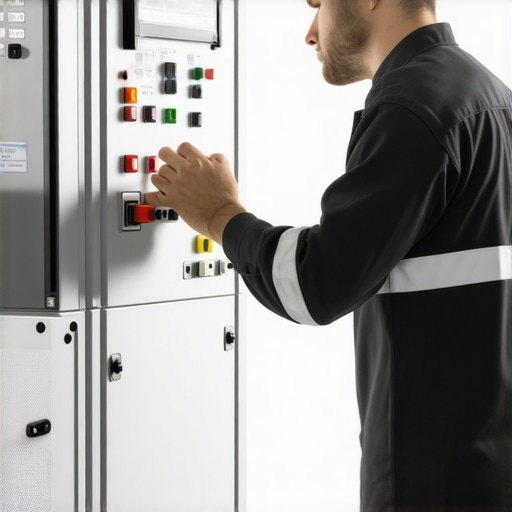
Most homeowners treat their electrical system like a toaster: as long as the lights turn on, they assume everything is fine. But after thirty-five years of pulling dikes out of my back pocket and smelling the sickly-sweet scent of melting PVC insulation, I can tell you that electricity is a patient killer. It doesn’t just fail; it degrades. Your home’s wiring is a living, breathing machine that undergoes constant thermal stress. Every time your HVAC kicks on or you plug in a high-draw appliance, those copper or aluminum molecules are vibrating, heating, and expanding. When the load drops, they contract. This is the ‘breath’ of your electrical system, and without annual maintenance contracts, that breath eventually leads to the ‘death rattle’ of a house fire.
The Flipper Special: A Forensic Reality Check
I remember walking into a high-end ‘renovated’ bungalow last summer. The owners were thrilled with their marble countertops and new pendant lights. But they called me because their EV charger installation kept tripping the main. I pulled out my tick tracer and started scanning the walls. I found a hot spot behind a decorative tile backsplash. When I opened it up, I found the ultimate ‘flipper special’: a buried junction box where the contractor had used cheap Romex scraps to extend a 50-amp circuit using 14-gauge wire nuts. They hadn’t even used a box cover; they just plastered over the live, arcing wires. The heat was so intense it had crystallized the wood studs. A routine electrical safety audit would have caught the voltage drop before it became a torch. This is why we don’t just ‘check’ wires; we perform an autopsy on the system’s performance.
“Aluminum wire connections can overheat and cause a fire without tripping the circuit breaker.” – CPSC Safety Alert 516
The Physics of Failure: Why Components Give Up
To understand the value of electrical wiring services and maintenance, you have to understand Cold Creep. This is particularly vicious in mid-century homes built between 1960 and 1980. Aluminum wiring has a different coefficient of expansion than the brass or copper terminals on your outlets. Over time, the wire literally ‘creeps’ out from under the screw. This creates a microscopic gap. That gap is an invitation for an arc. An arc is 35,000 degrees Fahrenheit—hotter than the surface of the sun. It doesn’t take long for that to turn your service entrance upgrade into a pile of slag.
During a maintenance visit, we don’t just look at the panel; we use infrared thermography to see the heat signatures you can’t. We look for oxidation layers. When copper is exposed to oxygen, it forms copper oxide—a semi-conductor that resists flow and generates heat. If we find it during troubleshooting, we clean it, apply dielectric grease, and torque it to the manufacturer’s inch-pound specifications. You can’t do that with a standard screwdriver and a ‘gut feeling.’ You need a calibrated torque wrench and a professional who knows that a loose neutral is the fastest way to fry every appliance in your house.
Modern Loads on Ancient Infrastructure
Your 1970s panel was designed for a few lights, a fridge, and a color TV. Today, you’re asking that same bus bar to handle ADU electrical services, high-speed EV charger units, and smart home hubs that never sleep. This is where the service entrance upgrade becomes mandatory. If your panel is a Federal Pacific or a Zinsco, you aren’t just overdue for maintenance; you’re sitting on a time bomb. These brands are notorious for ‘jammed’ breakers. The internal pivot points corrode and seize. You could have a dead short in your kitchen, and that breaker will sit there, frozen, until the wire inside the wall becomes a heating element.
When we perform permit pulling services for a heavy-up, we aren’t just adding capacity. We are resetting the safety clock. We install AFCI (Arc-Fault Circuit Interrupter) breakers that can detect the specific wave pattern of a dangerous arc and shut it down before the first spark leaves the wire. If you’re planning an EV charging station setup, you cannot skip the load calculation. Adding a 48-amp continuous load to an unmaintained panel is asking for a catastrophic failure.
“The employer shall establish, implement, and maintain an electrical safety program that directs activity appropriate to the risk associated with electrical hazards.” – NFPA 70E Standard for Electrical Safety
The Anatomy of a Maintenance Visit
When I arrive for a contract inspection, I start at the home run. I check the rough-in integrity of any visible wiring in the attic or crawlspace. I’m looking for rodent damage (squirrels love the soy-based insulation on modern wires) and ‘monkey shit’—that’s the duct seal we use to stop moisture from migrating from the exterior conduit into your panel. If that seal fails, water wicks through the stranded wire like a straw, corroding your main lugs from the inside out.
We also tackle troubleshooting for things you’ve ignored: that flickering light in the hallway or the outlet that feels warm. These are the ‘canaries in the coal mine.’ Often, it’s a failure in the trim-out phase where a wire was nicked during installation. A nicked wire reduces the circular mil area of the conductor, creating a bottleneck for electrons. Bottlenecks create heat. Heat creates fire. Our warranty backed repairs ensure that if we touch it, it’s locked down for the long haul. We don’t just swap parts; we verify the circuit’s impedance to ensure the breaker will actually trip when it’s supposed to.
The Value of the Paper Trail
Beyond safety, there’s the insurance angle. In today’s market, many carriers are dropping homeowners who can’t prove their electrical system is up to code. Having a record of annual maintenance contracts and professional electrical safety audits is your shield. If you ever have a claim, the first thing the forensic investigator (someone like me) looks for is negligence. If you have a documented history of maintenance, you’re protected. Furthermore, if you’re looking into troubleshooting for lighting or power issues, having a baseline of your system’s health makes the fix ten times faster and cheaper.
Maintenance isn’t an expense; it’s an investment in predictable power. It’s the difference between a $200 inspection and a $20,000 emergency rewire on Christmas Eve. Don’t wait for the smell of ozone to call me. By then, the damage is already done. We offer comprehensive contact options for those ready to take their home’s safety seriously. Whether you need a simple EV charger check or a full service entrance upgrade, treat your electricity with the respect it demands, and it will keep your world bright and your family safe.