
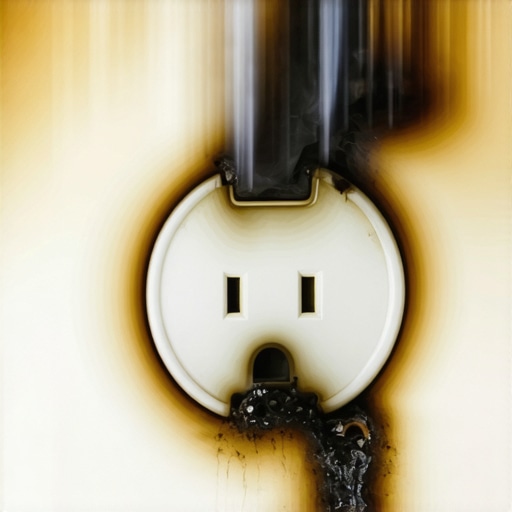
The Forensic Autopsy of a Burning Home
You wake up at 3:00 AM, and your nose catches it before your brain is even fully awake. It’s not the smell of burnt toast or a blown-out candle. It’s a cloying, chemical stench—halfway between rotting fish and melting plastic. That is the smell of a urea-formaldehyde resin or a phenolic insulator cooking under the heat of a high-resistance connection. In my 35 years as a master electrician, that smell has always been the precursor to a 911 call. If you smell it, you don’t ‘wait until morning’ to see if it goes away. You aren’t just looking at a nuisance; you are witnessing the early stages of a structural fire. This is the moment where certified journeyman services become the line between a minor repair and a total loss.
The Flipper Special: A Forensic Case Study
I remember a call last December, right in the middle of the peak season for holiday emergency calls. The homeowner complained of a ‘funny smell’ in the hallway whenever they ran the space heater in the nursery. I walked in, and my tick tracer didn’t even need to touch the wall to start screaming. I opened a ‘renovated’ utility closet where a previous flipper had buried a massive junction box behind a layer of drywall and shiplap. They hadn’t used wire nuts; they had literally twisted the wires together and wrapped them in masking tape—not even electrical tape. The tape had dried out, the connection had loosened, and the copper was literally melting the plastic insulation off the adjacent Romex. That ‘renovation’ was about twenty minutes away from igniting the wall studs. This is why I treat every ‘restored’ home with deep suspicion. People hide sins behind drywall, but physics always brings them to light.
“Aluminum wire connections can overheat and cause a fire without tripping the circuit breaker.” – CPSC Safety Alert 516
The Physics of the ‘Fish’ Smell: Thermal Expansion and Cold Creep
Why does it smell like fish? It’s not literal fish, obviously. Many older circuit breakers, outlets, and wire insulations use chemicals that release methylamines when they reach a certain temperature. When a connection is loose—whether it’s at a patio cover outlet or inside structured wiring panels—it creates resistance. According to Ohm’s Law, as resistance increases in a circuit pulling a constant load, heat is generated. In mid-century homes built between 1960 and 1980, this is often exacerbated by aluminum wiring. Aluminum suffers from ‘Cold Creep.’ Every time you run your toaster, the wire heats up and expands. Because it’s softer than copper, it deforms against the steel terminal screw. When it cools down, it doesn’t spring back to its original shape. It leaves a microscopic gap. That gap is an air-gap resistor. Current leaps across it in a micro-arc, generating temperatures that can exceed 1,000 degrees Fahrenheit. If you have a data center power setup in your home office or a high-draw appliance, this process accelerates until the plastic starts to vaporize. That’s your fish smell.
The Infrastructure Context: Mid-Century Time Bombs
If your home was built in the era of disco and shag carpet, you likely have a Federal Pacific Electric (FPE) or Zinsco panel. These aren’t just ‘old’; they are functionally dangerous. In a forensic inspection, we often find that the bus bars—the main power arteries of the panel—have oxidized or corroded to the point where the breakers actually weld themselves to the bar. The breaker won’t trip even if the wire is glowing red. This is especially dangerous when homeowners attempt a standby generator install without a proper transfer switch, or when they overload circuits with track lighting services that weren’t accounted for in the original load calc. I’ve seen FPE breakers that looked perfectly fine on the outside, but when I pulled them with my dikes, the back of the breaker was a charred husk of carbonized plastic.
“Electrical failures or malfunctions were the second leading cause of U.S. home fires in 2015-2019, accounting for 13% of home structure fires.” – NFPA Research
Beyond the Walls: Pool Pumps and Trenching
The smell of burning isn’t always inside the house. I’ve had calls for pool pump electrical failures where the owner smelled ‘burning rubber’ near the backyard. This usually points to a failure in the underground conduit. If the trenching electrical conduit wasn’t buried to the proper NEC-mandated depth (usually 18-24 inches depending on the material), soil shifts and freeze-thaw cycles can snap the PVC. Moisture gets in, creates a path to ground, and you have a slow-cook situation under your lawn. This can even affect fence line lighting. I’ve dug up conduits that were half-melted because someone used ‘monkey shit’ (duct seal) to try and plug a hole instead of replacing a cracked fitting. If you’re experiencing flickering in your landscape lights, you might be looking at a localized ground fault that is generating heat beneath your feet. For more on external issues, see how we handle troubleshooting for lighting installations.
Why Modern Loads Kill Old Wiring
The 1970s electrical grid in your house was designed for a television, some lamps, and a refrigerator. It was not designed for the 50-amp draw of an EV charger or the constant 24/7 load of a data center power setup. When you add these modern demands, you are pushing the aging copper and aluminum to its thermal limit. If you are experiencing issues with high-draw devices, you should look into safe EV charging station setup before you burn out your main lug. I’ve seen ‘Home Runs’—the direct line from the panel to the device—completely toasted because someone didn’t account for the 125% continuous load requirement. I’ve used my Wiggy to test circuits that showed 120V with no load, but dropped to 80V the moment a hair dryer was turned on. That voltage drop is being converted into raw heat somewhere in your walls. That is the ‘restoration’ you need: replacing the heat-damaged wire before it finds a fuel source.
The Professional Solution: Don’t Be a Hero
If you smell that ozone or fishy scent, the first step is to go to your panel and shut off the main breaker. Do not just turn off the individual circuit; the bus bar itself might be the source. Once the power is killed, call for certified journeyman services immediately. A forensic inspection involves thermal imaging and torque-testing every terminal. We don’t just ‘sniff around’; we use infrared cameras to find the hot spots that your eyes can’t see. We look for ‘rough-in’ mistakes made decades ago that are only now becoming lethal. Whether it’s a failing pool pump electrical motor or a patio cover outlet that has seen too many rainstorms, the goal is to eliminate the resistance. Electricity isn’t a hobby, and it isn’t a ‘DIY’ project. It’s a force of nature contained by thin layers of plastic and metal. When those layers fail, the house is just fuel. Keep your family safe by respecting the smell. It’s the only warning you’re going to get.