
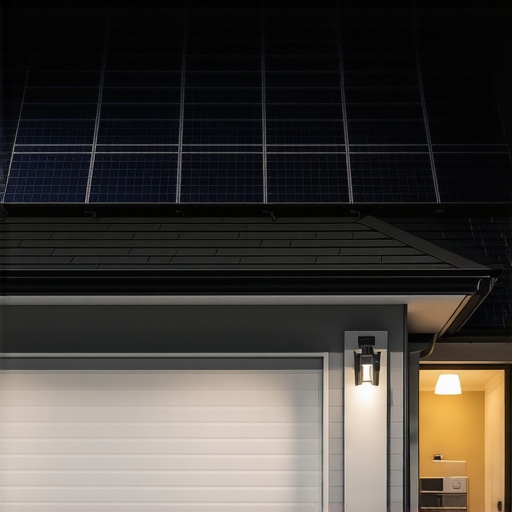
The Lie of the Grid-Tied Promise
You’ve been sold a bill of goods. The salesperson stood in your kitchen, flashing a glossy brochure showing sleek blue rectangles on your roof and a utility meter spinning backward. They promised you’d be your own power plant. But they forgot to mention one inconvenient truth: when the grid goes down, your fancy solar array is nothing more than expensive roof jewelry. Without a battery hookup, you are tethered to a failing infrastructure that doesn’t care if your freezer is defrosting. As a master electrician who has spent decades using a Wiggy to troubleshoot fried circuits, I’ve seen the fallout of these ‘budget’ solar installs. People think they’re saving ten grand by skipping the storage, but the hidden costs—in hardware degradation, safety risks, and lost utility—are far higher.
The Forensic Breakdown: Why Your System Fails When You Need It Most
I walked into a ‘fully renovated’ modern farmhouse last July during a localized blackout. The homeowner was furious. He had 10kW of solar on the roof, but his lights were out just like everyone else’s. The installer had performed a standard grid-tied setup without a battery backup. Because of anti-islanding requirements in the NEC code updates, the inverter is legally required to shut down when it senses a loss of grid power. This prevents your panels from back-feeding electricity into the lines and electrocuting the utility linemen trying to fix the transformer. I pulled the dead front off his main service panel and showed him the problem. The installer had used a line-side tap on an aging bus bar that was already showing signs of thermal stress. I pulled out my Tick Tracer and confirmed there wasn’t a single volt moving through the house. He was sitting on a gold mine of energy he couldn’t touch.
“Aluminum wire connections can overheat and cause a fire without tripping the circuit breaker.” – CPSC Safety Alert 516
Component Zooming: The Physics of Back-Feeding and Thermal Stress
Let’s talk about the 120% rule. This is where most cheap solar installs become a fire hazard. The National Electrical Code (NEC) allows you to back-feed a bus bar up to 120% of its rated capacity, but this assumes the heat is distributed correctly. When you skip a battery and dump all that solar energy back into the grid through a standard electrical panel upgrade, you are putting a constant, high-amperage load on your breakers. I’ve seen aluminum wiring repair jobs where the homeowner didn’t realize that the constant expansion and contraction—what we call ‘Cold Creep’—was loosening the lugs on the solar breaker. Aluminum expands at a different rate than copper. Every time the sun hits those panels and the inverter ramps up, those molecules are dancing. Eventually, the connection becomes high-resistance. High resistance equals heat. Heat equals the smell of fishy, burning plastic in your garage at 3:00 PM on a Tuesday.
If you don’t have a battery to buffer that load, your home’s electrical distribution system is the only thing standing between those panels and the grid. In many older homes, the main panel isn’t up to the task. We often recommend a full electrical panel upgrade before even thinking about solar. If your bus bar is pitted or shows signs of oxidation, you’re playing Russian roulette with your home’s safety. Using drone thermography scans, I can actually see the heat plumes radiating from improperly torqued solar breakers. It’s not a matter of if it will fail, but when the insulation finally gives up the ghost.
The Economics of Grid Instability
Net metering is dying. In many states, the utility companies are slashing what they pay you for the power you send back. Without a battery, you are forced to sell your power to the utility at wholesale prices during the day and buy it back at retail prices at night. This is a sucker’s bet. A licensed master electrician understands that the true value of solar is ‘self-consumption.’ By storing that energy in a battery, you avoid the ‘Time-of-Use’ surcharges that the utility companies use to pad their pockets. You’re also protecting your sensitive electronics. Grid power is ‘dirty.’ It spikes, it sags, and it flickers. A quality battery system acts as a massive power conditioner, ensuring your pendant light hanging in the foyer doesn’t flicker every time the neighbor’s AC kicks on.
Why Preventative Electrical Maintenance is Non-Negotiable
People treat solar like a ‘set it and forget it’ appliance. It’s not. It’s a high-voltage industrial power system living on your roof. You wouldn’t skip the oil change on a Ferrari, yet homeowners ignore preventative electrical maintenance for years. Every solar-equipped home needs regular electrical safety audits. We check the torque on every lug, we look for ‘Monkey Shit’ (duct seal) that’s dried out and allowing moisture into the Rough-in boxes, and we ensure the grounding electrode system hasn’t corroded into dust. If you’re having issues with your current setup, you might need to look into how electricians tackle troubleshooting for complex residential systems.
“All electrical equipment shall be installed and used in accordance with the instructions included in the listing or labeling.” – NEC Section 110.3(B)
The Load Calculation: Why Your 100-Amp Service is Screaming
Modern life is power-hungry. You want an EV charger, a hot tub, and a 5-ton AC unit, but your house was built when a 100-amp service was considered ‘generous.’ When you add solar to this mix without a battery to manage the peaks, you are redlining your infrastructure. I’ve seen access control wiring for smart gates melt because the installer didn’t account for the harmonic distortion caused by a cheap, non-battery-integrated inverter. If you’re planning on adding an EV, you need to ensure your system is robust enough to handle it; check out these tips for home EV charging setup to see what’s involved. Skipping the battery means you have no ‘buffer’ for these high-draw events, putting even more stress on your Home Run circuits.
The Solution: Do It Once, Torque It Right
If you want to sleep at night, stop looking for the cheapest bid. Look for warranty backed repairs and a contractor who insists on a battery hookup as a safety and stability measure, not just an add-on. A battery allows for a controlled ‘island’ mode, where your home can function independently of a crumbling grid. It prevents the rapid cycling of your appliances during brownouts, which kills compressor motors and fried circuit boards in modern refrigerators. When we perform a Trim-out on a solar job, we aren’t just connecting wires; we are balancing a complex chemical and electrical ecosystem. If you’re experiencing glitches now, you might need to troubleshoot your charging system or solar interface before the damage becomes permanent. Don’t wait for the ‘fish smell’ of an electrical fire to realize that skipping the battery was a $20,000 mistake. Get a real licensed master electrician to look at your panel. If you need a forensic eyes-on your system, you can contact us for a full audit. Electricity isn’t a hobby, and it doesn’t give second chances to those who cut corners.