
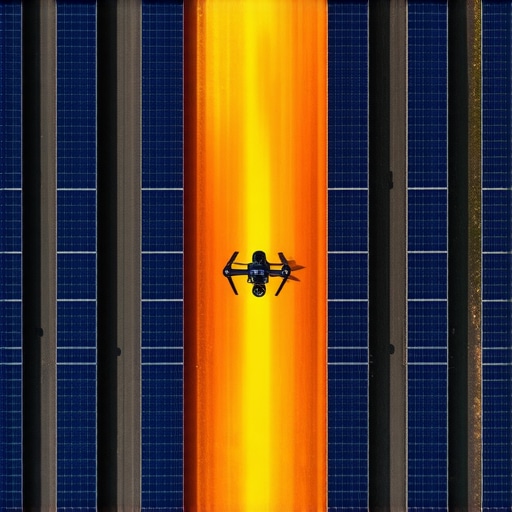
The Autopsy of a Dying Solar Array
I remember my journeyman, a grizzled old-timer named Miller who had hands like sandpaper and a nose for ozone that was better than any multi-meter. He used to smack my hand if I even thought about stripping a wire with a utility knife. ‘You nick that copper, you create a hot spot,’ he’d growl. ‘The electrons don’t like a traffic jam, and when they get squeezed, they get angry. Angry electrons make heat, and heat makes houses disappear.’ He was talking about residential rough-in at the time, but that fundamental law of physics—resistance equals heat—is exactly why your solar investment might be slowly cooking itself to death on your roof without you ever knowing it. When we talk about solar panel electrical hookup, we aren’t just talking about plugging in a few MC4 connectors. We are talking about managing a miniature power plant that is constantly under thermal stress.
“Aluminum wire connections can overheat and cause a fire without tripping the circuit breaker.” – CPSC Safety Alert 516
While that alert focuses on aluminum, the principle applies to the silicon and solder joints in your solar cells. A solar array is only as strong as its weakest link. If a single cell in a string of sixty develops a micro-crack or a solder joint fails due to thermal cycling, that cell stops being a generator and starts being a resistor. It begins to consume the power generated by its neighbors, turning that energy into localized heat. On the ground, with a standard tick tracer or even a high-end Wiggy, you aren’t going to find that. You’re just going to see a drop in your inverter’s output and wonder why your ROI is tanking. This is where the forensic autopsy begins, not with a screwdriver, but with a drone-mounted bolometer.
Component Zooming: The Physics of Thermal Anomalies
To understand why drones are the gold standard for inspection, we have to zoom into the molecular level of a photovoltaic cell. A solar cell is essentially a large-area semiconductor diode. When the sun hits it, photons knock electrons loose, creating current. However, if there is a defect—say, Potential Induced Degradation (PID) or a bypass diode failure—the flow of electrons is impeded. This resistance causes a phenomenon known as Joule heating. In a high-voltage home run back to the inverter, the sheer volume of current can turn a tiny crack into a 300-degree hotspot in minutes. We see this often during a data center power setup where high-density loads reveal every flaw in the termination. The same happens on your roof.
Thermal imaging drones use Long-Wave Infrared (LWIR) sensors to detect these temperature differentials. We aren’t just looking for ‘hot.’ We are looking for thermal signatures that indicate specific failure modes. A ‘patchwork’ pattern usually indicates PID, while a single bright hot spot often signifies a localized defect like a bird dropping causing a permanent shadow-induced burn or a cracked wafer. This is far more efficient than a manual chandelier installation style approach where you’re checking one fixture at a time. A drone can map a 5-megawatt field in hours, identifying every lockout tagout training scenario before a technician even sets foot on-site.
The Enemy: Thermal Expansion and Cold Creep
In my 35 years, I’ve seen that the biggest threat to electrical integrity isn’t just the sun—it’s the constant expansion and contraction of materials. We call this thermal cycling. Every morning, your solar array goes from 50 degrees to 150 degrees. The copper ribbons, the silicon wafers, and the glass all expand at different rates. This leads to ‘cold creep’ in terminations and micro-fractures in the cells. If your solar panel electrical hookup wasn’t torqued to spec, those connections will loosen over time, leading to arcing. You can’t see an arc in broad daylight, but a thermal drone sees it as a screaming white light on the display. This is the same reason we emphasize NEC code updates for torque requirements on breakers; if it’s not torqued, it’s a ticking time bomb.
“The technical term for these hotspots is ‘Radiometric Anomalies,’ and they are the leading indicator of impending catastrophic failure in PV systems.” – NFPA 70E Safety Standard
When the drone identifies a hot spot, it’s not just a suggestion to ‘clean the panels.’ It’s a forensic red flag. If we ignore it, that heat eventually melts the backsheet, compromises the EVA encapsulation, and allows moisture to enter. Once moisture hits a DC string, you don’t just have a performance issue; you have a fire hazard that no circuit breaker is designed to catch until it’s too late. This is why integrated systems, including your EV charger installation, need to be monitored. A fault in the solar array can feed back into the house’s electrical system, causing havoc in your data closet organization or frying sensitive electronics.
Why Manual Inspections Are a ‘Widow Maker’
In the old days, we’d climb up with a handheld FLIR camera. It was dangerous and technically flawed. To get an accurate thermal reading, you need the right angle of incidence—usually between 30 and 60 degrees. If you’re standing on the roof, the reflection of the sun off the glass (the ‘glint’) blinds the sensor. You end up with false positives or, worse, false negatives. Drones solve this by maintaining a perfect nadir or off-nadir angle, capturing radiometric data that can be analyzed frame-by-frame. This isn’t some weekend electrician services gimmick; it’s high-level forensics. For those struggling with power issues, you might find that ev charger troubleshooting starts with the source of the power: the panels themselves.
Furthermore, large-scale arrays often involve complex fiber optic cabling for monitoring and access control wiring for site security. A drone can inspect the perimeter and the data pathways simultaneously. If your data closet is a mess of ‘spaghetti wiring,’ you’re losing the very telemetry data that tells you your cells are failing. Proper ensuring safe and efficient ev charging station setup at home requires knowing exactly how much ‘clean’ power your solar array is pushing. If the drone shows ten dead cells, your 40-amp charger might be pulling more from the grid than you planned, blowing your utility budget.
The Fix: From Forensic Discovery to Code-Compliant Repair
Once the drone identifies the ‘sick’ modules, the real work begins. This is the rough-in and trim-out of the solar world. You don’t just slap some monkey shit (duct seal) on it and call it a day. You have to isolate the string using proper lockout tagout training procedures. DC current is ‘sticky’—it doesn’t have a zero-crossing like AC, meaning if you pull a connector under load, the arc will follow you, and it will burn you to the bone. You replace the module, verify the solar panel electrical hookup is torqued to the inch-pound, and then re-scan. It’s about precision. It’s the difference between a house that’s powered and a house that’s a crime scene. If you’ve ever dealt with how electricians tackle troubleshooting for lighting installations, you know that the root cause is rarely the bulb; it’s the path the power takes to get there.
Ultimately, using drones for thermal imaging is about moving from reactive ’emergency’ repairs to proactive asset management. You wouldn’t ignore a check engine light in your car, so why ignore the thermal ‘screams’ of your solar panels? Whether you’re managing a data center power setup or a simple residential array, the goal is the same: keep the resistance low and the electrons flowing. Sleep better at night knowing your roof isn’t cooking, and your connections are as tight as Miller would have demanded. For more guidance on maintaining your high-tech electrical home, check out lighting installations made easy or reach out to us at contact us for a professional evaluation.