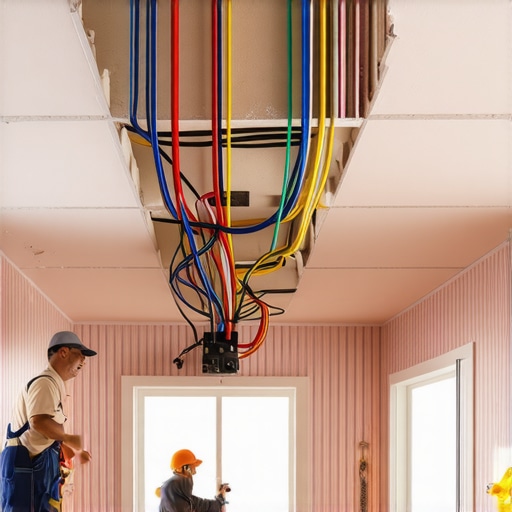
The 2026 Insurance Cliff: Why the Clock is Ticking on Your Home’s Safety
I started my journey under an old-school journeyman named ‘Iron Mike’ who used to carry a wooden ladder and a set of dikes that looked like they’d survived a world war. I’ll never forget the day he caught me using a pocket knife to strip back a piece of cloth-bound wire. He didn’t just yell; he slapped the knife out of my hand so hard it embedded in a joist. ‘You nick that copper, kid, and you’ve just built a heater inside a wall of dry tinder,’ he growled. He was right then, and he’s right now. That lesson about the fragility of old conductors is exactly why insurance companies are drawing a hard line in the sand for 2026. If your home still relies on knob and tube (K&T) wiring, you aren’t just living in a vintage house; you’re living inside a slow-motion electrical disaster that the actuarial tables are no longer willing to bet on.
The Forensic Breakdown: The Physics of Failure in Porcelain and Cloth
To understand why an electrician gets nervous when they see those ceramic knobs, you have to understand the physics of Cold Creep and thermal degradation. Knob and tube was designed for a 1920s load—maybe three 60-watt bulbs and a radio. It was an ‘open air’ system, meaning the conductors were spaced apart to dissipate heat into the wall cavity. But then came the 1970s energy crisis, and people started blowing cellulose and fiberglass insulation into those walls. You took a system designed to breathe and buried it in a thermal blanket. The bitumen-saturated cotton insulation on K&T wire isn’t just old; it’s chemically compromised. Over decades, the heat from the current causes the oils in the cotton to bake out, leaving behind a brittle, carbonized shell that crumbles the moment you touch it. I’ve seen workshop electrical setup attempts where the vibration from a table saw caused the insulation to fall off the wires three feet away, leading to a phase-to-phase arc that looked like a localized lightning strike.
“Knob-and-tube wiring… was not designed to be covered by thermal insulation because the insulation prevents the dissipation of heat from the conductors.” – CPSC Safety Alert 516
The Insurance Trap: The Death of the Grandfather Clause
By 2026, the ‘grandfathering’ of old electrical systems is expected to vanish from most standard homeowner policies. Underwriters have realized that the combination of aging K&T and modern high-draw appliances—like when you’re doing a kitchen range hood wiring job or installing a high-BTU oven—is a primary driver for residential fires. They are now requiring a full rough-in and trim-out of modern Romex or armored cable before they’ll even quote a premium. If you try to hide it, a forensic inspector with a Tick Tracer and a thermal camera will find those hot spots behind your plaster. This isn’t just about the wires; it’s about the lack of a grounding conductor. K&T is a two-wire system. There is no safety path for a fault. Without that ground, your smart lighting installation or PA system installation isn’t just potentially buggy; it’s a Widow Maker waiting for a surge.
The Myth of the ‘Safe’ Knob and Tube System
I hear it every week: ‘But my K&T has lasted 80 years without a problem!’ Sure, and a man can smoke for 40 years without getting cancer, but the odds are catching up. The problem is the ‘Handyman Special.’ Over the last century, people have spliced modern NM cable into old K&T without using a junction box, often just twisting the wires together and wrapping them in friction tape. This creates high-resistance junctions. When I perform vibration analysis services on older structures, we often find that even the slight harmonic hum of a nearby HVAC unit is enough to loosen these brittle splices. If you’re planning a holiday light installation that pulls significant amperage, you’re pushing that old copper to its expansion limit. Copper expands when hot and contracts when cold. In a K&T system, this mechanical stress eventually snaps the brittle wires or pulls them off the porcelain cleats.
“Aluminum and older copper connections can overheat and cause a fire without ever tripping a circuit breaker if the resistance at the connection is high enough.” – NFPA 70E Safety Standards
Beyond the Walls: Upgrading for the 21st Century
Removing K&T isn’t just about avoiding a fire; it’s about capacity. Your old 60-amp or 100-amp service mast is likely choked. If you’re looking into ensuring safe and efficient EV charging station setup at home, you cannot run that load on 1940s infrastructure. You need a ‘Heavy-Up’ service upgrade. This often involves trenching electrical conduit to bring in a 200-amp feed from the utility. While we are at it, we use Monkey Shit (duct seal) to ensure no moisture migrates from the outdoor meter can into your new panel. We don’t just swap wires; we pull permits. Our permit pulling services ensure that every home run is documented and inspected by the AHJ (Authority Having Jurisdiction), which is exactly what your insurance company will demand to see in 2026. Whether it’s lighting installations made easy or a complex whole-house rewire, doing it right means you can sleep through a thunderstorm without worrying about your attic glowing cherry red.
Forensic Solutions: The Path Forward
If you suspect your home still has K&T, don’t wait for a flickering light or a fishy smell—which is the scent of melting plastic and ozone. Get a professional out there with a Wiggy to test your actual voltage under load. If we find the ‘Time Bomb,’ the solution is a systematic replacement. We start with the rough-in, bypass the old knobs, and ensure every circuit is properly grounded and protected by AFCI (Arc-Fault Circuit Interrupter) breakers. If you experience a sudden failure before you can schedule the full replacement, our after hours electrical repair team can perform emergency stabilization, but the goal is always total removal. For more complex issues, check out how electricians tackle troubleshooting for lighting installations to see the level of detail required. If you are ready to secure your home’s future and keep your insurance coverage intact, you should contact us today for a forensic evaluation. Don’t let a 100-year-old wire dictate your family’s safety in 2026. Torque your connections, ground your circuits, and live without the paranoia of the ‘Old Timer’s’ warning.