The Invisible Fire Hazard in Your Smart Entryway
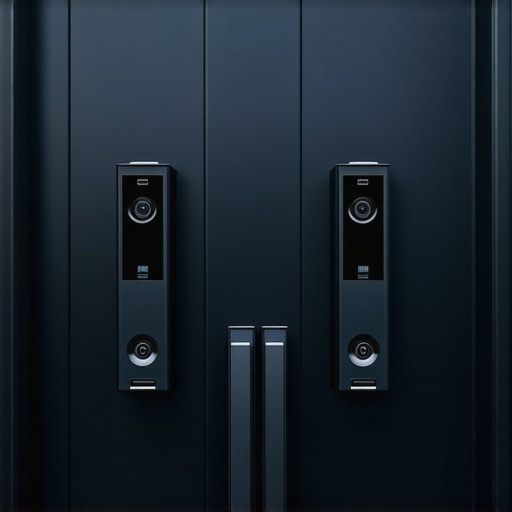
You see a sleek, matte-black doorbell camera with 4K resolution and AI facial recognition. I see a high-tech load being asked to run on 1970s infrastructure that was barely designed to ring a mechanical chime, let alone stream high-def video 24/7. Most ‘smart’ upgrades in 2026 fail not because of software, but because the copper behind the drywall is crying for help. I remember my first year as a green apprentice, trying to strip 18-gauge doorbell wire with a pair of rusty dikes. My journeyman, a guy whose lungs were 40% drywall dust and 60% cheap coffee, slapped the tool out of my hand. ‘You nick that conductor and you’ve just built a fuse that won’t blow until the wall is on fire,’ he growled. He made me use a precision stripper for every single low-voltage connection. He knew that the small stuff is what actually causes the most headaches during home automation setup.
Hack 1: The Transformer Heavy-Up
Most homeowners assume a doorbell is just a doorbell. But a 2026-spec camera requires consistent wattage that your old 10VA (Volt-Amp) transformer can’t provide. When you starve a camera for power, the transformer works overtime, generating heat through a process called hysteresis loss. The iron core vibrates at 60Hz, and if it’s buried under attic insulation, it becomes a heat sink. You need to swap that buzzing relic for a 30VA or 40VA transformer. This ensures the voltage doesn’t drop when the infrared LEDs kick in at night. If you’re already looking into lighting installations made easy, you’ll know that power stability is the foundation of any smart system. A ‘Wiggy’ or a decent multimeter will show you the truth: if you’re seeing 14V at the button but 16V at the transformer, you’ve got high resistance in the line.
“Aluminum wire connections can overheat and cause a fire without tripping the circuit breaker.” – CPSC Safety Alert 516
Hack 2: Structured Wiring and Signal Shielding
In mid-century homes, contractors used to staple doorbell wire right alongside the high-voltage Romex. This is a nightmare for 2026 entryways. Electromagnetic Interference (EMI) from those 120V lines can induce ‘ghost voltages’ into your low-voltage lighting and camera data lines. The fix is a structured wiring panel. By running a ‘home run’ of Cat6 or shielded 18/2 wire from the entryway back to a central hub, you eliminate the signal noise that causes your camera to flicker or drop connection. When doing a rough-in, always keep your low-voltage lines at least 6 inches away from power lines, and if they must cross, do it at a 90-degree angle. This isn’t just about the camera; it’s about OSHA compliance wiring standards that keep the data clean and the hardware cool.
Hack 3: The ‘Drip Loop’ and Flood Water Protection
Outdoor electronics are constantly under siege. If you live in a flood-prone area, flood water electrical safety isn’t just for your basement—it’s for your entryway. Water follows the path of least resistance, which is usually right down your wire and into your wall cavity. I’ve seen pool pump electrical systems fry because of a bad seal, and your doorbell is no different. Hack three is the ‘Drip Loop’: always leave a small U-shaped slack in the wire before it enters the house. Gravity forces the water to drip off the bottom of the loop instead of entering the hole. Use a bit of ‘Monkey Shit’ (duct seal) to plug the penetration. This is basic troubleshooting 101: stop the moisture before it reaches the terminals and causes galvanic corrosion between the copper wire and the zinc-plated screws.
“The installation of equipment shall be done in a neat and workmanlike manner.” – NEC Article 110.12
Hack 4: Energy Storage Integration
The smartest 2026 entryways aren’t just connected to the grid; they are tied into energy storage systems. When the power goes out, you don’t want your security to go dark. By wiring your low voltage lighting and doorbell camera into a battery-backed circuit, you maintain a ‘perimeter of protection.’ This requires a dedicated sub-panel or a smart hub that can handle the transfer. During a trim-out, I always recommend installing a whole-house surge protector at the main panel. Modern cameras have tiny circuit boards that can’t handle a 500V spike from a nearby lightning strike. If you’ve spent the money on a lighting troubleshooting-free entryway, don’t let a summer storm fry the brain of your home.
The Verdict: Don’t Be a Handyman Hero
Whether you are dealing with a ceiling fan installation or a complex doorbell camera setup, electricity requires respect. If you find yourself staring at a Federal Pacific or Zinsco panel while trying to find your doorbell transformer, stop. Those panels are notorious for ‘jamming’—they won’t trip even when the wire is glowing red. In those cases, a panel changeout is the only safe move. Your home’s safety depends on the integrity of every connection, from the 200-amp service mast down to the tiny 18-gauge wire at your front door. If you’re unsure, check our contact-us page to get a pro on-site. Don’t let a ‘smart’ upgrade be the dumbest mistake you make this year.