
The Ghost in the Garage: A Master Inspector’s Warning
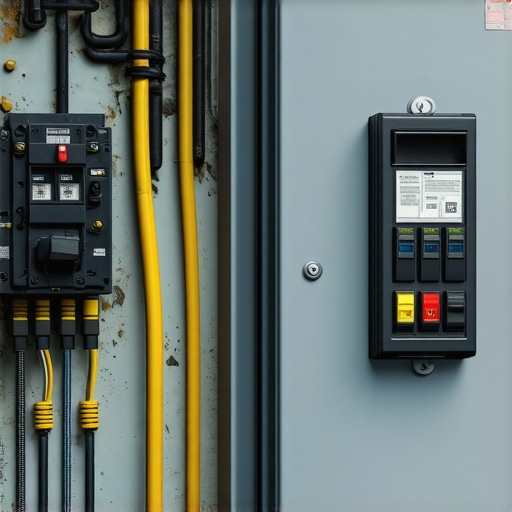
My journeyman used to smack my hand if I stripped a wire with a knife. ‘You nick the copper, you create a hot spot,’ he’d scream while we were working in a cramped basement in 1988. He was right then, and he’s right now. That tiny nick reduces the cross-sectional area of the conductor, forcing the same amount of current through less metal, leading to localized heating that can eventually ignite the surrounding insulation. When I walk into a home built in the 1940s and see an Edison-base fuse box still humming away in the corner, I don’t see a vintage relic. I see a thermal disaster waiting for its moment to strike. I’ve spent thirty-five years sniffing out the scent of ozone and scorched Bakelite, and nothing makes my skin crawl quite like a fuse box that has been ‘bridged’ with a penny or over-fused by a homeowner who got tired of the lights going out. These systems were designed for a world of three lightbulbs and a radio, not a world of home automation setup and high-speed chargers. If you are still relying on screw-in fuses, you aren’t just living in the past; you are sitting on a powder keg.
1. The Physics of Failure: Thermal Fatigue and Resistance
In the forensic world of electrical inspection, we talk about the ‘physics of the failure.’ A fuse box isn’t just old; its components are physically degrading at a molecular level. Every time current flows through those brass contacts, they heat up and expand. When you turn the appliances off, they cool down and contract. Over sixty or seventy years, this cycle causes a phenomenon called ‘cold creep.’ The mechanical pressure holding the fuse against the bus bar weakens. Once that connection is loose, you get micro-arcing. You won’t see it, but you might hear a faint sizzle or smell a metallic, fishy odor. That arcing creates a layer of oxidation—a non-conductive crust—that increases resistance. As Ohm’s Law dictates, higher resistance equals more heat. Eventually, the heat becomes so intense that the ceramic housing of the fuse block begins to crack. I’ve used drone thermography scans to look at overhead service drop connections, and the heat signatures on these old boxes look like a miniature sun. Unlike a modern breaker that uses a magnetic trip mechanism to shut down in milliseconds, a fuse only cares about heat. If the fuse is oversized—say, a 30-amp fuse on a 14-gauge Romex wire—it will let that wire turn into a heating element inside your walls long before it blows.
“Aluminum wire connections can overheat and cause a fire without tripping the circuit breaker.” – CPSC Safety Alert 516
2. Capacity Crushing: Why 60 Amps Can’t Handle Modern Life
Most original fuse boxes were rated for 60 amps. In the post-war era, that was plenty. Today, a kitchen range hood wiring job alone can pull significant amperage, and if you’re looking into ensuring safe and efficient EV charging station setup at home, a 60-amp service is a joke. A Level 2 EV charger typically requires a 40 to 50-amp dedicated circuit. Try running that alongside your air conditioner and a hair dryer on a fuse-based system, and you’ll be calling a 24 hour emergency electrician before the car is half-charged. Upgrading to a 200 amp panel install is no longer a luxury; it’s the baseline for modern infrastructure. We aren’t just talking about capacity; we’re talking about the ‘Home Run’—the direct line from the panel to the heavy appliance. Old fuse systems often relied on ‘daisy-chaining’ multiple rooms onto a single circuit. I’ve seen living rooms, two bedrooms, and a porch all tied to one 15-amp fuse. In the rough-in stage of a modern build, we’d never dream of such a load. The modern household requires a transformer installation that can handle the surge of high-efficiency motors and digital electronics. Without it, you are starving your devices of voltage, which causes them to run hotter and fail sooner.
3. The Widow Maker: The Lack of Grounding and AFCI Protection
One of the most dangerous things I find in old fuse boxes is the ‘bootleg ground.’ This is when a handyman connects the neutral wire to the ground screw because the old house doesn’t have a dedicated ground wire. It’s a shortcut that can kill. If that neutral wire ever breaks, every metal surface in your home—your toaster, your refrigerator, your lamp—can become ‘live.’ This is why I call these old ungrounded systems ‘Widow Makers.’ Modern breakers, specifically Arc-Fault Circuit Interrupters (AFCI) and Ground-Fault Circuit Interrupters (GFCI), provide layers of protection that fuses simply cannot. An AFCI breaker uses a tiny microprocessor to analyze the waveform of the electricity. If it detects the signature of an arc—like a loose wire sparking behind a baseboard—it trips instantly. Fuses are blind to arcing; they only see total load. If you’re doing a shed wiring install or even a simple warehouse lighting retrofit, you need that protection. I’ve seen houses saved because an AFCI tripped the moment a nail was driven through a wire. A fuse would have just let the wood smolder. When we do a trim-out, we ensure every screw is torqued to the specific inch-pound requirements defined by the manufacturer. You can’t do that with a screw-in fuse.
“The authority having jurisdiction shall have the authority to require an existing electrical system to be upgraded to meet the requirements of this Code if it is deemed a hazard.” – NFPA 70: National Electrical Code
4. Insurance Rejection and Property Devaluation
Let’s talk about the cold, hard cash. Insurance companies are no longer willing to gamble on mid-century infrastructure. If you have a fuse box, your premiums are either astronomical or you’re one renewal notice away from being dropped. They know the statistics. They know that a 200 amp panel install significantly reduces the risk of a total-loss structure fire. Furthermore, if you are planning to sell, a fuse box is a massive red flag that will lead to a buyer demanding a price reduction far exceeding the cost of the upgrade. Whether you need a lighting installations made easy guide or a full service overhaul, the investment pays for itself in peace of mind. I’ve spent too many nights standing in muddy yards with my Tick Tracer and my Dikes, cutting the power to a house that’s already half-gone because a fuse didn’t blow when it should have. Don’t wait for the smell of ozone. Get a free electrical estimates from a pro who knows how to handle a service mast and how to pack the meter hub with monkey shit to keep the moisture out. Your family’s safety isn’t something to gamble with. Once the new panel is in, you can look at how electricians tackle troubleshooting for lighting installations without the fear of your panel melting down behind you. It’s about more than just power; it’s about control.
Comments
One response to “That Old Fuse Box Is a Liability: 4 Reasons to Switch to Modern Breakers Today”
Reading this post really drives home how crucial it is to upgrade those old fuse systems. I grew up in a house with a fuse box, and I remember the flickering lights and occasional hot smell that was just ignored at the time. It’s alarming how many of these systems are still in use, especially considering how much our electrical demands have increased with modern electronics and appliances. I’ve personally had a few close calls with overloaded circuits, and it’s frustrating to think how easily something could have gone wrong. The importance of grounding and AFCIs is also something I hadn’t fully appreciated before, but now I realize how they can prevent fires and save lives. From your experience, what’s the biggest challenge homeowners face when trying to make this upgrade? Is it mostly cost, or are there other hurdles like permitting and inspections that tend to delay these essential updates? I’d love to hear more about common resistance points and how to effectively address them.