
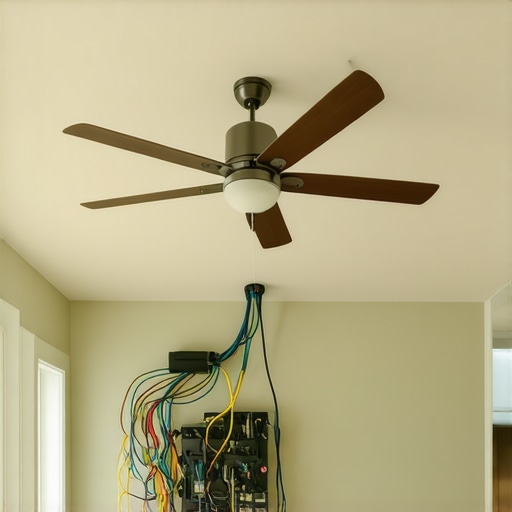
The Old Timer’s Lesson: Why Precision Prevents House Fires
My journeyman used to smack my hand with a pair of dikes if he saw me stripping a wire with a folding knife. ‘You nick that copper, you create a hot spot,’ he’d scream loud enough for the neighbors to hear. ‘That nick is a bottleneck where electrons pile up and create heat. You want to be the guy who burned down a family’s ranch house because you were too lazy to use your strippers?’ He was right, and that lesson stayed with me for 35 years. Whether I’m doing a rough-in for a new build or a whole house fan wiring job in a 1970s split-level, the physics of electricity don’t forgive ‘good enough.’
We see it every summer. The HVAC unit is screaming, the condenser is caked in dust, and the homeowner is watching their utility bill climb like a rocket. They decide to install a whole house fan to pull that cool evening air through the windows and flush the attic heat. It’s a brilliant move for your wallet, but if you treat that fan like a simple ceiling fan installation, you’re asking for a tick tracer to start screaming at your drywall. These aren’t just fans; they are high-torque inductive loads that can pull a significant ‘inrush’ current every time they kick on.
The Mid-Century Time Bomb: Aluminum Wiring and Inductive Loads
If your home was built between 1965 and 1978, you’re likely sitting on a structural hazard that most ‘weekend warriors’ ignore: aluminum wiring. The problem isn’t the metal itself; it’s Cold Creep. Aluminum expands and contracts at a different rate than the brass screws on your switches and outlets. Over time, the wire literally crawls out from under the terminal. This creates a high-resistance gap. When you add a heavy-duty whole house fan to an existing circuit already struggling with aluminum oxidation, you’re lighting a fuse.
“Aluminum wire connections can overheat and cause a fire without tripping the circuit breaker.” – CPSC Safety Alert 516
When we perform a power quality analysis, we often find that mid-century panels, especially those dreaded Federal Pacific or Zinsco units, won’t trip even when the bus bar is melting. The fan motor starts up, the aluminum wire heats up due to the resistance of the oxide layer, and because the breaker is jammed or the thermal element is shot, the wire just glows until the insulation ignites. This is why a whole house fan wiring project must start at the panel, not the ceiling hole. You need a dedicated home run back to the breaker to ensure you aren’t overloading a bedroom circuit where a smart thermostat wiring job or a space heater is already drawing juice.
Component Zooming: The Physics of the Inductive Surge
Most homeowners don’t understand the difference between a resistive load, like a toaster, and an inductive load, like a large fan motor. When that fan motor starts, it requires a massive surge of energy to overcome inertia—this is the Locked Rotor Amps (LRA). If your wiring is undersized or your connections aren’t torqued to spec, that surge creates a momentary voltage drop across the rest of the house. You’ll see the lights flicker, and your sensitive electronics will take a hit. This is why we don’t just ‘tap into the nearest light box.’
A proper whole house fan wiring setup requires a 12/2 Romex dedicated circuit. We use a 20-amp breaker to handle the startup spike. We also look at the ‘monkey shit’ (duct seal) around the penetration points to ensure we aren’t sucking attic insulation into the living space. If you’re already looking at your panel for this upgrade, it’s the perfect time to consider a level 2 EV charger or an RV hookup installation, as these high-draw items all require the same fundamental respect for load calculations. You can learn more about managing high-draw devices in our guide on safe EV charging setup.
The Forensic Breakdown: Why ‘Handyman’ Wiring Fails
I’ve walked into too many attics where a handyman used a 14-gauge extension cord to power a 1/2 horsepower fan motor. I can smell the ozone before I even see the fan. The heat radiating from a loose neutral wire is a specific, metallic scent that tells a forensic inspector exactly where the fire was going to start. When the neutral connection is loose, the electricity looks for any path back to the source, sometimes energizing the metal frame of the fan itself—a literal widow maker situation for anyone crawling in that attic later.
“All motor controllers shall have a disconnecting means within sight from the controller location.” – NEC 422.31
The code isn’t there to make your life difficult; it’s there to keep you alive. If I’m working on a fan and someone flips the switch downstairs, I need a local disconnect in the attic so I don’t lose a finger. This is the difference between warranty backed repairs and a ‘tailgate warranty’ where the guy disappears as soon as his truck leaves your driveway. Whether it’s garage wiring services or weekend electrician services for an emergency, the standards don’t change just because it’s Saturday.
The Modern Integration: Smart Switches and Protection
We live in an age of smart thermostat wiring and automated homes. You can integrate your whole house fan with your HVAC system so they never fight each other. But, if you’re installing these smart controllers, you need a clean power quality analysis. Harmonic distortion from cheap LED drivers or poorly wired portable generator hookups can fry the logic boards in high-end fan timers. If you are experiencing issues with your current setup, checking out troubleshooting tips for other high-draw appliances can give you an idea of the complexity involved.
Don’t let your fan become a liability. When we do a trim-out, we use a Wiggy (solenoid voltmeter) to ensure we have a true load-bearing voltage, not just ‘ghost voltage’ that a cheap digital meter might pick up. It’s about the integrity of the copper. If you’re planning on adding a whole house fan, or even just a ceiling fan installation in a high-vaulted room, do it once and do it right. For more on proper electrical practices, read our guide on lighting installations or contact us to get a pro on the job. Sleep at night knowing every lug in your panel is torqued to the inch-pound.
Comments
2 responses to “Stop Overworking Your AC: The Right Way to Wire a Whole House Fan”
This article hits home for me — understanding the importance of proper wiring and the risks involved in shortcuts is crucial, especially with older homes. I’ve seen firsthand how a simple project like installing a whole house fan can turn into a disaster if not done correctly. The mention of aluminum wiring and its tendency to develop high-resistance points is alarming, but it’s a reality that many homeowners overlook. I’m curious, for those living in homes with outdated panels or aluminum wiring, what are the best steps to upgrade safely? I’ve been considering a whole panel replacement but worry about the cost and complexity. Also, I wonder how many homeowners realize the importance of dedicated circuits for high-demand appliances like fans and EV chargers. It seems like a lot of issues stem from a lack of understanding about load calculations and proper dedicated wiring. How do others approach planning for future high-power needs in an aging home? What’s the most reliable way to ensure safety without ripping out every wall or ceiling?
This article highlights some critical aspects of safe wiring installations, especially when dealing with older homes and high inductive loads like whole house fans. I resonate with the emphasis on dedicated circuits and proper panel setup—these often get overlooked during DIY projects, leading to serious hazards like overheating and fires. I once encountered a homeowner who tried to just tap into existing circuits for a large attic fan, only to find the breaker never tripped despite sizzling wires. It reminds me how important it is to perform a thorough power quality analysis before any upgrade involving high loads. Also, the discussion about aluminum wiring brings back memories of inspecting a 60s home where connections had severely degraded over time, creating a real fire risk. Upgrading to copper or installing a proper connector system was the only safe solution. Has anyone here gone through a panel upgrade for similar reasons? Would love to hear what approaches or safety measures worked best in those cases.