
I recently walked into a ‘fully renovated’ kitchen where the flipper had buried four live junction boxes behind a custom marble backsplash. The homeowner was complaining about a faint buzzing sound near the stove. I pulled out my tick tracer, and the thing started screaming before I even touched the stone. That flipper didn’t just cut corners; he buried a series of thermal grenades behind three inches of expensive rock. This is the reality of residential electrical work today—aesthetic upgrades masking ancient, overloaded infrastructure that no longer meets the National Electrical Code (NEC). Your house is a machine, and if you haven’t updated its operating system in a decade, you’re running 2024 loads on a 1970s motherboard.
The Evolution of the NEC: Why ‘Grandfathered’ Means ‘Dangerous’
Homeowners love the word ‘grandfathered.’ They think it’s a legal shield against spending money. In my 35 years of troubleshooting, I’ve seen ‘grandfathered’ wiring turn into charred remains more times than I can count. The NEC isn’t a suggestion manual written by bureaucrats; it’s a forensic record of every house fire that didn’t have to happen. When the code updates every three years, it’s responding to the fact that our homes now consume power in ways the original builders never imagined. We have data centers in our spare bedrooms and EV chargers in our garages that pull more current than an entire 1950s household used in a week. To ensure you aren’t living in a ticking time bomb, you need to understand where the current standards stand.
“The National Electrical Code is intended for the practical safeguarding of persons and property from hazards arising from the use of electricity.” – NFPA 70: NEC Article 90.1
The GFCI Revolution: Beyond the Bathroom Sink
Most people know about Ground Fault Circuit Interrupter (GFCI) protection near the bathroom sink, but the recent code cycles have expanded this requirement significantly. A GFCI works by comparing the current flowing to the load with the current returning on the neutral. If there’s a difference of as little as 5 milliamperes, the internal circuitry trips the breaker in milliseconds. We’re no longer just looking at GFCI outlet installation in kitchens and baths. The 2020 and 2023 NEC updates have pushed these requirements to include basements, crawl spaces, and even outdoor outlets for HVAC equipment. If you’re performing ensuring safe and efficient EV charging station setup at home, the grounding requirements are non-negotiable. I’ve seen old outdoor receptacles where salt air corrosion had fused the internal mechanism, turning a safety device into a useless piece of plastic. In coastal environments, the salt bridges the gap between phases, leading to tracking and eventual fire. We use dielectric grease and stainless steel enclosures now because the standard ‘rough-in’ gear just won’t survive the humidity.
AFCI Breaker Services: Detecting the Invisible Spark
If GFCIs protect you from shocks, Arc-Fault Circuit Interrupters (AFCIs) protect your house from burning down while you sleep. An arc fault is a high-power discharge of electricity between two or more conductors. This happens when a nail is driven through a Romex wire in the wall or when a cord is crushed behind a couch. The heat generated by an arc can exceed 10,000 degrees Fahrenheit, instantly igniting wood framing or insulation. AFCI breaker services are now required for almost every living area in the home, including bedrooms, dining rooms, and hallways. Unlike a standard breaker that only trips during a massive overcurrent (a short circuit), an AFCI uses a microprocessor to identify the specific waveform of a dangerous arc. It’s the difference between a smoke detector and a fire extinguisher. If your panel is full of those old, fat breakers from the 80s, you’re missing the most critical fire-prevention technology available. When I perform a forensic inspection, I look for ‘cold creep’—the thermal expansion and contraction of conductors that loosens terminal screws over time. A loose screw is an arc waiting to happen.
“Aluminum wire connections can overheat and cause a fire without tripping the circuit breaker.” – CPSC Safety Alert 516
The Heavy-Up: Why Financing Electrical Upgrades Makes Sense
We are seeing a massive surge in demand for financing electrical upgrades because the modern home is hungry. A 100-amp service used to be plenty. Today, with heat pumps, induction cooktops, and high-speed top EV charger maintenance tips, that 100-amp panel is screaming for mercy. When you overload a panel, the bus bars heat up. Over years of use, this heat causes the metal to lose its ‘spring,’ leading to poor contact between the breaker and the bus. This resistance generates more heat, which generates more resistance—a death spiral for your electrical system. A ‘heavy-up’ to 200 or 400 amps isn’t an upsell; it’s a necessity for modern life. This often involves a new service mast, grounding rods, and a complete re-wiring of the home run circuits back to the panel. During a rough-in, we ensure every terminal is torqued to the specific inch-pounds required by the manufacturer. If you just ‘hand-tighten’ a main lug, you’re inviting a house fire. I’ve seen lugs so hot they were cherry red because some ‘handyman’ didn’t use a torque wrench.
The Digital Infrastructure: CAT6 Cabling and Data Safety
Modern code compliance isn’t just about high-voltage wires. As more homeowners shift to remote work, data center power setup and CAT6 cabling services have become integral to home infrastructure. Running data lines next to power lines is a rookie mistake that causes electromagnetic interference. We see ‘packet loss’ and dropped Zoom calls not because of the ISP, but because the CAT6 wasn’t shielded or was run too close to a high-draw appliance circuit. Furthermore, harmonic filter services are becoming a requirement for homes with sensitive electronics. Nonlinear loads like LED dimmers and server power supplies create ‘harmonics’ that distort the sine wave of your electricity. This distortion causes neutrals to overheat even when the circuit isn’t overloaded. It’s a ghost in the machine that only a pro with a Wiggy or a high-end fluke meter can diagnose.
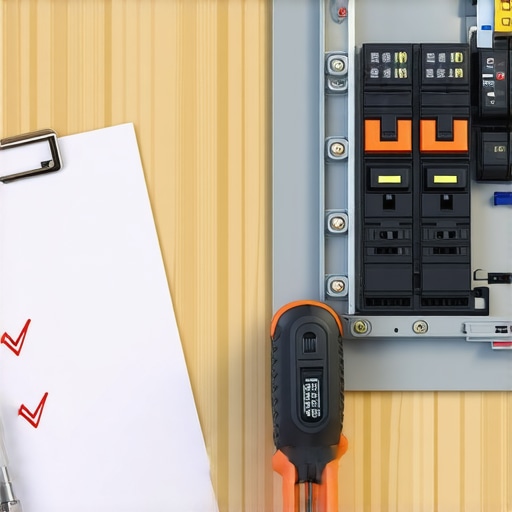
Checklist for the Modern Homeowner
- Annual Maintenance Contracts: Have a pro check the torque on your main lugs and scan the panel with infrared to find hot spots before they smell like ozone.
- Attic Fan Installation: Keep those temperatures down. Excessive attic heat degrades the thermoplastic insulation on your Romex, making it brittle and prone to cracking.
- Dock Electrical Services: If you have a boat lift, you need specialized ground-fault protection to prevent ‘electric shock drowning’ (ESD). Saltwater and electricity are a lethal mix.
- GFCI Outlet Installation: Ensure every ‘wet’ area is protected by a modern, self-testing GFCI. If yours is more than 10 years old, it’s probably a ‘widow maker’ that won’t trip when you need it.
- Lighting Installations: When swapping old fixtures, don’t just ‘wire nut’ things together. Check out our guide on lighting installations made easy and how electricians tackle troubleshooting for lighting installations to see the complexity involved in modern LED drivers.
Electricity is a patient killer. It doesn’t complain, and it doesn’t give many warnings until the monkey shit (duct seal) starts melting off your service entry. If your lights flicker when the fridge kicks on, or if you smell something ‘fishy’ (the scent of melting phenolic resin), don’t wait. You need professional troubleshooting. Upgrading to meet current NEC standards is about more than just resale value; it’s about making sure that when you flip the switch, the only thing that happens is the light comes on. If you’re having issues with your vehicle’s power supply, check our ev charger troubleshooting expert tips to stay safe. Don’t let your home be the next forensic ‘autopsy’ I have to perform.