
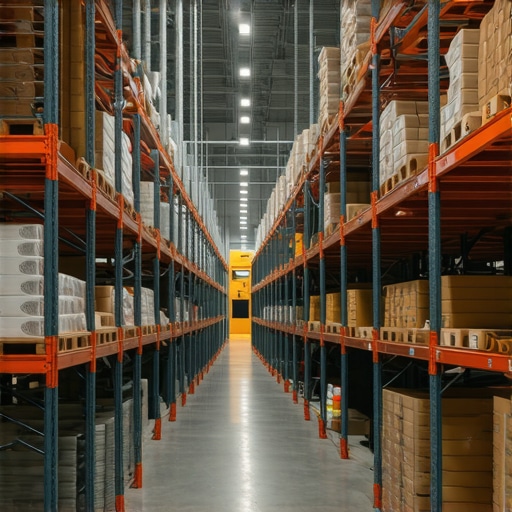
The Dangerous Anatomy of a Warehouse Shadow
Walk into any warehouse built during the mid-century industrial boom and you will smell it before you see it: that faint, metallic tang of ionized air and dust baking on old T12 ballasts. Shadows in a workspace aren’t just an aesthetic nuisance; they are a forensic indicator of a failing system and a massive liability for worker safety. When you have forklifts moving 5,000-pound pallets in the dark, a shadow is where a trip hazard hides or where a pallet rack upright gets clipped because the operator couldn’t see the edge. My journeyman used to smack my hand with his dikes if I stripped a wire with a pocket knife. ‘You nick that copper, you create a microscopic hot spot, and that’s how you burn a building down while the owners are at lunch,’ he’d scream. He was right. Precision in the rough-in phase is what separates a professional industrial lighting system from a series of widow makers hanging from the rafters. Fixing shadows requires more than just slapping up more fixtures; it requires a deep dive into the load calculations of your 200 amp panel install and understanding the physics of light dispersion.
“All equipment shall be installed and used in accordance with the instructions included in the listing or labeling.” – NEC Article 110.3(B)
The Forensic Breakdown: Why Your Warehouse Is Dark
Shadows are created by high-contrast environments where the ‘throw’ of the light doesn’t overlap sufficiently. In older facilities, we often find office lighting upgrades that were never properly scaled for the warehouse floor. You might see a camper electrical panel or some other sub-standard subpanel feeding 400-watt metal halides that take ten minutes to warm up. These old systems suffer from ‘Lumen Depreciation’—the bulbs lose 30% of their output long before they actually burn out. This creates ‘dead zones’ between the aisles. If you are dealing with a mid-century building, you’re likely fighting aluminum wiring in the branch circuits. The physics of Cold Creep is your enemy here. Aluminum expands and contracts at a different rate than the steel lugs in your panel, causing connections to loosen over time. This increased resistance generates heat, which drops the voltage at the fixture and dims your output. Before you even think about track lighting, you need to verify the integrity of your home run back to the main breaker. If you find charred insulation, you’re looking at a full rewire, not just a bulb change.
Blueprint: The Load Calculation and Track Lighting Integration
When I’m called in for certified journeyman services to fix warehouse visibility, I start with Ohm’s Law and a light meter. Track lighting is often overlooked for industrial use, but it’s the ultimate tool for ‘Task Lighting’ over packing stations or mezzanine storage. However, you cannot just daisy-chain track sections indefinitely. You have to account for voltage drop. For a 120V track system, a 3% drop is the maximum I’ll tolerate before the LEDs start flickering like a horror movie. To do this right, you often need to upgrade the backbone. If your facility is still running on an old 100-amp service, a modern 200 amp panel install is the only way to support high-output LED tracks alongside your other equipment. For those managing outdoor storage areas or loading docks, I often integrate tree mounted lights or pole-mounted LEDs, but the indoor shadows are fixed by overhead track precision. When you’re planning your lighting installations, you must calculate the total wattage of the track heads and ensure you aren’t loading the circuit beyond 80% of its rated capacity.
“Aluminum wire connections can overheat and cause a fire without tripping the circuit breaker.” – CPSC Safety Alert 516
Technical Zoom: The Contact Pitted Surface and Arcing
The biggest failure point in warehouse track lighting isn’t the bulb; it’s the track interface itself. In an industrial environment, vibrations from heavy machinery cause the track heads to shift. This creates a tiny gap between the bus bar and the fixture head. Electricity doesn’t like gaps; it jumps them. This creates micro-arcing, which pits the copper surface and creates carbon tracking. Eventually, the resistance becomes so high the plastic housing melts. This is why lockout tagout training is vital; you never adjust a track head while the circuit is live. If you’re experiencing flickering, don’t just swap the head. Use your Wiggy or a high-quality multimeter to check the voltage at the end of the run. If you’re getting 108V on a 120V circuit, your wires are undersized for the length of the run. You might need to move your feed point to the center of the track to split the load. For businesses that rely on refrigeration or sensitive equipment, troubleshooting for lighting installations often reveals that the lighting noise is polluting the ground plane, necessitating a dedicated neutral.
The Solution: Strategic Overhauls and Code Compliance
To truly eliminate shadows, we implement ‘Volumetric Lighting.’ We use track lighting to fill the vertical space between shelves while high-bay LEDs handle the floor. If your warehouse doubles as a workspace where water is present, you must ensure GFCI outlet installation is current for any floor-level periphery. For those running remote sites or temporary warehouses, a portable generator hookup must be professionally installed with a transfer switch to avoid backfeeding the grid, which is a widow maker for utility workers. Don’t forget the low-voltage needs; often, a phone line installation or data rack is located in the same dark corners. Lighting these areas reduces the risk of data cable damage during maintenance. Every upgrade we perform follows the latest NEC code updates to ensure your insurance doesn’t walk away after a fire. When you are ready to stop squinting at your inventory, contact us for a full forensic electrical audit. We don’t just hang lights; we build infrastructure that lets you sleep at night knowing every lug is torqued to spec and every shadow is gone. “